Interior & Exterior Paint
Do I Tape or Mud On Drywall First [Explained & Solved]
Drywall joints are normally finished by bedding tape in fresh joint compound, then covering it with additional coats after the previous layer has set or dried as required.
Published
Tapping and mudding are regularly used on drywall projects. Tape and mud fix any joint or gap in drywall.
Now can be a question, tape or mud which should apply first?
It depends on which type of tape or project you work on. Generally, with paper tape, mud is used as the setting compound of the tape. So the mud is used first then paper tape. If you use mesh tape, first mash tape use on drywall joints, then apply mud.
In this article, I am going to explain more about the topic. Let's jump in.
In what order should I tape drywall?
A typical sequence is to fill major gaps first, bed paper or mesh tape as appropriate, then apply progressively wider fill and finish coats after each layer is ready.
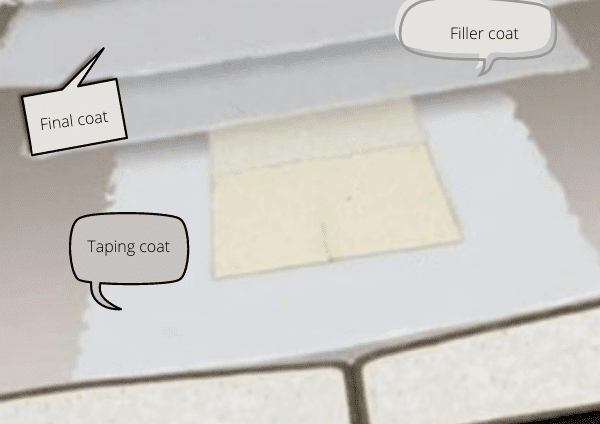
You must use a tapping layer when you go with paper tape. The tapping layer should fill with ¼-inch thick mud. Then apply tape on the mud. After drying the tap, you should apply continuous filler and a final layer of mud.
For mush tape, you do not need to apply tapping layer mud. The tape has the adhesive ability under the back for attach on drywall.
Just use the mush tape, Then apply filler and the final coat of mud.
However, you can apply more layers of mud on drywall to make the surface more smooth. And it will be good practice.
How to use drywall tape and mud
Apply compound to the joint, embed the appropriate tape, remove excess mud, and let or allow the coat to set as required before building the next wider layer.
You can check the video as a tutorial. The video shows how to use paper tape on drywall.
Should I tape joints during or after an initial fill with a setting-type compound?
Large gaps are often prefilled and allowed to firm up before taping, while normal joints can be taped directly in fresh compound according to the drywall system being used.
For small joints like ¼ inch, you should directly use compound and then apply paper tape on it.
Apply tape on wet mud. It will cover the gap. Also, the tape will stick hard and dry with mud.
If the gap size ½ uses mush tape, then apply your joint compound on it.
If the gap size is more than ½ inch, use different methods to fill the gap. After that, you can apply joint compound as a tapping layer.
You can check this article where I explain how big gap can fill drywall compound.
Can I tape over mud?
Paper tape is normally embedded into fresh joint compound rather than laid over a fully dried coat, so the mud beneath it can bond the tape to the joint.
The mud setting layer is called tapping mud layer. This layer needs a minimum of ¼ inch thick and 4-6 inches wide of mud. And next, use the tape.
However, the tapping mud layer can not be used for mush tape. The tape is directly used on drywall.
Can I apply drywall mud on wet tape?
After tape is embedded, excess compound is wiped away and the coat is allowed to dry or set before later finish coats, unless the product system specifically allows another sequence.
Give it time for a dry minimum of 12 hours, then apply the first layer of mud on tape.
Can drywall tape be applied after the mud has dried?
Paper tape generally needs fresh compound beneath it for proper bedding, so a dried coat usually requires another thin layer of mud before the tape is embedded.
However, if you used joint compound to fill the gap, and it dries, apply mud again, then use tape on it.
If you already paint your house, but you forget prime. You can check this article.
Although mash tape does not need any wet mud to apply, it needs a clean drywall surface to stick well.
How long after taping can I mud?
Recoat timing depends on compound type, layer thickness, temperature, humidity, and whether it is drying-type or setting-type, so use the product guidance rather than a fixed time.
Generally, you can use a mud first coat after tapping 12 hours later. However, you can find easy sand 45, 90, etc., type products in the market. This type of joint compound dries very fast. After applying those, you can mud in less time, like 2-3 hours.
But for mash tape, they do not need any tapping compound. So you can apply mud to it instantly.
Conclusion
Good drywall joints come from the correct sequence: prefill where needed, embed tape in fresh compound, then build smooth wider coats after each layer is ready.
I hope you got the answer about when and how mud should be used. If you think this article is helpful, share it with your friends and family.
Related articles
Explore more PaintZeal articles covering related paint questions, materials, surfaces, techniques, and practical painting topics.
Tape Drywall with Easy Sand? 5, 20, 45, 90, 210 [Compared]
Compare setting-type compounds and working times when choosing mud for taping, filling, and subsequent drywall coats.
How Big a Gap Can You Fill With Drywall Mud?
See when a drywall gap can be prefilled with compound and when a larger opening needs a different repair before taping.
Is Premixed Drywall Mud Good?
Compare premixed and setting compounds for taping, filling, working time, sanding, and finishing.
How Smooth Does Drywall Mud Need to Be?
Learn how the later fill and finish coats should be feathered and smoothed before primer and paint.