Wood
Wood is a natural, porous material whose grain, absorbency, knots, resin, species, and existing finish all influence paint preparation and adhesion.

Surfaces to Paint
Painting surfaces vary in porosity, texture, flexibility, and moisture exposure, which affect paint adhesion and preparation.
Compare common painting surfaces by surface traits, compatible paint options, preparation needs, and the key conditions that affect coating performance.
| Painting surface | Surface traits | Paint options | Preparation focus | Main decision |
|---|---|---|---|---|
| Wood | Variable grain, porosity, resin, and existing finish | Acrylic Paint, Oil Paint, Spray Paint, Enamel Paint, Latex Paint, Chalk Paint, Alkyd Paint, Glow-in-the-Dark Paint, Watercolor Paint, Gouache Paint, Tempera Paint, and Milk Paint | Clean and dry the wood, sand as needed, dull glossy coatings, and prime bare, absorbent, or stain-prone areas | Interior or exterior exposure, expected wear, desired finish, and the risk of tannin or stain bleed |
| Bamboo | Hard, smooth outer surface on natural canes; split or engineered bamboo can be more absorbent or factory-coated | Acrylic Paint, Latex Paint, Enamel Paint, Spray Paint, and Chalk Paint | Identify the bamboo product, clean and dry thoroughly, address wax or glossy finish, gently create tooth when approved, and test a compatible primer | Natural cane versus engineered panel, existing finish, wear, weather exposure, and full coating-system adhesion |
| Cork | Porous, absorbent, lightweight, and resilient natural bark; some cork products have factory sealers | Acrylic Paint, Latex Paint, Spray Paint, and Chalkboard Paint for suitable decorative uses | Remove loose particles and dust, clean gently, avoid soaking, test thin coats, and prime only as needed | Decorative use versus pinboard function, surface flexibility, existing sealer, and whether flooring needs a specialty system |
| Drywall | Absorbent when bare or patched, with joints and repairs that can show through paint | Acrylic Paint, Enamel Paint, Latex Paint, Emulsion Paint, and Milk Paint | Repair defects, let joint compound dry, sand smooth, remove dust, and prime new or patched areas evenly | Room conditions, desired sheen, cleaning needs, and whether stains or damaged paper need special primer |
| Wallpaper | May be paper, vinyl-coated, textured, or another specialty wallcovering, with seams and adhesive beneath | Latex Paint and Emulsion Paint | Confirm that the wallcovering is firmly bonded, repair loose seams or damage, clean the surface, and seal or prime when needed | Wallcovering condition, adhesive residue, material type, stain risk, and whether removal is preferable to painting |
| Metal | Smooth and nonporous; bare metal may rust or oxidize | Acrylic Paint, Oil Paint, Spray Paint, Enamel Paint, Latex Paint, Chalk Paint, Epoxy Paint, and Alkyd Paint | Remove loose rust or coating, degrease thoroughly, create the required tooth, and use a compatible metal primer | The metal type, corrosion condition, handling, weather exposure, and complete primer-and-topcoat system |
| Steel | Ferrous metal that can rust and may carry mill scale, oil, or existing coating | Spray Paint, Enamel Paint, Alkyd Paint, Epoxy Paint, Acrylic Paint, High-Heat Paint, and Intumescent Paint | Remove rust, mill scale, oil, grease, and failing coating and create the surface profile required by the system | Ordinary steel versus galvanized or stainless steel, corrosion exposure, service temperature, and coating-system requirements |
| Cast Iron | Ferrous metal with a textured surface that can trap rust and contamination | Enamel Paint, Spray Paint, Alkyd Paint, Epoxy Paint, and High-Heat Paint | Remove loose rust, scale, grease, oil, and failing coating, then use a compatible ferrous-metal primer where required | Moisture, outdoor exposure, handling, service temperature, and whether the coating explicitly approves iron or steel |
| Chrome | Very smooth, hard plated metal with little natural tooth for paint | Spray Paint and Enamel Paint with a chrome-compatible adhesion system | Remove grease, wax, polish, dirt, and residue, then use only the abrasion and primer specified by the selected coating system | Whether the adhesion promoter or primer explicitly suits chrome and whether covering the original plated finish is acceptable |
| Plastic | Material families vary widely, and some strongly resist paint | Acrylic Paint, Spray Paint, and Glow-in-the-Dark Paint | Identify the plastic, clean and dry it, test adhesion, and add light tooth or compatible primer only when appropriate | Whether the exact coating approves that plastic and can tolerate the item's flexing, heat, handling, or exposure |
| Polypropylene | Low-surface-energy, nonporous plastic with poor adhesion for ordinary paints and primers | PP-approved Spray Paint and specially primed Acrylic or Enamel Paint systems | Identify PP, clean molding residues and grease, test compatibility, and use a polypropylene adhesion promoter when directed | Exact PP formulation, primer approval, flexing, rubbing, and durability of the complete coating system |
| Polyethylene | Low-surface-energy plastic (HDPE or LDPE) that usually resists conventional paint adhesion | PE-approved Spray Paint or Acrylic and Enamel systems with validated polyethylene adhesion promoters | Identify HDPE or LDPE, remove contamination, verify product approval, and test a complete plastic-specific coating system | PE grade, flexibility, low surface energy, primer compatibility, and whether the finished item needs coating at all |
| PET plastic | Smooth polyester resin used in clear bottles and films; print-receptive surface treatments vary by product | PET-compatible Spray Paint, Acrylic Paint, and Paint Markers with tested adhesion | Identify PET rather than PE, remove dirt and labels, check for factory print treatment, and test paint and primer compatibility | Rigid bottle versus flexible film, existing treatment, scratch resistance, solvent effects, and coating durability |
| Polycarbonate | Tough engineering plastic that may be transparent or opaque and can be sensitive to incompatible solvents | Polycarbonate-approved flexible coatings, formula-specific Acrylic Paint and Oil Paint, Spray Paint, and Paint Markers | Use plastic-safe cleaning methods, test solvent compatibility, and use only primers or adhesion systems approved for polycarbonate | Stress cracking, solvent compatibility, impact performance, flexibility, and whether the complete coating system approves polycarbonate |
| ABS Plastic | Rigid engineering plastic that is generally paintable but can be damaged by incompatible solvents | Spray Paint, Enamel Paint, Acrylic Paint, and Paint Markers with compatible preparation | Remove grease and mold-release residue, test solvent compatibility, and use a plastic-compatible primer when required | Solvent attack, impact resistance, primer compatibility, film flexibility, and the intended handling or exposure |
| TPU | Flexible thermoplastic polyurethane whose hardness, elasticity, chemistry, and additives vary by grade | Flexible specialty coatings and product-specific Acrylic Paint, Paint Markers, or Spray Paint | Clean without aggressive solvents, remove processing residue, test the exact TPU grade, and use only compatible adhesion preparation | Flexing, solvent sensitivity, abrasion, coating elasticity, and whether the exact system approves the TPU grade |
| Silicone | Flexible low-surface-energy elastomer that ordinary paints usually struggle to wet and bond to | Purpose-made silicone coating systems; ordinary Acrylic Paint, Paint Markers, and Spray Paint are generally unreliable | Remove mold release, oil, dust, and contamination exactly as the selected silicone coating system requires | Silicone chemistry, very low surface energy, flexing, handling, and whether the complete coating system is designed for silicone |
| Plexiglass | Rigid acrylic plastic sheet with a smooth nonporous surface that can be sensitive to incompatible solvents | Acrylic Paint, compatible Oil Paint, and formula-specific Spray Paint | Use acrylic-safe cleaning methods, remove dust and grease, test compatibility, and roughen the surface only when the selected system or desired finish calls for it | Solvent compatibility, transparency, desired opacity, surface scratching, and whether the exact coating system suits acrylic sheet |
| Resin | Hard synthetic casting surface that is often smooth and nonporous | Acrylic Paint and resin-compatible Spray Paint | Use fully cured resin, remove mold-release residue and contamination, and create tooth or prime when the selected coating system requires it | Resin chemistry, surface gloss, release agents, handling, and whether the exact paint or primer approves the material |
| Concrete | Porous, alkaline when new, and capable of retaining or transmitting moisture | Acrylic Paint, Spray Paint, Latex Paint, Masonry Paint, Epoxy Paint, and Milk Paint | Allow proper curing, diagnose moisture, clean and repair the surface, and create the profile required by the coating | Wall or floor use, interior or exterior exposure, moisture, traffic, and cure time before returning to service |
| Asphalt | Bitumen-bound aggregate pavement that may retain surface oils, move with temperature, and experience heavy abrasion | Water-based Acrylic Traffic Paint and approved specialty colored pavement coatings | Remove oil, debris, loose material, and moisture; repair damaged pavement and allow fresh asphalt or sealcoat to cure as specified | Markings versus broad-area color, traffic type, wear, weather, and the exact coating system approved for asphalt |
| Brick | Porous and textured, with possible moisture movement and efflorescence | Acrylic Paint, Spray Paint, Latex Paint, Chalk Paint, Masonry Paint, and Milk Paint | Correct leaks, remove dirt, loose material, and efflorescence, let the brick dry, and prime when required | Interior or exterior location, moisture path, desired coverage, substrate condition, and coating-system approval |
| Glass | Hard, smooth, and nonporous | Acrylic Paint, Spray Paint, Enamel Paint, and Chalk Paint | Degrease completely and follow the chosen glass-compatible system for adhesion, primer, and curing | Decorative or handled use, washing, transparency, and whether the formula requires air curing or baking |
| Fabric | Varies by fiber, weave, stretch, texture, and washing requirements | Acrylic Paint with a suitable medium and textile-specific Fabric Paint | Pre-wash and dry when appropriate, avoid fabric-softener residue, and follow the system's curing or heat-setting directions | Fiber approval, flexibility, stretch, hand feel, washability, and the care method for the finished item |
| Polyester | Synthetic textile fiber with relatively low absorbency; may be tightly woven, blended, or stretchy | Polyester-compatible Fabric Paint, approved Acrylic Paint with fabric medium, and textile-compatible Paint Markers | Check fabric composition, pre-wash without softener where appropriate, dry fully, and test thin flexible layers | Polyester content, stretch, washability, heat tolerance, and the fabric paint's approved setting method |
| Nylon | Synthetic textile fiber with variable weave, factory finish, and moisture-repellent coatings | Fabric Paint, textile-compatible Acrylic Paint, and synthetic-fabric Paint Markers | Check for waterproofing or factory finish, clean as care permits, dry fully, and test coating adhesion and flexibility | Fiber composition, factory finish, fabric movement, heat-setting limits, and wash or weather exposure |
| Wool | Natural protein fiber used in knits, felt, and woven cloth, with variable texture and sensitivity to wet handling | Wool-compatible Fabric Paint, flexible Acrylic Paint with fabric medium, and approved Paint Markers | Check garment care, gently clean and dry, test paint penetration and hand feel, and avoid excessive saturation | Preserve softness, avoid felting or shrinking, respect safe heat-setting temperatures, and verify washability |
| Cotton | Absorbent natural fiber whose weave, weight, finish, and washing requirements affect paint behavior | Fabric Paint, Acrylic Paint with a suitable fabric medium, and textile-compatible Paint Markers | Pre-wash new cotton when appropriate, dry fully, avoid fabric-softener residue, and follow curing or heat-setting directions | Softness, flexibility, washability, color penetration, and whether the selected system needs heat-setting |
| Silk | Lightweight natural protein fiber with a smooth surface and distinctive luster | Fabric Paint and Acrylic Paint with a compatible fabric medium | Use clean dry silk, test color penetration and hand feel, stabilize the fabric when needed, and avoid heavy paint buildup | Preserving softness and luster, product-specific setting method, washability, and whether transparent dye would be more suitable |
| Canvas | Woven and flexible; available raw or with different factory grounds | Acrylic Paint, Oil Paint, Chalk Paint for decorative projects, Watercolor Paint with a suitable ground, and Gouache Paint | Confirm whether the canvas is raw or pre-primed and use sizing and a ground compatible with both support and paint | Artist painting or decorative use, the selected paint system, support flexibility, and optional final varnish |
| Tile | May be glazed or unglazed and can face water, heat, abrasion, cleaners, and heavy wear | Acrylic Paint, Enamel Paint, and Epoxy Paint | Identify the tile and exposure, remove grease and residue, repair defects, abrade as directed, and use the complete approved system | Wall, floor, shower, countertop, heat, food-contact, water, slip resistance, and full-cure requirements |
| Ceramic | May be porous and unglazed or hard, slick, and glazed | Acrylic Paint, Enamel Paint, Chalk Paint, Glow-in-the-Dark Paint, and Tempera Paint | Identify the surface, clean and degrease thoroughly, and follow the complete system for adhesion and curing | Decorative or functional use, washing, heat, food contact, glaze, and any required curing or baking process |
| Clay | Broad category that may be air-dried, oven-cured, kiln-fired, porous, sealed, or glazed | Acrylic Paint broadly; Tempera Paint and Watercolor Paint mainly on porous air-dry craft clay | Identify the clay type first and complete the required drying, curing, or firing before choosing any sealing, priming, or paint system | Clay type, porosity, glaze or sealer, moisture exposure, intended use, and whether a more specific clay guide applies |
| Air-Dry Clay | Porous unfired modeling material that hardens by drying rather than kiln firing | Acrylic Paint, Tempera Paint, and Watercolor Paint | Let the piece dry completely, remove loose dust, and seal first when a more uniform or less absorbent surface is wanted | Complete drying, absorbency, moisture sensitivity, handling, and whether a protective finish is needed |
| Polymer Clay | Oven-cured modeling material, commonly PVC-based, that forms a relatively smooth low-porosity surface | Water-based Acrylic Paint | Cure and cool the clay fully, remove dust or oily residue, and test the paint and any glaze on a hidden area first | Paint compatibility, surface residue, handling, and whether the selected glaze remains compatible with the cured clay and paint |
| Paper | Varies in weight, sizing, absorbency, strength, and tendency to buckle | Acrylic Paint, Oil Paint, Watercolor Paint, Gouache Paint, and Tempera Paint | Choose sufficiently heavy, stable paper; use an appropriate ground or sizing when the paint system requires it | Wet-media load, oil isolation, buckling, long-term stability, and whether the work needs a ground |
| Foam Board | Lightweight foam core between paper or other facings; exposed core may be solvent-sensitive | Acrylic Paint and formula-specific Spray Paint | Keep the facing clean and dry, avoid saturating paper surfaces, and protect exposed foam from incompatible solvents | Facing material, foam-core chemistry, exposed edges, warping risk, and exact paint compatibility |
| EVA Foam | Lightweight flexible foam commonly shaped for craft, props, costumes, and cosplay | Flexible Acrylic Paint | Complete shaping and repairs first, keep the foam clean and dry, and use a flexible primer or sealer when the paint system requires one | Flexing, compression, costume wear, primer flexibility, and whether the complete coating system can move with the foam |
| Plywood | Layered wood with absorbent faces, exposed edges, joints, and possible surface defects | Acrylic Paint, Oil Paint, Latex Paint, Chalk Paint, and Milk Paint | Use sound, dry plywood; smooth fibers and filled areas, prepare edges, and prime bare or stain-prone material | Plywood grade, edge exposure, interior or exterior use, movement, wear, and stain bleed |
| Wood Veneer | Thin real-wood face bonded over a separate core material | Latex Paint, Enamel Paint, Chalk Paint, and Acrylic Paint | Clean carefully, repair loose veneer, and dull glossy finishes without sanding through the thin wood face | Veneer condition, existing finish, core stability, stain bleed, and how much sanding the surface can safely tolerate |
| Laminate | Hard, slick, and nonporous with a durable factory wear layer | Spray Paint and Chalk Paint | Clean and degrease completely, create the directed key, and use a bonding primer when the coating system requires it | Adhesion, expected abrasion, location, coating approval, and whether a protective topcoat is required |
| Melamine | Hard, slick resin surface commonly bonded to composite wood | Melamine-approved cabinet systems, Enamel Paint, and formula-specific Spray Paint | Degrease thoroughly and use the bond coat or high-adhesion primer required by the selected coating system | Whether the complete system explicitly approves melamine and can tolerate cabinet or furniture wear |
| Leather | Flexible and often carries natural oils, conditioners, dyes, or factory finishes | Acrylic Paint in a suitable flexible leather system | Clean using the approved method, dry thoroughly, test compatibility, and preserve the flexibility of the material | Leather type, existing finish, flexing, handling, color transfer, and compatible flexible topcoat |
| Faux Leather | Fabric-backed PU or PVC synthetic coating; flexible, smooth, and sometimes treated with conditioners | Flexible Leather Paint, vinyl-compatible Spray Paint, and product-approved Paint Markers | Identify PU or PVC, clean off oils and dressings, test adhesion, and use only an approved adhesion promoter if required | Polyurethane versus PVC finish, abrasion and creasing, primer compatibility, and surface wear |
| Vinyl | Flexible and potentially affected by additives that interfere with adhesion | Acrylic Paint for vinyl-record display projects and formula-specific Enamel Paint | Identify the item, clean and dry it, preserve playable grooves, and use only compatible adhesion preparation | The vinyl product, flexibility, intended function, coating compatibility, and whether the result is display-only |
| Linoleum | Natural resilient flooring made from linseed oil, wood flour, and minerals, often protected by a factory finish | Linoleum-approved floor coating systems; ordinary Acrylic Paint and Spray Paint are poor choices for trafficked floors | Confirm true linoleum rather than vinyl, remove wax and grease, test the existing finish, and follow the floor system's full instructions | Approved coating and topcoat, factory-finish compatibility, foot traffic, slip resistance, and full cure |
| Rubber | Flexible elastomer whose plasticizers and movement can interfere with adhesion | Rubberized coatings, rubber-approved paint markers, and limited product-specific Acrylic or Spray Paint | Clean and dry thoroughly, identify the rubber or item when possible, and test compatibility before coating | Flexing, abrasion, plasticizer migration, solvent sensitivity, and whether the exact product approves rubber |
| Plaster | Porous and moisture-sensitive until fully cured and dry | Acrylic Paint, Spray Paint, Emulsion Paint, and Milk Paint | Let new plaster cure and dry completely, remove dust and loose material, then seal or prime as directed | Residual moisture, the approved new-plaster first-coat method, location, and expected wear |
| Stone | Varies widely in porosity, mineral makeup, texture, finish, and moisture behavior | Acrylic Paint, stone-approved Masonry Paint, and Milk Paint | Identify the stone, resolve moisture problems, remove deposits and loose material, dry fully, and test the system | Stone type, porosity, existing sealer, appearance, moisture, interior or exterior exposure, and reversibility needs |
| Limestone | Calcium-carbonate-rich sedimentary stone with variable porosity, moisture movement, and acid sensitivity | Stone-approved Masonry Paint, Limewash Paint, and Acrylic Paint for suitable small decorative items | Clean with non-acidic stone-safe products, check existing sealers and dampness, and use only compatible mineral or decorative coatings | Stone porosity, historic value, existing sealer, water movement, and whether painting is appropriate |
| Sandstone | Sedimentary stone of cemented sand grains that varies in absorbency and surface cohesion | Stone-approved Masonry Paint, Limewash Paint, and Acrylic Paint for suitable decorative projects | Avoid eroding weak stone, remove deposits gently, correct moisture sources, and test a substrate-approved coating | Surface stability, porosity, historic preservation, weather exposure, and breathable coating compatibility |
| Marble | Calcareous natural stone that may be honed, polished, or treated with an impregnating sealer | Stone-approved Masonry Paint and Limewash Paint on suitable absorbent surfaces | Identify the finish and sealer, avoid acidic cleaners, resolve moisture, and confirm that the stone is suitable for coating | Preserving the original finish, absorbency, sealer compatibility, location, wear, and whether coating valuable polished stone is appropriate |
| Granite | Hard, relatively low-absorption natural stone that is often polished or sealed | Stone-approved Masonry Paint and Limewash Paint on suitable absorbent surfaces | Identify the finish and sealer, clean with stone-safe products, resolve moisture, and test whether the dense surface can accept the coating | Surface density, polish, sealer compatibility, appearance, exposure, and whether the product explicitly approves the stone |
| Slate | Layered natural stone whose texture, density, finish, and sealer affect coating adhesion | Stone-approved Masonry Paint and Acrylic Paint for suitable decorative uses | Identify any sealer, clean with a stone-safe method, resolve moisture, dry fully, and test adhesion | Floor, roof, wet-area, hearth, or decorative use; traffic, heat, moisture, sealer compatibility, and product approval |
| Aluminum | Nonferrous metal that quickly develops an oxide layer affecting adhesion | Acrylic Paint, Spray Paint, Enamel Paint, Latex Paint, and Alkyd Paint | Remove oxidation and loose coating, degrease, abrade or etch as directed, and use an aluminum-compatible primer | Exposure, existing coating, primer compatibility, direct-to-metal approval, and recoat and cure timing |
| Fiberglass | Usually presents a smooth resin or gelcoat surface rather than exposed fibers | Acrylic Paint with preparation | Clean thoroughly, sand or otherwise prepare the surface, remove residual dust, and use a compatible primer-sealer | Gelcoat condition, adhesion testing, handling, weather or water exposure, and protective finish compatibility |
| Denim | Flexible, textured, and often washable | Acrylic Paint, Fabric Paint, and Spray Paint for limited decorative use | Pre-wash wearable denim when appropriate, avoid fabric-softener residue, dry fully, and test flexibility | Whether the item must remain soft, flexible, and washable or is only decorative |
| Wicker | A woven construction that may be natural plant material, plastic, resin, or another substrate | Acrylic Paint, Spray Paint, and Chalk Paint | Identify the material, remove dust and loose coating, clean and dry the weave, and coat crevices without heavy buildup | Natural or synthetic material, flexing, indoor or outdoor location, coverage between strands, and finish durability |
| Rattan | Natural palm cane used in furniture, woven panels, and seating, often with existing varnish or protective finish | Spray Paint, Chalk Paint, and Acrylic Paint with an approved substrate and finishing system | Remove dust and loose finish, dry the cane, check existing varnish, and apply light coats around woven joints | Natural rattan versus synthetic wicker, flexibility, existing finish, wear, and indoor or outdoor use |
| Cinder Block | Highly porous and textured, with voids that may require filling | Acrylic Paint, Spray Paint, Latex Paint, and Masonry Paint | Allow new work to cure, repair defects, correct water entry, remove deposits, dry fully, and use filler or primer when needed | Above-grade or below-grade conditions, water pressure, interior or exterior use, texture, and coating approval |
| Brass | Smooth copper-zinc alloy that can tarnish and retain polishing residue | Acrylic Paint, Spray Paint, and Enamel Paint | Degrease thoroughly, remove tarnish and polishing residue, and use a compatible nonferrous-metal adhesion system | Primer compatibility, handling, exposure, and whether the original metal appearance should remain visible |
| Cardboard | Lightweight, absorbent paper-based material that can soften or warp when saturated | Acrylic Paint, Tempera Paint, and formula-specific Spray Paint | Use clean, dry, rigid cardboard and favor moderate or light coats to limit moisture and warping | Wet-media load, warping, handling, and whether a ground or protective finish is useful |
| Cement Board | Rigid cementitious panel whose porosity and factory surface vary by product | Latex Paint and product-specific Masonry Paint | Confirm the panel face is paintable, finish joints and fasteners, clean and dry the surface, and prime or seal as specified | Panel approval, interior or exterior location, moisture exposure, and the complete coating system |
| Copper | Smooth nonferrous metal that develops oxide and patina over time | Acrylic Paint, Spray Paint, and Enamel Paint | Degrease thoroughly, remove oxidation or loose patina, and use a compatible nonferrous-metal primer or adhesion system | Surface appearance, primer compatibility, handling, and interior or exterior exposure |
| Galvanized Steel | Steel protected by zinc, with new surfaces sometimes carrying oil or passivation treatments | Latex Paint, Spray Paint, Epoxy Paint, Polyurethane Paint, and compatible Alkyd Paint | Remove oil, grease, passivator, white rust, and loose coating and prepare the zinc surface to the selected system | Zinc compatibility, corrosion exposure, primer requirements, and expected weather or chemical service |
| Linen | Strong woven flax fabric used as a flexible fine-art support, sold raw or pre-ground | Acrylic Paint and Oil Paint | Use properly primed artist linen or size and ground raw linen for the selected paint medium | Paint medium, ground type, support preparation, flexibility, and optional final varnish |
| MDF | Engineered wood panel with smooth faces and highly absorbent cut edges | Acrylic Paint, Latex Paint, Enamel Paint, Spray Paint, Chalk Paint, and Magnetic Paint | Fill and sand defects, remove dust, seal cut edges, and prime the faces and edges for an even finish | Edge sealing, moisture exposure, intended wear, and whether the coating system suits MDF |
| OSB | Engineered wood panel with a textured strand face and absorbent exposed edges | Acrylic Paint and Latex Paint | Use dry, sound OSB, remove contamination and loose fibers, protect exposed edges, and seal or prime as required | Interior or exterior exposure, moisture, edge protection, texture, and primer compatibility |
| Painting Board | Rigid artist panel whose material, absorbency, ground, and heat resistance vary by product | Acrylic Paint, Acrylic Gouache, Iridescent Paint, Oil Paint, Water-Mixable Oil Paint, Egg Tempera, Casein Paint, and Encaustic Paint | Use a clean, stable panel and apply or confirm a ground compatible with the chosen medium | Paint medium, panel stability, absorbency, ground compatibility, and heat resistance where relevant |
| Particleboard | Resin-bonded wood particles with porous raw faces and edges that are moisture-sensitive unless sealed | Acrylic Paint and Latex Paint | Keep the board dry, smooth rough areas, seal raw faces and edges, and use a compatible primer before topcoating | Raw versus laminated surface, moisture exposure, edge protection, and expected handling or cleaning |
| Porcelain | Dense fired ceramic with a hard, low-porosity surface that is often glazed | Ceramic Paint, Acrylic Paint, porcelain-specific Spray Paint, and approved Epoxy Paint | Degrease thoroughly and follow the selected system for abrasion, adhesion preparation, and curing | Decorative versus wet-service use, washing, food contact, glaze, and exact curing requirements |
| PVC | Rigid or flexible vinyl plastic with a smooth nonporous surface and adhesion-affecting additives | PVC-approved Spray Paint | Identify the material, remove dirt and residue, dry fully, and use a plastic bonding primer unless direct application is approved | Exact PVC approval, flexibility, handling, exposure, and full curing requirements |
| Stainless Steel | Corrosion-resistant alloy with a smooth passive surface and little natural tooth for coatings | Spray Paint, Epoxy Paint, and Polyurethane Paint | Degrease thoroughly and create the surface profile required by a stainless-steel-compatible primer and coating system | Alloy and system approval, corrosion exposure, wear, chemicals, weather, and cleaning requirements |
| Stucco | Porous, textured cementitious wall finish that can transmit moisture vapor after curing | Latex Paint, Masonry Paint, Elastomeric Paint, Textured Paint, Limewash Paint, and Silicate Paint | Let new stucco cure, repair cracks and defects, correct moisture problems, remove loose material or efflorescence, and prime as directed | Interior or exterior exposure, moisture, crack movement, breathability, texture, and coating-system approval |
| Styrofoam | Lightweight polystyrene foam that can dissolve or deform when exposed to incompatible solvents | Water-Based Acrylic Paint and formula-specific Foam-Safe Spray Paint | Remove loose particles gently, test first, and use only foam-safe coatings or barrier coats | Solvent compatibility, surface damage risk, handling, and whether a protective foam-safe finish is needed |
| Terra Cotta | Porous low-fired clay that readily absorbs moisture, primer, and paint | Acrylic Paint, Ceramic Paint, Spray Paint, and formula-specific Silicate Paint | Remove dirt and mineral deposits, let the clay dry fully, and use the primer or sealing system required for the exposure | Indoor or outdoor use, moisture movement, porosity, curing, and whether the item needs a breathable or sealed finish |
Browse individual surface references for material traits, compatible paints, preparation, primer needs, application guidance, and durability considerations.
Wood is a natural, porous material whose grain, absorbency, knots, resin, species, and existing finish all influence paint preparation and adhesion.

Bamboo is a hard-skinned grass used in furniture, fencing, and crafts, with smooth or factory-finished surfaces that often need careful preparation for paint.
Cork is a porous, flexible bark material used in bulletin boards, tiles, and crafts, where absorbency and movement affect paint coverage and durability.
Canvas is a woven fabric support, commonly cotton or linen, used for painting and sold either raw or prepared with a compatible ground layer.

Metal surfaces are hard and nonporous but vary by material, with steel prone to rust and aluminum forming an oxide layer that changes paint adhesion.
Concrete is a porous building material made from cement, water, and aggregate that hardens through curing and can continue moving moisture through its surface.
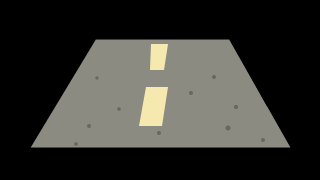
Asphalt is a bitumen-bound paving material used for roads, driveways, and parking lots, where traffic wear and surface oils call for specialty coatings.

Plastic is a broad family of rigid or flexible synthetic materials whose smooth surfaces and varied chemistry make paint compatibility highly material-specific.
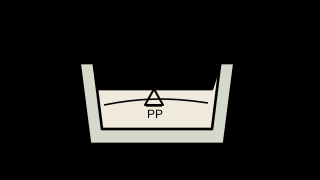
Polypropylene (PP) is a lightweight plastic found in containers, auto trim, and household goods, with low surface energy that makes paint adhesion difficult.
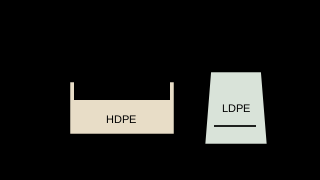
Polyethylene (PE) is a common plastic used in containers, furniture, and films, with low surface energy that makes HDPE and LDPE particularly hard to paint.
PET plastic is a polyester used for clear bottles, packaging, and films, with a smooth surface whose treatment and existing coatings affect paint adhesion.

Glass is a hard, smooth, nonporous material with low surface tooth, while its transparency makes uneven coverage and brush marks more visible.
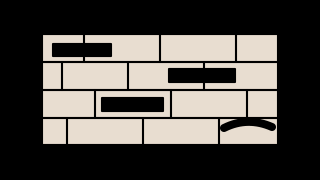
Brick is a porous fired-clay masonry material with a textured surface that absorbs moisture and paint while allowing vapor to move through the wall.

Drywall is a gypsum-core building panel faced with paper, with joint compound at seams and repairs creating areas of different absorbency for paint.

Paper is an absorbent sheet material made from pressed fibers, with weight, sizing, and surface texture controlling moisture tolerance and paint behavior.
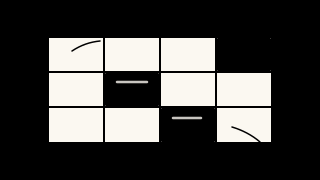
Tile is a hard manufactured surface made from ceramic, porcelain, stone, or other materials, ranging from porous and unglazed to smooth and glazed.

Ceramic is a hard material made by firing clay or other minerals, with surfaces ranging from porous and unglazed to smooth and glass-like when glazed.

Fabric is a flexible material made by weaving, knitting, or bonding fibers, with fiber content, texture, stretch, and washability affecting paint adhesion.

Polyester is a synthetic textile used in clothing, bags, and upholstery, with low absorbency and variable stretch that complicate paint adhesion and washability.

Nylon is a strong synthetic fiber used in jackets, bags, and outdoor gear, with tight weaves and water-repellent finishes that can limit paint adhesion.

Wool is a natural protein fiber used in sweaters, felt, blankets, and upholstery; its texture, moisture response, and care requirements affect paint results.

Plywood is an engineered wood panel made from bonded veneer layers with alternating grain, and its faces, edges, and filled areas absorb paint differently.
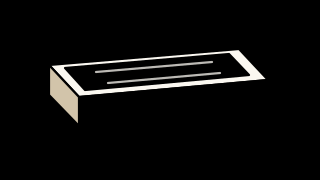
Laminate is a layered material with a hard decorative wear surface bonded over a core, creating a smooth, nonporous surface with low natural tooth for coatings.

Plaster is a mineral wall finish made from gypsum, lime, cement, or similar binders, with porosity and moisture content changing as the material cures and dries.
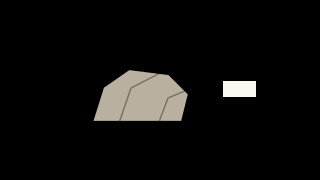
Stone is a natural mineral material whose porosity, texture, and moisture behavior vary by type, causing some stones to accept coatings more readily than others.
Limestone is a calcium-rich natural stone used in walls and paving, with variable porosity, acid sensitivity, and moisture movement that affect paint choice.
Sandstone is a sedimentary stone used in walls, paving, and cladding, with variable porosity and grain strength that affect paint absorption and durability.

Aluminum is a lightweight nonferrous metal that quickly forms a protective oxide layer in air, changing how primers and paints bond to its surface.

Steel is a strong ferrous metal that can corrode when unprotected, with ordinary carbon steel requiring different preparation from galvanized or stainless steel.

Vinyl is a synthetic plastic used in rigid and flexible products, with additives, surface finish, and thermal movement all affecting coating adhesion.

Linoleum is resilient flooring made from linseed oil, wood flour, and mineral fillers on a backing, unlike synthetic PVC-based vinyl flooring.

Leather is a flexible natural material made from treated animal hide, with oils, texture, factory finish, and movement affecting how paint adheres and wears.

Faux leather is a fabric-backed synthetic surface, usually coated with polyurethane or PVC, whose finish and flexing affect how well paint stays attached.

Wallpaper may be paper, vinyl-coated, textured, or another specialty material, with surface type, seam condition, and bond strength affecting coating behavior.

Cotton is an absorbent natural fiber used in clothing, canvas, and household fabrics, with weave, weight, finish, and washing affecting paint performance.

Denim is a sturdy woven fabric, usually cotton, with a diagonal twill structure whose flexibility, texture, and regular washing affect painted finishes.

Clay includes modeling and ceramic materials hardened by air drying, oven curing, or kiln firing, producing surfaces that differ in porosity, hardness, and finish.

Air-dry clay is a porous modeling material that hardens without a kiln or oven and remains more moisture-sensitive than fired ceramic after drying.

Fiberglass is a composite of glass fibers embedded in resin, with finished parts usually presenting a smooth resin or gelcoat surface rather than exposed fibers.
Cured resin is a hard synthetic surface used in castings, crafts, furniture, and molded objects, with a smooth finish and relatively low natural tooth for coatings.

Rubber is a flexible elastomer used in tires, seals, footwear, mats, grips, and molded parts, with flexibility and plasticizers making paint adhesion difficult.

Wood veneer is a thin layer of real wood bonded over another core, with a shallow surface layer that can be damaged or sanded through more easily than solid wood.
Melamine is a hard resin surface commonly bonded to particleboard or MDF, creating a smooth, nonporous finish with low natural tooth for coatings.

Wicker describes woven construction rather than one material, with natural plant fibers and synthetic versions presenting very different painting surfaces.

Rattan is a flexible natural palm stem used in furniture, cane panels, and woven seating, where surface finish, joints, and movement affect how coatings hold.

Cinder block is a lightweight concrete masonry unit with a rough, highly porous surface that readily absorbs moisture, primer, and paint.

Cast iron is a ferrous metal with a rough, oxidation-prone surface that can rust when exposed to moisture and often requires corrosion removal before coating.

Chrome plating creates a very smooth, hard metal surface with little natural tooth, making coating adhesion more dependent on surface preparation and bonding primers.

Marble is a calcareous natural stone often honed, polished, or sealed, with those surface treatments reducing porosity and influencing coating adhesion.

Granite is a hard, low-absorption natural stone often polished or sealed, and those smooth treatments can make reliable paint adhesion more difficult.

Slate is a layered natural stone used for flooring, roofing, and cladding, with texture, density, sealer, moisture, and intended use affecting paint adhesion.

Plexiglass is a rigid acrylic sheet with a smooth, nonporous surface and sensitivity to incompatible solvents that can craze or damage the material.

Foam board is a lightweight panel with a foam core between paper facings, and the paper surface and exposed foam edges can respond differently to paint.

EVA foam is a lightweight, flexible material used in crafts, props, costumes, and cosplay, with repeated bending capable of stressing rigid paint films.

Polymer clay is an oven-cured modeling material commonly made with a PVC base, forming a relatively smooth, low-porosity surface after baking.

Silk is a lightweight natural protein fiber with a smooth, lustrous surface that can accept dyes or compatible fabric paints without losing its flexibility.

Silicone is a flexible, low-surface-energy elastomer used in molds, seals, cases, and soft parts, with its surface chemistry limiting adhesion for many conventional coatings.

Polycarbonate is an impact-resistant engineering plastic used in glazing, guards, housings, and lenses, with some solvents capable of causing stress cracking or surface damage.

ABS is a rigid engineering plastic used in housings, trim, appliances, toys, and molded parts, with a smooth surface and sensitivity to some coating solvents.
Thermoplastic polyurethane is a flexible plastic used in cases, films, footwear, seals, and protective parts, with elasticity affecting coating performance.

Brass is a smooth copper-zinc alloy that can tarnish or retain polishing residue, so reliable paint adhesion depends on thorough cleaning and preparation.

Cardboard is a lightweight, absorbent paper-based sheet material whose fibers and corrugated layers can soften or warp when exposed to heavy wet coats.

Cement board is a rigid cementitious panel reinforced with fibers or mesh, with surface porosity and factory finish varying by product and affecting coating adhesion.

Copper is a smooth nonferrous metal that develops oxide and patina over time, leaving a changing surface that can affect primer and coating adhesion.

Galvanized steel is steel protected by a zinc coating, with new surfaces sometimes carrying oil or passivation treatments that interfere with paint adhesion.

Linen is a strong woven fabric made from flax fibers and widely used for fine-art painting, with artist linen sold either raw or prepared with a ground layer.
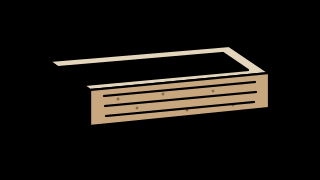
MDF is an engineered wood panel made from compressed wood fibers and resin, with relatively smooth faces and highly absorbent cut edges.

OSB is an engineered wood panel made from cross-oriented strands, with a textured face and exposed edges that can absorb coatings at different rates.

Painting board is a rigid artist support made from hardboard, wood, or another stable panel, sold either raw or prepared with a medium-specific ground.

Particleboard is an engineered wood panel made from resin-bonded wood particles, with raw surfaces porous and moisture-sensitive unless sealed or laminated.

Porcelain is a dense fired ceramic with a hard, low-porosity surface that is often glazed, creating a smooth finish with limited natural tooth for coatings.

PVC is a rigid or flexible polyvinyl chloride plastic whose smooth, nonporous surface and manufacturing additives make paint adhesion product-specific.

Stainless steel is a chromium-containing iron alloy with a corrosion-resistant passive layer and a typically smooth, low-tooth surface for coatings.

Stucco is a porous, textured wall finish made from cement, sand, and water, with a mineral surface that can transmit moisture vapor after curing.

Styrofoam is a lightweight polystyrene foam used in crafts, models, and insulation, with some solvents able to dissolve or deform the material.

Terra cotta is a porous, low-fired clay material used for pots, tiles, and decorative objects, readily absorbing moisture, primer, and paint.