Bong-Chae Son
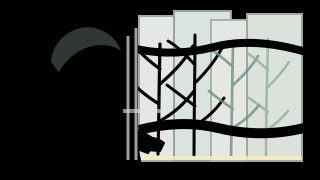
Bong-Chae Son is a South Korean painter known for layered oil landscapes painted on transparent polycarbonate sheets and often illuminated from behind.
Painting Surface
Polycarbonate is an impact-resistant engineering plastic used in glazing, guards, housings, and lenses, with some solvents capable of causing stress cracking or surface damage.
Use only coating systems known to be compatible with polycarbonate, because unsuitable solvents or rigid paint systems can promote stress cracking or reduce impact performance.
| Paint | Compatibility | Preparation | Primer or ground | Finish | Guide |
|---|---|---|---|---|---|
| Approved flexible coating | Best when the paint manufacturer explicitly approves polycarbonate | Use plastic-safe cleaning methods and remove dust, grease, and residue without aggressive solvents. | Use only the primer or adhesion system specified for polycarbonate. | Flexible systems are preferred where the sheet or part may flex or experience impact. | — |
| Acrylic paint | Formula-specific | Clean carefully and test the exact paint on scrap or a hidden area before broad application. | A polycarbonate-compatible primer may be needed depending on the system. | Choose a film that does not become excessively brittle on flexible parts. | — |
| Oil paint | Formula-specific; documented in fine art | Test the complete paint and medium system first because solvents and additives may attack polycarbonate. | Product-specific; use only grounds or adhesion systems known to be compatible with polycarbonate. | Avoid incompatible solvent-rich coatings or rigid systems that may contribute to crazing or stress cracking. | — |
| Spray paint | Only when the aerosol formula specifically suits polycarbonate | Check solvent compatibility first; unsuitable thinners can cause crazing or stress cracking. | Product-specific. | Apply the complete approved system rather than mixing unrelated primers and topcoats. | — |
| Paint markers | Formula-specific | Use only marker chemistry that is safe for polycarbonate and test before marking a visible area. | Usually none when the marker is explicitly approved for the substrate. | Clear or transparent parts can show scratches, solvent attack, and uneven opacity more readily. | — |
Sources: SABIC LEXAN sheet painting guidance, SABIC LEXAN polycarbonate properties, and Korean Art Museum Association: Bong-Chae Son, All Things Pass I.
Browse PaintZeal painter profiles featuring documented uses of polycarbonate as a painting support, from layered transparent landscapes to contemporary abstract acrylic work.
Bong-Chae Son is a South Korean painter known for layered oil landscapes painted on transparent polycarbonate sheets and often illuminated from behind.
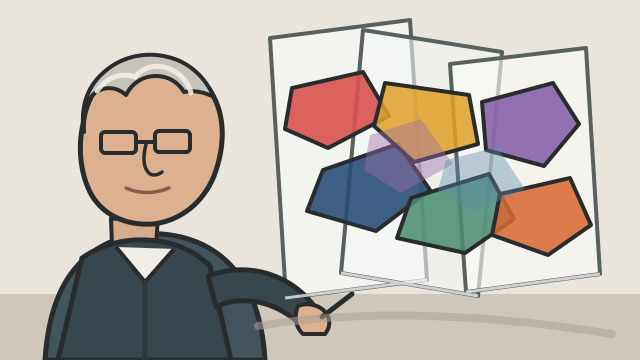
Rafael Canogar is a Spanish painter, sculptor, and printmaker known for postwar abstraction and recent acrylic paintings made on polycarbonate.
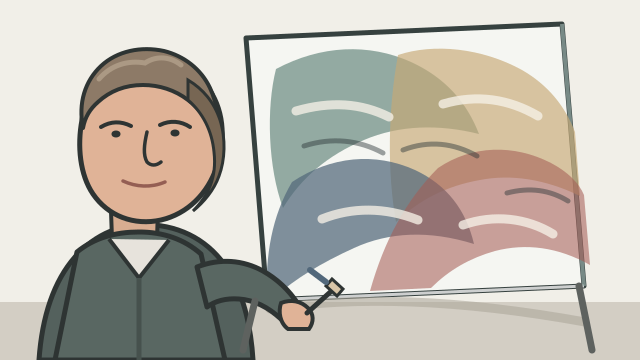
Sigrid Sandström is a Swedish painter whose work moves between landscape and abstraction, including documented acrylic paintings on polycarbonate.
No related PaintZeal articles are currently listed for polycarbonate.