Jackson Pollock
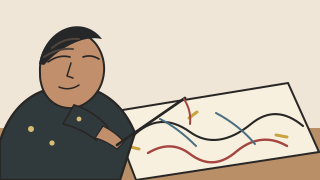
Jackson Pollock was an American Abstract Expressionist known for pouring, dripping, and flinging fluid paint across canvases laid on the floor.
Paint Type
Enamel paint is a broad coating category formulated to produce a durable finish, with modern products available in both oil-based and water-based systems.
Enamel paint performs well on prepared wood and metal, while smoother or unusual surfaces need a compatible formula, primer, and preparation.
| Surface | Compatibility | Preparation | Primer | Finish | Guide |
|---|---|---|---|---|---|
| Trim / doors / cabinets | Excellent with an interior enamel formulated for them | Clean thoroughly, repair defects, and dull glossy surfaces before painting. | Use a compatible enamel undercoater, bonding primer, or stain-blocking primer as needed. | Satin, semi-gloss, and high-gloss options are common. | — |
| Wood Veneer | Excellent for cabinets and furniture when properly primed | Clean thoroughly, repair loose veneer, and dull glossy finishes gently without sanding through the thin wood face. | Use a compatible bonding or stain-blocking primer as needed. | Allow the enamel to cure fully before heavy handling or cleaning. | — |
| Metal | Good with a metal-compatible enamel | Remove loose rust or coating; clean, degrease, and dry thoroughly. | Use the primer specified for bare, rusted, or difficult-to-adhere metal. | Product-specific | — |
| Chrome | Good with suitable adhesion preparation and primer | Clean and degrease completely, remove loose coating if present, and follow the enamel system's surface-preparation instructions. | Use a compatible high-adhesion or metal primer before the enamel unless the complete system approves direct application. | Allow the enamel and primer system to reach full cure before regular handling or cleaning. | — |
| Wood | Good | Use clean, dry wood; sand rough areas and dull glossy existing finishes. | Recommended on bare wood when required by the chosen enamel. | Product-specific | — |
| Melamine | Good with a high-adhesion primer or approved cabinet system | Remove grease, wax, dirt, and residue; lightly dull the surface only when the selected coating system directs it. | Use a bonding primer approved for glossy or difficult-to-coat composite surfaces. | Use a durable cabinet or trim enamel and allow the full stated cure before heavy handling. | — |
| Drywall | Good with an interior enamel approved for walls or trim | Patch defects, sand smooth, and remove dust before coating. | Prime new, porous, repaired, or problem areas as required. | Product-specific | — |
| Previously painted surfaces | Good when the existing coating is sound and compatible | Clean thoroughly, dull glossy finishes, and verify adhesion before recoating. | Use when needed for adhesion, stain blocking, or a change in coating system. | Product-specific | Acrylic over enamel guide |
| Tile | Good with a tile- or ceramic-specific enamel | Remove soap film, grease, and residue; prepare glossy tile exactly as directed. | Product-specific; some craft enamels need no separate primer. | Follow the stated curing or baking method and use limitations. | — |
| Glass | Good with a glass-specific enamel | Clean and degrease thoroughly before painting. | Usually no separate primer when the enamel is designed for glass; follow the product instructions. | Follow the exact curing or baking instructions; washability is product-specific. | — |
| Aluminum | Good over a suitable primer | Clean, degrease, and prepare the aluminum for adhesion. | Use an aluminum-compatible primer followed by the approved enamel. | Product-specific | — |
| Copper | Good with a compatible metal system | Remove grease, oxidation, loose patina, and polishing residue before coating. | Use a primer approved for clean nonferrous metal or other difficult-to-adhere surfaces. | Allow the coating to cure fully before heavy handling or exposure. | — |
| Brass | Good with a compatible metal system | Remove grease, tarnish, wax, and polishing residue before coating. | Use a primer approved for clean nonferrous metal or other difficult-to-adhere surfaces. | Allow the coating to cure fully before heavy handling or exposure. | — |
| Ceramic | Formula-specific | Clean and dry thoroughly; follow the product instructions for adhesion preparation. | A bonding primer may be needed on hard-to-adhere surfaces. | Product-specific | — |
| Vinyl | Formula-specific | Clean and dry thoroughly and confirm that the selected topcoat is approved for vinyl. | Use a compatible undercoater or bonding primer when specified. | Product-specific | — |
Sources: Rust-Oleum Stops Rust Protective Enamel, Behr Acrylic-Alkyd Enamel Undercoater, Rust-Oleum Cabinet Transformations, Plaid glass and enamel paints, Rust-Oleum Professional Aluminum Primer, and Sherwin-Williams Bulldog Adhesion Promoter.
Browse PaintZeal painter profiles featuring artists who used enamel paint, including examples of durable finishes and unconventional studio materials.
Jackson Pollock was an American Abstract Expressionist known for pouring, dripping, and flinging fluid paint across canvases laid on the floor.

Keith Haring was an American artist known for energetic outlined figures, public murals, subway drawings, vivid color, and an instantly recognizable visual language used to address social and political themes.

Sidney Nolan was an Australian painter whose early work made extensive use of fluid, fast-drying commercial enamel paint, especially Ripolin, to build stark figures and landscapes with unusually direct color.

David Alfaro Siqueiros was a Mexican painter and muralist who deliberately embraced modern industrial materials and methods, including lacquer, enamel, pyroxylin, and automotive coatings, as alternatives to traditional easel-painting materials.

Billy Al Bengston was an American painter associated with postwar Los Angeles who adapted automotive lacquer, enamel, aluminum, and high-gloss finishing methods to fine-art painting.

Molly Zuckerman-Hartung is an American painter known for materially experimental abstraction that can combine latex house paint, enamel, spray paint, cut and sewn drop cloth, and other everyday studio materials.
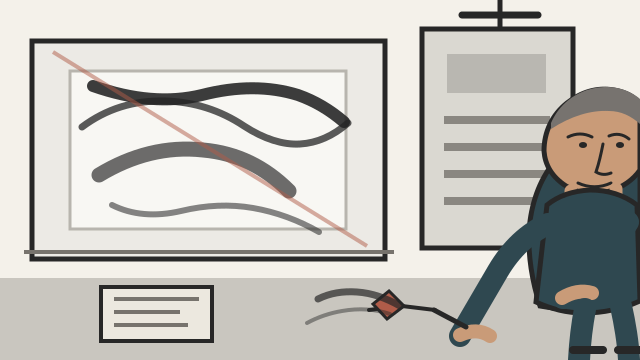
Christopher Wool is an American painter known for stark black enamel paintings, especially works on white aluminum panels made with stencils, patterned rollers, screens, and spray paint.

Thornton Dial was an American self-taught artist whose large painted assemblages combined found objects with ordinary house paint, enamel, spray paint, and other construction materials.
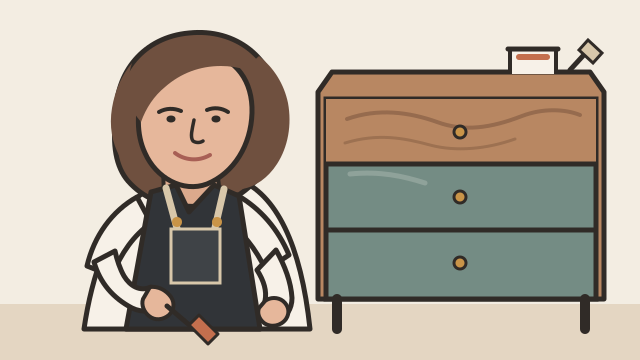
Christina Muscari is a furniture painter, refinisher, and video educator who teaches practical makeovers using paint, stain, topcoats, brushes, rollers, and sprayers. Her projects range from distressed chalk-paint finishes to smooth modern enamel-style furniture finishes.

Nick Slavik is a professional painter, restoration contractor, and trade educator known for residential and commercial painting, historic restoration, cabinet and trim finishing, rigorous preparation, and practical coating-system education.

Brooke Cambridge is the founder and owner of BLC Painting, a Massachusetts painting contractor known for high-end residential and commercial work, detailed preparation, sprayed finishes, cabinet painting, and industry education.

Frank Stella was an American artist whose abstract paintings repeatedly crossed into industrial paint chemistry, including alkyd enamel, epoxy paint, urethane enamel, fluorescent color, synthetic polymer paint, and copper antifouling paint.

Helen Frankenthaler was an American painter whose soak-stain technique helped reshape postwar abstraction by allowing thinned paint to soak directly into raw canvas.

Jim Lacey is a veteran New England painter and contractor known for historic reproduction work, traditional-looking finishes, careful interior preparation, trim painting, and practical craft instruction.

Juan Torres is the owner of 518 Painters and the creator behind DIY Home Improvement Guy, known for professional interior painting, cabinet refinishing, drywall repair, popcorn-ceiling removal, spraying, and practical home-improvement education.

Juan Vasquez is the founder of Illusions Inc., a painter, artisan, and bilingual trade educator known for professional painting, Los Pintores, and education for Hispanic painting contractors.

Raqib Shaw is an Indian painter known for densely detailed, jewel-like scenes made with industrial enamel, raised acrylic liner, and painstaking techniques that transform Old Master references into elaborate personal worlds.

Tim Leahy is a veteran painting professional associated with Kirby Perkins Construction, known for historic-restoration work, old-growth wood and millwork preparation, traditional colors, primers, and durable architectural finish systems.