
Frida Kahlo
Frida Kahlo was a Mexican painter known for psychologically intense self-portraits and paintings exploring identity, family, physical pain, relationships, and Mexican culture.

Painting Surface
Metal surfaces are hard and nonporous but vary by material, with steel prone to rust and aluminum forming an oxide layer that changes paint adhesion.
Metal can accept many durable coatings, but rust, oxidation, grease, surface smoothness, and the specific metal determine preparation and primer requirements.
| Paint | Compatibility | Preparation | Primer or ground | Finish | Guide |
|---|---|---|---|---|---|
| High-heat paint | Excellent when rated for the metal and service temperature | Remove rust, scale, loose coating, grease, oil, and other contamination; prepare the metal exactly as directed. | Product-specific: some high-heat coatings specify no primer, while automotive systems may use a dedicated high-heat primer. | Observe the stated drying and heat-curing schedule and do not exceed the product's temperature or flame-exposure limits. | — |
| Intumescent paint | Excellent for structural steel when part of an approved intumescent system | Prepare steel to the coating manufacturer's specified cleanliness and profile, removing rust, scale, oil, grease, and incompatible coating. | Use only the primer approved for the tested intumescent system. | Apply the required dry-film thickness and compatible topcoat, if specified, to achieve the designed fire-protection performance. | — |
| Reflective paint | Excellent with a reflective coating approved for metal | Remove rust or loose coating, clean, degrease, dry, and prepare glossy areas as directed. | Use a compatible metal primer when required by the coating or condition of the surface. | Apply multiple light coats and keep the finished surface where direct light can reach it. | — |
| Hammered paint | Excellent with a hammered coating approved for the metal | Remove loose rust or coating, clean, degrease, dry, and prepare glossy or oxidized areas as directed. | Some hammered products are paint-and-primer systems; otherwise use the specified metal primer. | Produces a durable dimpled finish that can visually reduce the prominence of minor imperfections. | — |
| Bituminous paint | Excellent for approved exterior metalwork and corrosion-protection uses | Remove loose rust, scale, grease, oil, dirt, and failing coating before application. | Use the rust treatment or primer required by the selected system, especially where corrosion is advanced. | Black protective film with water and weather resistance; gloss commonly dulls with weathering and ultraviolet exposure. | — |
| Spray paint | Good with a compatible product | Remove loose rust or coating; clean, degrease, and dry thoroughly. | Use when required for bare or weathered metal; some all-in-one products do not require it. | Product-specific. | — |
| Paint markers | Good with a marker approved for metal | Clean, degrease, and dry thoroughly before marking. | Product-specific; smooth or exposed metal may need a compatible preparation system. | Use a compatible clear finish when the design needs additional abrasion or weather resistance. | — |
| Chalkboard paint | Good with metal-specific preparation | Remove rust and loose coating, then clean, degrease, and dry thoroughly. | Prime bare metal when required by the chalkboard-paint system. | Allow full cure before writing, erasing, or cleaning the surface. | — |
| Dry-erase paint | Good with suitable preparation | Remove rust or loose coating, clean, degrease, dry, and smooth the surface. | Use the compatible primer system specified for the metal and dry-erase coating. | Allow the full cure before writing, erasing, or cleaning. | — |
| Metallic paint | Good with a metallic coating system approved for the metal | Remove rust or oxidation, clean, degrease, dry, and dull glossy areas when required. | Use a compatible bonding or corrosion-control primer before the decorative metallic finish when directed. | Protect with the system's compatible clear finish when exposure or handling requires it. | — |
| Textured paint | Good when the architectural texture coating explicitly approves metal | Remove rust or oxidation, clean, degrease, dry, and dull glossy surfaces when required. | Use the compatible bonding or corrosion-control primer specified for the metal and texture system. | Decorative texture can reduce the visual prominence of minor surface irregularities. | — |
| Enamel paint | Good with a metal-compatible enamel | Remove loose rust or coating; clean, degrease, and dry thoroughly. | Use the primer specified for bare, rusted, or difficult-to-adhere metal. | Product-specific. | — |
| Alkyd paint | Good with a metal-compatible alkyd system | Remove rust and loose coating; clean, degrease, dry, and dull glossy areas. | Use the specified rust-inhibiting or bonding primer when required. | Choose a product rated for the location and exposure. | — |
| Epoxy paint | Good with a metal-specific epoxy product | Remove rust and loose coating; clean, degrease, dry, and dull glossy surfaces. | Follow the product system for bare or previously coated metal. | Respect the stated recoat and full-cure times. | — |
| Chalk paint | Good for interior décor | Remove loose paint and rust; clean and dry thoroughly. | Product-specific; a suitable metal primer may improve durability or block rust. | Use the recommended wax or protective topcoat. | — |
| Glow-in-the-dark paint | Good with a metal-approved formula | Remove rust and loose coating; clean, degrease, and dry thoroughly. | Prime bare metal as directed, then use the recommended light base coat. | Product-specific. | — |
| Latex paint | Formula and primer specific | Remove rust and loose coating; clean, degrease, and dull glossy surfaces. | Use a compatible rust-inhibiting or bonding primer unless approved for direct-to-metal use. | Use a product rated for the exposure. | Latex on metal guide |
| Acrylic paint | Preparation required | Degrease and create tooth by sanding or another suitable surface-prep method. | Water-compatible industrial primer recommended. | Protective finish recommended for handling or exposure. | Acrylic on aluminum guide |
| Oil paint | Preparation required | Clean and degrease thoroughly, then prepare the surface for adhesion. | Manufacturer-approved oil painting primer. | Optional final varnish. | — |
| Elastomeric paint | Limited to adjacent metal approved by the complete exterior wall-coating system | Remove rust or oxidation, clean, degrease, dry, and prepare galvanized or glossy metal as directed. | Use the compatible metal primer specified by the elastomeric coating system. | Use only where the complete system approves the metal and exterior exposure. | — |
Sources: Rust-Oleum Appliance Epoxy, Behr Direct-To-Metal Paint, Benjamin Moore metal-painting guidance, POSCA metal guidance, Rust-Oleum Chalkboard Paint, Rust-Oleum Dry Erase Paint, Rust-Oleum High Heat Spray Paint, Rust-Oleum Reflective Finish Spray Paint, Sherwin-Williams intumescent coating guidance, Modern Masters Metallic Paint Collection, Behr Pro Acrylic Texture Coating, Behr Elastomeric Masonry, Stucco & Brick Paint, Rust-Oleum Universal Hammered Spray Paint, and Sika Black Jack 901 Black Bitumen Paint.
Browse PaintZeal painter profiles featuring artists who worked on metal, with examples of industrial coatings, painted objects, and unconventional studio materials.
Frida Kahlo was a Mexican painter known for psychologically intense self-portraits and paintings exploring identity, family, physical pain, relationships, and Mexican culture.
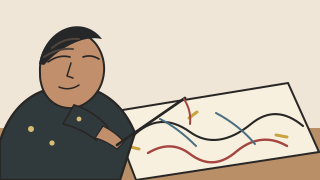
Jackson Pollock was an American Abstract Expressionist known for pouring, dripping, and flinging fluid paint across canvases laid on the floor.

Helen Frankenthaler was an American painter whose soak-stain technique helped reshape postwar abstraction by allowing thinned paint to soak directly into raw canvas.

Roy Lichtenstein was an American Pop artist known for enlarging comic-book and advertising imagery into carefully constructed paintings using bold outlines, flat color, and patterns inspired by commercial printing.

Thornton Dial was an American self-taught artist whose large painted assemblages combined found objects with ordinary house paint, enamel, spray paint, and other construction materials.

Jean Dubuffet was a French painter and sculptor who challenged conventional ideas of artistic refinement through rough surfaces, unruly figures, unconventional materials, and a long-running interest in Art Brut.

Abraham Joel Tobias was an American painter, muralist, and educator whose experiments with durable materials included pioneering use of ethyl silicate paint as a permanent medium for outdoor murals.