Molly Zuckerman-Hartung
Molly Zuckerman-Hartung is an American painter known for materially experimental abstraction that can combine latex house paint, enamel, spray paint, cut and sewn drop cloth, and other everyday studio materials.
Paint Type
Latex paint is a water-based architectural coating made with a synthetic polymer binder and commonly used on interior and exterior building surfaces.
Latex paint works well on many building surfaces, while bare, porous, glossy, or difficult materials often need a compatible primer and preparation.
| Surface | Compatibility | Preparation | Primer | Finish | Guide |
|---|---|---|---|---|---|
| Drywall | Excellent | Repair defects, remove dust, and make sure joint compound is dry. | Use drywall primer on new or patched drywall. | Choose the sheen for the room and cleaning needs. | — |
| Wallpaper | Good on sound wallpaper with suitable preparation | Make sure the wallpaper is firmly bonded, repair loose seams and edges, remove surface contamination, and let repairs dry fully. | Use a wallpaper-compatible primer or sealer when needed to isolate adhesive residue, stains, absorbent paper, or problem areas. | Choose a sheen appropriate for the room and avoid excessive wet application that may disturb marginally bonded paper. | — |
| Wood | Good with preparation | Clean, dry, sand as needed, and address loose coating or stains. | Prime bare, glossy, or stain-prone wood. | Use an interior or exterior product suited to the project. | — |
| Wood Veneer | Good with gentle preparation and suitable primer | Clean thoroughly and dull glossy finishes carefully without sanding through the thin veneer face. | Use a bonding primer on glossy veneer or a stain-blocking primer when the wood or existing finish requires it. | Choose a durable interior or exterior formula suited to the item and exposure. | — |
| Concrete | Good with a suitable formula | Allow new masonry to cure; remove dust, loose material, and surface deposits. | Use a compatible masonry primer when required. | Use a coating designed for the location and moisture conditions. | — |
| Brick | Good with a masonry-grade product | Correct moisture issues and remove dirt, loose material, and efflorescence. | Use a masonry primer when required by the paint system. | Use an interior or exterior product suited to the location. | — |
| Plywood | Good with preparation | Sand rough areas and make sure faces and edges are dry and sound. | Prime bare plywood, cut edges, and stain-prone areas. | Match the product to interior or exterior exposure. | — |
| Aluminum | Good with an approved primer and topcoat | Remove oxidation and loose coating; clean, degrease, and dull the surface. | Use a compatible aluminum primer unless the coating system approves direct application. | Choose a coating rated for the location and exposure. | — |
| Cinder Block | Good with a masonry-grade formula | Repair defects and correct moisture problems; remove dirt, loose coating, and efflorescence. | Use block filler or a suitable masonry primer unless direct application is approved. | Choose a product for the exact interior, exterior, or below-grade location. | — |
| Cement Board | Good on a board approved for painting | Confirm that the exposed face can be painted, finish joints and fasteners as directed, and make sure the surface is clean and dry. | Follow the board and paint manufacturers' requirements for sealing or priming. | Choose an interior or exterior formula suited to the location and moisture exposure. | — |
| Galvanized Steel | Good with a galvanized-metal-compatible system | Remove oil, grease, passivator, white rust, and loose coating, then create the required surface profile. | Use a water-based or other zinc-compatible primer when the selected system requires it. | Choose a topcoat rated for the location and weather exposure. | — |
| Particleboard | Good for suitable interior projects after priming | Clean and dry the board, smooth rough areas, and avoid saturating raw faces or edges. | Use a compatible sealing or bonding primer; raw edges usually need extra sealing. | Use a durable interior sheen where the surface will be cleaned or handled. | — |
| OSB | Good with preparation and a compatible primer | Keep the panel dry, remove contamination and loose fibers, and address exposed edges before painting. | Prime raw OSB with a product approved for composite wood and the intended exposure. | Use a durable architectural coating matched to the location. | — |
| Metal | Formula and primer specific | Remove rust and loose coating; clean, degrease, and dull glossy surfaces. | Use a compatible rust-inhibiting or bonding primer unless the paint is approved for direct-to-metal use. | Use a product rated for the exposure. | Latex on metal guide |
Sources: Behr Direct-To-Metal Paint, Behr primer guidance, Behr painting specifications, Sherwin-Williams Duration Exterior Acrylic Latex, James Hardie Backer Board, Sherwin-Williams galvanized-metal guidance, Tikkurila particleboard painting guidance, Benjamin Moore composite-wood acrylic latex paint, and Zinsser wallpaper guidance.
Browse PaintZeal painter profiles featuring artists who used latex house paint, including examples of architectural and unconventional applications.
Molly Zuckerman-Hartung is an American painter known for materially experimental abstraction that can combine latex house paint, enamel, spray paint, cut and sewn drop cloth, and other everyday studio materials.
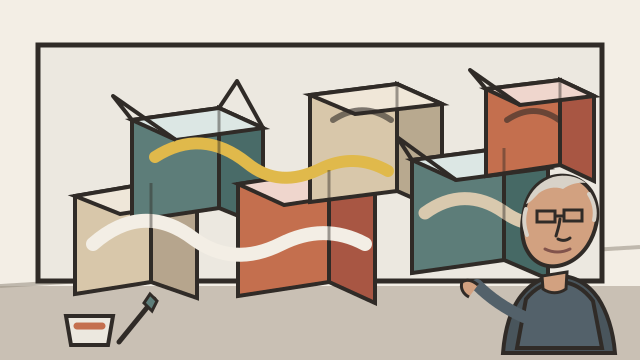
Justen Ladda is a German artist whose work crosses painting, assemblage, and installation. MoMA documents his 1985 work Tide as latex, vinyl paint, and synthetic polymer paint applied to washing-powder boxes.

Chris Berry is a professional painting contractor and educator known for practical instruction on interior and exterior house painting, masking, surface preparation, airless spraying, tools, coatings, and running a painting business.

Brian Santos is a fourth-generation painting contractor, author, and home-improvement educator known as The Wall Wizard, with decades of instruction focused on painting, wallcovering, surface preparation, decorating techniques, and the practical science behind professional results.

Brooke Cambridge is the founder and owner of BLC Painting, a Massachusetts painting contractor known for high-end residential and commercial work, detailed preparation, sprayed finishes, cabinet painting, and industry education.

Jim Lacey is a veteran New England painter and contractor known for historic reproduction work, traditional-looking finishes, careful interior preparation, trim painting, and practical craft instruction.

Joe Cornelius is a mural painter and educator known as Mural Joe, combining an early painting-contractor background with large-scale mural work and practical instruction on how painted visual effects are built.

Juan Torres is the owner of 518 Painters and the creator behind DIY Home Improvement Guy, known for professional interior painting, cabinet refinishing, drywall repair, popcorn-ceiling removal, spraying, and practical home-improvement education.

Juan Vasquez is the founder of Illusions Inc., a painter, artisan, and bilingual trade educator known for professional painting, Los Pintores, and education for Hispanic painting contractors.

Kristoffer Ardeña is a Filipino artist whose Ghost Paintings use everyday tropical materials, repurposed printed surfaces, and industrial coatings such as elastomeric paint to let cracking, weather, and material instability become part of the image.