
Vincent van Gogh
Vincent van Gogh was a Dutch Post-Impressionist painter known for expressive color, energetic brushwork, and a highly visible paint surface.
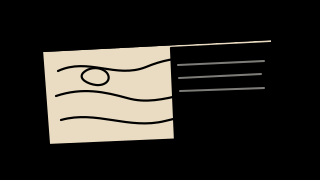
Painting Surface
Wood is a natural, porous material whose grain, absorbency, knots, resin, species, and existing finish all influence paint preparation and adhesion.
Wood accepts many paint types, but grain, porosity, resin, knots, existing finishes, and exposure conditions determine the preparation and primer needed.
| Paint | Compatibility | Preparation | Primer or ground | Finish | Guide |
|---|---|---|---|---|---|
| Chalk paint | Excellent for interior furniture and décor | Clean thoroughly; remove loose coating and smooth rough areas. | Often optional; use a suitable primer if stains or tannins bleed. | Wax or a compatible topcoat is useful for handled pieces. | — |
| Chalkboard paint | Excellent for an indoor writable surface | Clean, dry, and smooth the wood; remove loose coating and address defects before painting. | Prime bare or porous wood when directed by the selected chalkboard-paint system. | Allow the coating to cure fully, then condition the surface with chalk if the product requires it. | — |
| Magnetic paint | Good to excellent on smooth interior wood, MDF, doors, panels, and furniture when approved by the product | Clean, sand smooth, remove dust, and repair open grain or defects that would interrupt the magnetic film. | Prime bare or absorbent wood when the selected system requires it. | Magnet-receptive base that can commonly be covered with compatible wall, chalkboard, or other decorative paint. | — |
| Anti-slip paint | Excellent on properly prepared porches, decks, steps, and other approved walking surfaces | Clean thoroughly, remove dirt, oil, grease, loose coating, and mildew, then sand weathered fibers or glossy paint as needed. | Use the interior or exterior wood primer specified by the selected anti-slip floor-paint system. | Textured low-lustre finish intended to improve traction; allow the stated cure before regular traffic. | — |
| Paint markers | Excellent with many paint-marker formulas | Use clean, dry wood and remove dust, grease, or loose finish before marking. | Usually none on suitable bare or prepared wood. | Use a compatible protective finish when handling or exposure requires it. | — |
| Alkyd paint | Excellent with a suitable interior or exterior formula | Clean, dry, sand as needed, and dull glossy existing coatings. | Prime bare, repaired, or stain-prone wood as directed. | Smooth, durable finishes make alkyds common for trim, doors, and cabinets. | Recoat guide |
| Milk paint | Excellent on raw, unfinished wood | Remove dust, wax, grease, and incompatible finish; smooth rough areas as needed. | Usually unnecessary on porous raw wood; use the approved bonding additive or primer over a previous finish when needed. | Wax, oil, or another compatible topcoat can improve resistance to handling, moisture, and weather. | — |
| Oil paint | Excellent on a stable wood panel with preparation | Use clean, dry, stable wood; sealing first can reduce absorbency and moisture movement. | Artist acrylic gesso or oil ground. | Optional final varnish after the painting is ready for it. | — |
| Egg tempera | Excellent on a rigid, stable wood panel with a suitable ground | Use a well-seasoned, stable panel and prepare it to receive a smooth tempera ground. | Traditional gesso or another ground specifically suitable for egg tempera. | Apply thin layers rather than a heavy flexible paint film; final protection is optional and technique-specific. | — |
| Casein paint | Excellent on a rigid, stable, porous wood panel | Use clean, dry, rigid wood and remove dust, grease, wax, or unstable existing finish. | Prime with a casein-compatible binder or ground when needed to control absorbency and adhesion. | Let the casein film cure thoroughly before adding any optional compatible finish. | — |
| Encaustic paint | Excellent on a stable rigid wood panel | Use clean, dry, dimensionally stable wood and remove dust or surface contamination. | Raw wood can sometimes be used directly, or apply an encaustic-compatible absorbent ground. | Build and fuse the wax layers without overheating the support or paint. | — |
| Latex paint | Good with preparation | Clean, dry, sand as needed, and address loose coating or stains. | Prime bare, glossy, or stain-prone wood. | Use an interior or exterior product suited to the project. | — |
| Enamel paint | Good | Use clean, dry wood; sand rough areas and dull glossy existing finishes. | Use the primer recommended for the chosen enamel and condition of the wood. | Product-specific. | — |
| Dry-erase paint | Good when smooth and properly prepared | Clean, sand smooth, remove dust, and address knots, defects, or unstable existing finish. | Use the recommended white primer or base coat. | Keep the finished surface indoors and allow the stated cure before marker use. | — |
| Bituminous paint | Good for approved exterior timber, felt-backed work, and utility protection where appearance is secondary | Use dry, sound timber and remove dirt, loose coating, oil, and other contamination. | Primer requirements vary by porosity and product; use only the preparation specified by the bituminous system. | Black protective film that can reduce water exposure but is not a substitute for structural moisture control. | — |
| Spray paint | Good | Use clean, dry wood and smooth rough or loose areas as needed. | Useful on bare or porous wood unless the chosen product says otherwise. | Product-specific. | — |
| Acrylic paint | Good | Clean the wood and lightly sand smooth or sealed surfaces. | Recommended on bare or absorbent wood. | Optional for decorative work; useful for surfaces that will be handled or worn. | Acrylic wood table guide |
| Acrylic gouache | Good for stable decorative or art panels with preparation | Use clean, dry, stable wood and lightly smooth rough fibers or glossy existing finishes as appropriate. | Seal and apply an acrylic ground on bare or absorbent wood when a controlled painting surface is wanted. | Permanent matte finish; use a compatible protective finish for handled or exposed work if needed. | — |
| Fluorescent paint | Good with a fluorescent acrylic or specialty formula approved for wood | Clean, dry, and smooth the wood; remove dust, grease, wax, or unstable finish. | Prime bare or absorbent wood as needed; a white base often improves fluorescent intensity. | Use a compatible protective finish when handling or exposure requires it. | — |
| Reflective paint | Good with a reflective coating approved for wood | Use clean, dry wood; sand rough or glossy areas and remove dust, grease, wax, or loose finish. | Prime bare or porous wood when the selected coating system requires it. | Build the reflective effect with light coats and keep the finished surface where direct light can reach it. | — |
| Metallic paint | Good with a metallic coating approved for wood | Clean, dry, sand as needed, and remove dust, grease, wax, or loose existing finish. | Prime bare or uneven wood with the foundation system specified for the metallic paint. | Use a compatible clear topcoat when additional handling or weather protection is required. | — |
| Textured paint | Good when the architectural texture coating explicitly approves wood | Clean, dry, sand as needed, remove loose coating, and repair defects before painting. | Prime bare, patched, or stain-prone wood with the compatible primer specified by the system. | Decorative textured finish; suitability for weather and handling depends on the exact product. | — |
| Hammered paint | Good with a multi-surface hammered formula | Use clean, dry wood; sand rough or glossy areas and remove dust, grease, wax, or loose finish. | Follow the selected hammered product's instructions for bare or porous wood. | Decorative hammered texture; durability depends on the product, preparation, and exposure. | — |
| Intumescent paint | Good when the exact intumescent system is tested and approved for the wood assembly | Use sound, dry, clean wood and follow the system's requirements for existing finishes, moisture, sanding, and repairs. | Use only the primer or base coat specified for the tested wood system. | Required coating thickness and any protective topcoat must follow the approved fire-protection specification. | — |
| Watercolor paint | Good with watercolor-specific preparation | Use clean, dry, stable wood and smooth rough areas before applying the preparation. | Apply a watercolor ground or multi-surface watercolor preparation. | Protect from moisture and handling using a method compatible with the preparation and paint. | — |
| Gouache paint | Good for suitable art and decorative projects | Use clean, dry, stable wood and smooth rough areas before painting. | A compatible absorbent ground can make application more predictable. | Best for protected decorative work rather than wet or heavily handled surfaces. | — |
| Tempera paint | Good when the product approves wood | Use clean, dry wood and smooth rough areas. | Product-specific. | Best for decorative craft use rather than weather or heavy handling. | — |
| Glow-in-the-dark paint | Good with an approved brush-on or spray formula | Use clean, dry wood and smooth rough or loose areas. | A white or light-colored base coat usually improves the glow. | Product-specific; preserve the luminous layer when adding a clear finish. | — |
| Elastomeric paint | Limited to adjacent exterior wood approved by the complete wall-coating system | Clean, dry, remove loose coating, and sand glossy or unstable areas as required. | Prime uncoated wood with the compatible exterior primer specified by the elastomeric system. | Use as part of an approved exterior wall system rather than as a general-purpose wood finish. | — |
Sources: Winsor & Newton Multi-Surface Preparation, Royal Talens gouache guidance, Real Milk Paint application guidance, Liquitex Professional Acrylic Gouache, Natural Pigments tempera grounds, Natural Pigments casein guidance, R&F encaustic grounds and surfaces, Rust-Oleum Chalkboard Paint, Rust-Oleum Dry Erase Paint, Behr Anti-Slip Floor Paint, Rust-Oleum Reflective Finish Spray Paint, Sherwin-Williams intumescent coating guidance, Liquitex BASICS Fluorescent Yellow, Modern Masters Metallic Paint Collection, Behr Pro Acrylic Texture Coating, Behr Elastomeric Masonry, Stucco & Brick Paint, Rust-Oleum Universal Hammered Spray Paint, MagPaint MagnetPaint, and Sika Black Jack 901 Black Bitumen Paint.
Browse PaintZeal painter profiles featuring artists who worked on wood, with examples of panel painting, decorative surfaces, and material-specific techniques.
Vincent van Gogh was a Dutch Post-Impressionist painter known for expressive color, energetic brushwork, and a highly visible paint surface.
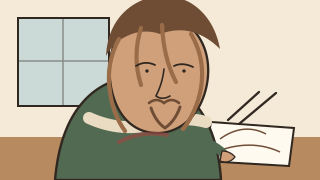
Albrecht Dürer was a German Renaissance artist whose precise watercolors, drawings, engravings, and woodcuts combined close observation with exceptional technical control.
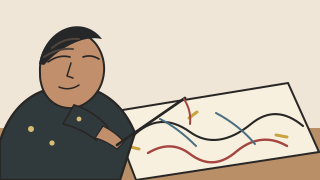
Jackson Pollock was an American Abstract Expressionist known for pouring, dripping, and flinging fluid paint across canvases laid on the floor.

Helen Frankenthaler was an American painter whose soak-stain technique helped reshape postwar abstraction by allowing thinned paint to soak directly into raw canvas.

Jasper Johns is an American artist known for turning familiar symbols such as flags, targets, numbers, and maps into tactile paintings and objects that question how images are seen and understood.

Sandro Botticelli was a Florentine Renaissance painter known for elegant line, graceful figures, religious paintings, portraits, and mythological works including The Birth of Venus and Primavera.

Koo Schadler is an American painter known for contemporary egg tempera paintings, metalpoint drawings, and teaching traditional painting methods.
Betsy Eby is an American painter and musician known for abstract encaustic paintings that connect layered wax, gestural line, color, rhythm, and musical structure.

Martin Kline is an American painter known for abstract works built from encaustic and pigmented wax on rigid wood panels, often creating pronounced layered relief.

Thornton Dial was an American self-taught artist whose large painted assemblages combined found objects with ordinary house paint, enamel, spray paint, and other construction materials.

Alicia McCarthy is an American painter associated with San Francisco's Mission School whose work often uses modest materials including house paint, spray paint, gouache, colored pencil, and wood.

Carroll Dunham is an American painter whose work has moved between abstraction and cartoon-like figuration while using materials that include synthetic polymer paint, casein, and urethane paint.

Annie Sloan is a British-based artist, decorative painter, designer, and author who invented Chalk Paint in 1990. Trained as a fine artist, she developed the paint for fast decorative work across furniture and other surfaces and continues to use it in her own painting and design practice.

Brian Santos is a fourth-generation painting contractor, author, and home-improvement educator known as The Wall Wizard, with decades of instruction focused on painting, wallcovering, surface preparation, decorating techniques, and the practical science behind professional results.

Brooke Cambridge is the founder and owner of BLC Painting, a Massachusetts painting contractor known for high-end residential and commercial work, detailed preparation, sprayed finishes, cabinet painting, and industry education.

Chris Berry is a professional painting contractor and educator known for practical instruction on interior and exterior house painting, masking, surface preparation, airless spraying, tools, coatings, and running a painting business.
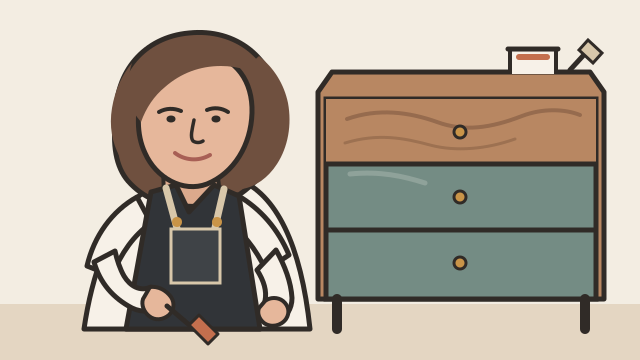
Christina Muscari is a furniture painter, refinisher, and video educator who teaches practical makeovers using paint, stain, topcoats, brushes, rollers, and sprayers. Her projects range from distressed chalk-paint finishes to smooth modern enamel-style furniture finishes.
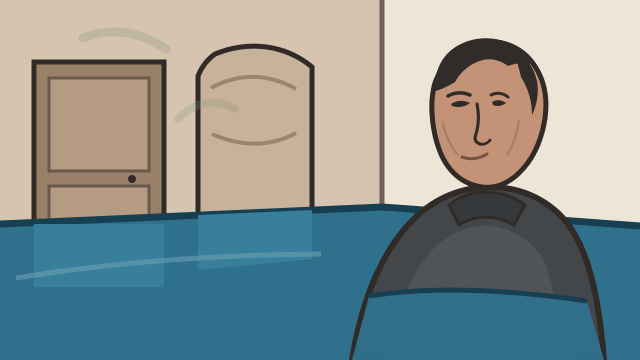
Davide D'Elia is an Italian artist whose work explores time, material change, and preservation. He is known for partially covering furniture, fabrics, pictures, and other existing objects with blue antifouling paint normally used to protect boat hulls.

Jean-Michel Basquiat was an American artist whose paintings combined intense color, handwritten text, anatomy, crowns, cultural references, music, history, and the energy of New York street culture.

Jonathon Marc Mendes is a British furniture artist and painting educator known for decorative furniture transformations, custom color mixes, hand-painted details, and practical chalk-paint techniques taught through workshops and online tutorials.

Juan Torres is the owner of 518 Painters and the creator behind DIY Home Improvement Guy, known for professional interior painting, cabinet refinishing, drywall repair, popcorn-ceiling removal, spraying, and practical home-improvement education.

Juan Vasquez is the founder of Illusions Inc., a painter, artisan, and bilingual trade educator known for professional painting, Los Pintores, and education for Hispanic painting contractors.

Katarina Hernandez is a furniture artist and painting educator known for transforming old furniture with layered color, decorative effects, gilding, and highly finished statement surfaces. Her work grew from furniture painting into a large online teaching and product business.

Lauren Hull is a furniture flipper and painting educator who teaches practical ways to repair, paint, stage, and resell used furniture. Her tutorials focus on approachable makeovers that combine surface preparation, paint, hardware changes, and refinishing decisions with the business side of furniture flipping.

Maceptaw Bogun was a self-taught artist who used phosphorescent paint to make images change after the lights went out. Smithsonian conservators documented this effect in his painting Chapel In-the Fall-Wood, where a daytime landscape reveals a glowing moon and night sky in darkness.

Martand Khosla is an Indian artist and architect whose work examines construction, demolition, memory, and urban change through architectural materials and processes, including laser etching into intumescent paint.

Nick Slavik is a professional painter, restoration contractor, and trade educator known for residential and commercial painting, historic restoration, cabinet and trim finishing, rigorous preparation, and practical coating-system education.

Raqib Shaw is an Indian painter known for densely detailed, jewel-like scenes made with industrial enamel, raised acrylic liner, and painstaking techniques that transform Old Master references into elaborate personal worlds.

Tim Leahy is a veteran painting professional associated with Kirby Perkins Construction, known for historic-restoration work, old-growth wood and millwork preparation, traditional colors, primers, and durable architectural finish systems.