
Paint Type
Casein Paint
Casein paint is a water-based paint that uses milk protein as its binder, dries quickly to a matte finish, and becomes more water-resistant as it cures.
Casein paint surface compatibility
Casein paint suits rigid, porous supports because its brittle cured film can crack when flexible materials like stretched canvas shift beneath it.
| Surface | Compatibility | Preparation | Primer or ground | Finish | Guide |
|---|---|---|---|---|---|
| Painting Board | Excellent when rigid, porous, and properly prepared | Use a clean, dry, dimensionally stable board and smooth the surface as needed. | Use a casein-compatible ground or casein gesso when a prepared painting surface is wanted. | Allow the paint to cure fully before optional polishing or another compatible protective treatment. | — |
| Wood Panel | Excellent on stable porous wood with suitable preparation | Use clean, dry, rigid wood and remove dust, grease, wax, or unstable existing finish. | Prime with a casein-compatible binder or ground when needed to control absorbency and adhesion. | Let the casein film cure thoroughly before adding any optional compatible finish. | — |
Sources: Jack Richeson Casein Emulsion, Natural Pigments casein paint guidance, and Natural Earth Paint casein paint recipe.
Painters who used casein paint
Explore PaintZeal painter profiles documenting casein or casein tempera, with works showing matte color, rigid supports, and layered painting techniques.
-

Jacob Lawrence
Jacob Lawrence used casein tempera across the sixty panels of The Migration Series, cataloged by MoMA as casein tempera on hardboard. Its quick-setting matte finish suited sharply bounded color and the coordinated panels that carry the series’ account of migration as one sustained narrative.
-

Paul Klee
The National Gallery of Art records casein in Paul Klee’s Passing By Red Pillars (1928), with watercolor, stamped gouache, and colored gesso on paper. The milk-protein binder is one component of this mixed-media work, not a material to assume across all Klee’s color studies.
-

James Gurney
James Gurney uses casein for outdoor studies painted from life, favoring its quick-drying matte surface for compact field work. He records color and value on location while light or weather can change, then uses watercolor for more transparent notes and other effects.
-

Bernard Perlin
The Smithsonian records Bernard Perlin’s The Farewell (1952) as casein on fiberboard. The catalog entry documents the medium on a rigid manufactured support and distinguishes this figurative painting from Perlin’s oil works on canvas in his broader practice.
-

Mark Tobey
In Edge of August (1953), Mark Tobey covered a large board with casein paint. Fine, closely layered strokes create an all-over field without one dominant center; MoMA identifies casein specifically, rather than tempera or oil, as the medium for this painting.
-
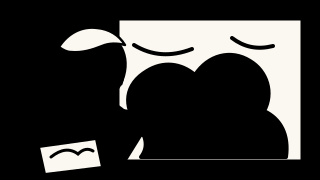
Carroll Dunham
MoMA lists casein in an untitled 1985 work on wood and in Age of Rectangles. These records show the medium across different supports and alongside synthetic polymer and casein emulsion, identifying casein as one distinct paint in Dunham’s varied practice.
-

Joan Miró
The Frances Lehman Loeb Art Center records oil and casein on raw canvas in Joan Miró’s Painting (Birds, Personages, and Blue Star) (1950). Miró left the unprimed support visible around the marks, documenting casein as a distinct binder within an experimental composition.
-

Andy Warhol
Buffalo AKG records casein in Andy Warhol’s 100 Cans, while the Met identifies it in Dr. Scholl’s Corns. These entries document the paint across different works and combinations, separate from acrylic and metallic enamel in other Warhol paintings.
-

Konrad Lueg
MoMA identifies Konrad Lueg’s Untitled (Uncle) (1965) as casein tempera on canvas. The record supports a casein-based tempera without specifying an egg binder; Lueg’s restrained image turns a familiar figure into a cool, matter-of-fact painting.
-

Koo Schadler
Koo Schadler uses casein, a milk-protein binder, when a quick-drying matte surface suits the painting. Her process descriptions distinguish casein from egg tempera even though both are water-based, showing how she chooses between traditional media for different handling and opaque color.
Sources: MoMA: Jacob Lawrence casein-tempera panel, National Gallery of Art: Paul Klee’s Passing By Red Pillars, James Gurney: Casein Painting in the Wild, Smithsonian: Bernard Perlin’s The Farewell, MoMA: Mark Tobey’s Edge of August, MoMA: Carroll Dunham’s Age of Rectangles, Frances Lehman Loeb Art Center: Miró’s oil and casein painting, Buffalo AKG: Warhol’s 100 Cans, MoMA: Konrad Lueg’s Untitled (Uncle), and Koo Schadler: painting techniques.
Casein paint articles
PaintZeal has no dedicated casein paint articles yet, so this guide covers its milk-protein binder, matte finish, rigid supports, and compatibility limits.