Polyurethane Paint
Polyurethane paint is a resin-based coating that forms a tough and durable finish. Formulas range from clear wood finishes to pigmented industrial coatings.
Painter
Carroll Dunham is an American painter whose work has moved between abstraction and cartoon-like figuration while using materials that include synthetic polymer paint, casein, acrylic, oil, emulsion, vinyl, and urethane paint.
Review key details about Carroll Dunham's career, abstraction and figuration, varied paint media, supports, and cartoon-like imagery shaping his work.
| Born | November 5, 1949 · New Haven, Connecticut, U.S. |
|---|---|
| Died | — |
| Nationality | American |
| Movements | — |
| Paint types | Urethane paint · synthetic polymer paint · Casein paint · Acrylic paint · Oil paint · Emulsion paint · Vinyl paint |
| Painting surfaces | Linen · Canvas · Wood · Wood veneer · Paper |
| Painting methods | Intuitive, trial-and-error painting guided by forceful drawing and shifts between abstraction and figuration |
| Common subjects | Abstract forms, cartoon-like figures, bodies, landscapes, trees, and recurring symbolic motifs |
| Known for | Combining forceful drawing and color with an intuitive painting process that shifts between abstraction and figuration |
| Notable works | Ship · Pine Gap · Age of Rectangles |
Sources: Museum of Modern Art, MoMA: Ship, MoMA: Untitled (1985), MoMA: Untitled (2003), MoMA: Age of Rectangles, Whitney: Pine Gap, and Carroll Dunham: Paintings 2000–2009.
See the paint types documented in Dunham's work, with links to PaintZeal references explaining each medium's properties, uses, and working characteristics.
Polyurethane paint is a resin-based coating that forms a tough and durable finish. Formulas range from clear wood finishes to pigmented industrial coatings.

Casein paint is a water-based paint that uses casein, a milk protein, as its binder. It dries quickly to a matte film and becomes increasingly water-resistant as it cures.
Acrylic paint is a fast-drying, water-based paint made with pigment and an acrylic polymer binder. It is widely used in art and decorative projects because it is versatile and durable.
Oil paint is a slow-drying paint made with pigment and a drying oil binder. It is widely used for artwork because it blends smoothly and develops rich color.
Emulsion paint is a common UK term for water-based paint used on interior walls and ceilings. Most modern formulas use an acrylic or vinyl binder and dry to a durable finish.
Vinyl paint is a flexible specialty coating used to recolor or restore vinyl and related interior or trim surfaces. Some products contain vinyl resin, while other vinyl-and-fabric coatings use different flexible binders and adhesion systems, so the selected product should match both the material and intended exposure.
See the surface types documented in Dunham's work, with links to PaintZeal references explaining how each support behaves and is prepared for painting.

Linen is a strong woven fabric made from flax fibers and commonly used as a support for fine-art painting. Artist linen may be sold raw or prepared with a ground layer.
Canvas is a woven fabric support used for paintings, banners, bags, décor, and other projects. Artist canvas may be raw, sized, acrylic-primed, oil-primed, or factory-coated, and each condition changes how paint absorbs and bonds.
Wood is a natural, porous material with grain patterns and absorbency that vary by species and cut. Its surface may also contain knots, resin, or an existing finish.

Wood veneer is a thin layer of real wood bonded to a stable core such as plywood, MDF, particleboard, or another panel material. Its thin face and factory finish can make sanding and coating more delicate than solid wood.
Paper is an absorbent sheet material made primarily from cellulose fibers. Its weight, sizing, surface texture, and wet strength determine how much paint it can accept before buckling, pilling, bleeding, or warping.
Explore painters similar to Carroll Dunham through unconventional paint materials, abstraction, expressive mark-making, and shifts between drawing and figuration.
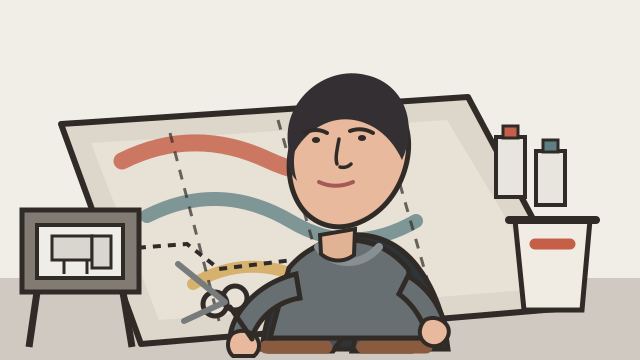
Molly Zuckerman-Hartung is an American painter known for abstract works combining latex house paint, enamel, spray paint, cut and sewn drop cloth, and other studio materials.
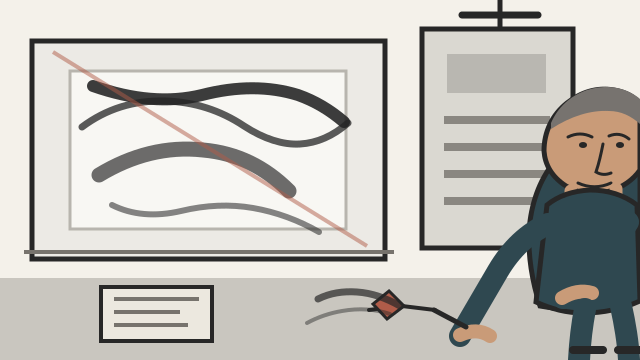
Christopher Wool is an American painter known for black enamel paintings, especially works on white aluminum panels made with stencils, patterned rollers, screens, and spray paint.