Christopher Wool
Christopher Wool is an American painter known for black enamel works on aluminum, made with stencils, patterned rollers, screens, and spray paint.

Painter
Molly Zuckerman-Hartung is an American painter whose abstractions combine commercial paints with cut fabric, sewn supports, paper, and studio materials.
Molly Zuckerman-Hartung cuts, sews, and layers fabric, paper, and commercial paint, exploring boundaries between painting, objects, and performance.
| Full name | Molly Zuckerman-Hartung |
|---|---|
| Born | 1975 · Los Gatos, California, U.S. |
| Died | — |
| Nationality | American |
| Movements | Contemporary abstraction |
| Paint types | Latex paint · Enamel paint · Spray paint · Acrylic paint |
| Other media | — |
| Other materials | — |
| Painting surfaces | Drop cloth · Canvas · Fabric · Linen · Cotton · Silk · Leather · Paper |
| Painting methods | Cutting, sewing, distressing, dyeing, spraying, collage assembly, and gestural mark-making |
| Common subjects | Gestural abstract forms, text, painting history, and fragmented figurative references |
| Notable works | Bedweather · Rolling in the deep · Melanie Klein's Part Object |
Sources: Whitney Museum of American Art, Whitney: painting and sewing, Corbett vs. Dempsey: Molly Zuckerman-Hartung, Corbett vs. Dempsey: Jennifer Jason Leigh, Corbett vs. Dempsey: Flim-Flam, San Diego State University: Edgeless, and Lefranc Bourgeois: Flashe Extra Fine Vinyl Paint.
Molly Zuckerman-Hartung used Latex paint, Enamel paint, Spray paint; examples below link these media to named works and explain their role in image-making.
The Whitney lists latex house paint in Notley (2013), applied to drop cloth that Zuckerman-Hartung cut, sewed, and joined into a hinged support. The commercial wall coating becomes one part of a constructed painting, rather than a standardized layer on a flat canvas.

The Whitney’s material record for Notley also lists enamel alongside latex house paint and spray paint. These distinct coatings share the sewn drop-cloth surface, where folds and joins interrupt a conventional picture plane. The work documents enamel as one component of a mixed industrial palette.

In Notley, the Whitney lists spray paint on sewn drop cloth. The artist has described spray-painted dots and later incised marks, working across the assembled fabric rather than a flat support. The aerosol medium is distinct from the latex and enamel also listed for this work.

The Whitney records acrylic in The Madame of the Painting (2013), together with latex, fabric and paper collage, and black ink on canvas. Acrylic is a separate paint within this layered work, while the fabric and paper collage remain attached materials. This record documents a mixed-media canvas rather than a single-medium painting.
Sources: Whitney Museum of American Art: Notley and The Madame of the Painting, Whitney Museum of American Art: Notley materials and process.; Whitney: Zuckerman-Hartung on painting and sewing
Molly Zuckerman-Hartung's works use drop cloth, canvas, fabric; examples below identify how each surface carries or forms part of the image in cited works.

Zuckerman-Hartung uses drop cloth as a working support in paintings and sewn constructions. In the Whitney’s Notley (2013), she cuts and sews the cloth into a hinged surface before applying latex house paint, enamel, and spray paint; the construction changes how the work hangs and folds.

The Whitney records The Madame of the Painting as a canvas work combining paint, fabric and paper collage, and ink. The support carries layered additions rather than a single painted image, distinguishing it from the sewn drop cloth in Notley.
Zuckerman-Hartung’s works use fabric and sewn cloth, where stitching, folds, and painted marks shape the support. In Notley, she joins drop cloth into a hinged construction, making the textile’s movement and seams part of the painting. The seams and folds remain part of the image.

Linen appears in selected works as a textile support, retaining its woven structure beneath applied material. Zuckerman-Hartung also sews and assembles fabric into constructed paintings, so the linen surface adds a distinct weave and flexible ground to that material practice in documented examples.

Cotton appears in her sewn and painted constructions, where the textile can be cut, folded, and joined before paint is added. The cloth is treated as a flexible component of the work’s structure, not simply as a conventional stretched canvas.

Silk is used in selected fabric-based works, introducing a finer, more flexible textile into Zuckerman-Hartung’s material practice. As with her other sewn supports, the fabric’s texture and drape remain visible in the finished construction. Its fine weave gives the construction a distinct drape.

Zuckerman-Hartung’s leather works form a heavier surface than the drop cloth and linen used elsewhere. The material bends less readily and its grain remains visible within assembled paintings, adding a distinct texture to her experiments with sewn and constructed supports.

Zuckerman-Hartung’s works on paper include drawings and painted studies. The sheet format is distinct from her sewn fabric constructions and collaged canvases, allowing her to work with paint and line in a portable, flat support. The sheet format keeps these works separate from sewn constructions.
Sources: Whitney Museum of American Art, Whitney: painting and sewing, Corbett vs. Dempsey: Molly Zuckerman-Hartung, Corbett vs. Dempsey: Jennifer Jason Leigh, Corbett vs. Dempsey: Flim-Flam.
Zuckerman-Hartung's material experiments connect her to painters who combine commercial coatings, cut fabric, and sewn supports in layered abstract work.
Christopher Wool is an American painter known for black enamel works on aluminum, made with stencils, patterned rollers, screens, and spray paint.

Sarah Crowner is an artist known for sewn paintings in linen and cotton, works on paper, and glazed-tile projects that extend abstraction into space.

Alicia McCarthy is an American painter associated with San Francisco’s Mission School, using house paint, spray paint, and gouache on found supports.
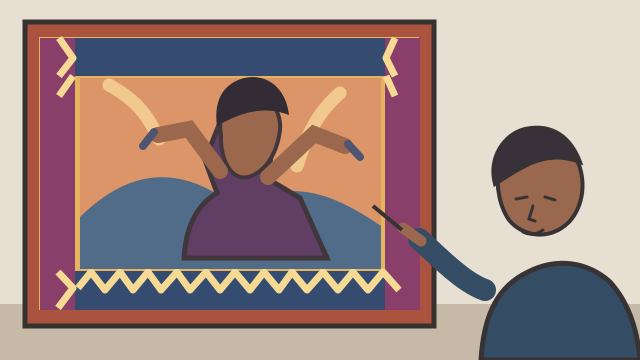
Emma Amos was an American painter whose oil and acrylic figures on canvas often incorporate handwoven textiles and African fabric borders in many works.
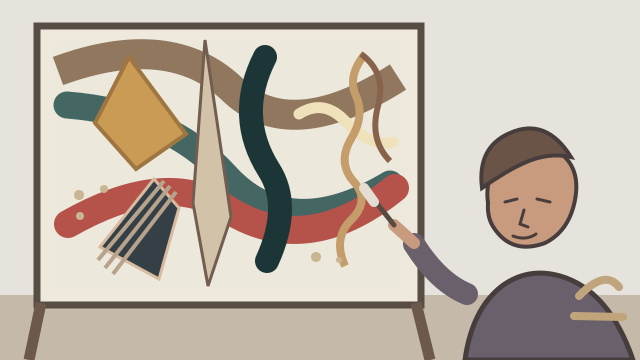
Rosy Keyser is an American painter known for gestural abstractions combining oil, enamel, house paint, spray paint, and found materials on canvas or steel.
Amy Sillman is an American painter known for layered oil and acrylic paintings that move between abstraction and figuration through drawing and revision.

Sarah Cain is an American painter known for colorful acrylic and mixed-media abstractions on canvas and across architectural spaces and installations.
Dona Nelson is an American painter who builds two-sided acrylic canvases with poured color, stitched string, dyed fabric, and paint seepage.