
Painting Surface
Linen
Linen is a strong flax fabric for fine-art painting, sold raw or prepared with a ground that affects absorbency and compatibility for each medium.
Paint compatibility with linen
Linen supports acrylic and oil paint, but raw fabric needs a suitable ground to control absorbency, protect fibers, and prepare it for the chosen medium.
| Paint | Compatibility | Preparation | Primer or ground | Finish | Guide |
|---|---|---|---|---|---|
| Acrylic paint | Excellent on properly prepared artist linen | Use acrylic-ready pre-primed linen or prepare raw linen before painting. | Acrylic gesso or another acrylic-compatible ground. | Optional varnish after the painting is fully dry. | — |
| Oil paint | Excellent | Use oil-ready pre-primed linen or size raw linen before applying a suitable ground. | Artist acrylic gesso or oil ground. | Optional final varnish. | — |
Sources: Liquitex surface preparation, Gamblin sizes and grounds, and Winsor & Newton Oil Painting Primer.
Painters who used linen
These profiles document linen in sewn textile works and oil paintings, showing both its role as a constructed surface and as a prepared painting ground.
-

Sarah Crowner
For Curtains (Vidas perfectas) (2011), Crowner painted large linen panels, sewed the pieces together, and assembled them into a curtain for the performance. The fabric serves as both painted surface and stage setting, with its seams and hanging format built into the installation.
-

Helen Frankenthaler
The Frankenthaler Foundation records Italian Beach (1960) as oil on sized and primed linen. The prepared flax textile provides a grounded surface for the oil paint, separating it from the linen fibers and documenting a specific use of linen in her work.
-
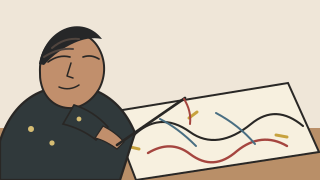
Jackson Pollock
MoMA records Pollock’s Stenographic Figure (c. 1942) as oil on linen. In this early painting, recognizable forms and gestural marks share the woven support, documenting a linen work whose recorded medium is distinct from the canvas and board associated with other paintings.
Sources: Museum of Fine Arts, Boston: Sarah Crowner, Vidas Perfectas, MASS MoCA: Sarah Crowner, Beetle in the Leaves, Helen Frankenthaler Foundation: Italian Beach, Gagosian: Helen Frankenthaler, The Moment and the Distance, MoMA: Jackson Pollock, Stenographic Figure.
Linen paint articles
No linen-paint guides are available yet, but future articles can cover fabric weight, sizing, grounds, and preparing linen for oil or acrylic.