
Oil Paint
Oil paint is a slow-drying paint made with pigment and a drying oil binder. It is widely used for artwork because it blends smoothly and develops rich color.

Painter
Helen Frankenthaler was an American painter whose soak-stain technique helped reshape postwar abstraction by allowing thinned paint to soak directly into raw canvas.
Review key details about Helen Frankenthaler's life, career, postwar abstraction, major periods, and the soak-stain methods and material experiments that shaped her work.
| Born | December 12, 1928 · New York City, New York, U.S. |
|---|---|
| Died | December 27, 2011 · Darien, Connecticut, U.S. |
| Nationality | American |
| Movements | Abstract Expressionism and Color Field Painting |
| Paint types | Oil paint · Enamel paint · Acrylic paint · Watercolor |
| Painting surfaces | Canvas · Linen · Paper · Wood · Metal · Painting board · Cardboard |
| Painting methods | Pouring and staining thinned paint into unprimed canvas, later combined with more defined acrylic shapes |
| Common subjects | Landscape, atmosphere, color, space, movement, and organic abstraction |
| Notable works | Mountains and Sea, Mauve District, Commune, and Chairman of the Board |
Sources: The Museum of Modern Art, MoMA: Great Meadows; Untitled (Landscape), Helen Frankenthaler Foundation: Provincetown Series, Helen Frankenthaler Foundation: Break-Through, MoMA: Helen Frankenthaler: A Grand Sweep, The Met: Red and Brown Scene, Norton Simon Museum: Untitled (1955), and The Met: Helen Frankenthaler in her studio.
See the paint types documented in Frankenthaler's work, with links to PaintZeal references explaining each medium's properties, uses, and working characteristics.
Oil paint is a slow-drying paint made with pigment and a drying oil binder. It is widely used for artwork because it blends smoothly and develops rich color.

Enamel paint is a broad category of coatings designed to form a hard and durable finish. Modern enamels may use either oil-based or water-based binders.

Acrylic paint is a fast-drying, water-based paint made with pigment and an acrylic polymer binder. It is widely used in art and decorative projects because it is versatile and durable.

Watercolor paint is a water-based art medium made with pigment and a water-soluble binder. It is known for transparent color that settles into absorbent paper.
See the surface types documented in Frankenthaler's work, with links to PaintZeal references explaining how each support behaves and is prepared for painting.
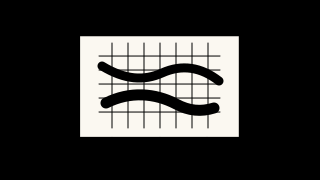
Canvas is a woven fabric support used for paintings, banners, bags, décor, and other projects. Artist canvas may be raw, sized, acrylic-primed, oil-primed, or factory-coated, and each condition changes how paint absorbs and bonds.

Linen is a strong woven fabric made from flax fibers and commonly used as a support for fine-art painting. Artist linen may be sold raw or prepared with a ground layer.

Paper is an absorbent sheet material made primarily from cellulose fibers. Its weight, sizing, surface texture, and wet strength determine how much paint it can accept before buckling, pilling, bleeding, or warping.
Wood is a natural, porous material with grain patterns and absorbency that vary by species and cut. Its surface may also contain knots, resin, or an existing finish.

Metal is a hard, nonporous material used in furniture, fixtures, equipment, vehicles, and architectural components. Its smooth surface gives ordinary paint little mechanical grip, and bare iron or steel can also corrode beneath a weak coating system.

Painting board is a rigid artist support made from hardboard, wood, or another stable panel material. It may be sold raw or prepared with a medium-specific ground layer.

Cardboard is a paper-based sheet material made from compressed fibers, often with corrugated fluting between liner sheets. It is lightweight and absorbent, so heavy wet coats can soften or warp it.
Explore painters similar to Helen Frankenthaler through postwar abstraction, poured or stained color, experimental paint handling, and attention to surface.
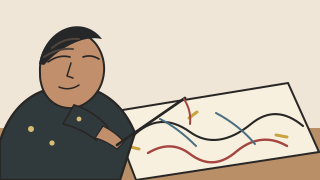
Jackson Pollock was an American Abstract Expressionist known for pouring, dripping, and flinging fluid paint across canvases laid on the floor.

Mary Corse is an American painter known for white acrylic paintings incorporating reflective glass microspheres that change in appearance with light and the viewer's position.

Morris Louis was an American Color Field painter known for pouring diluted Magna acrylic-resin paint onto raw canvas to produce luminous Veils, Unfurleds, and Stripes.