
Acrylic Paint
Acrylic paint is a fast-drying, water-based paint made with pigment and an acrylic polymer binder. It is widely used in art and decorative projects because it is versatile and durable.

Painter
Mary Corse is an American painter known for white acrylic paintings incorporating reflective glass microspheres that change in appearance with light and the viewer's position.
Review key details about Mary Corse's career, white acrylic paintings, reflective glass microspheres, light effects, and the viewing conditions that shape her work.
| Born | 1945 · Berkeley, California, U.S. |
|---|---|
| Died | — |
| Nationality | American |
| Movements | Light and Space |
| Paint types | Acrylic paint with reflective glass microspheres |
| Related paint type | Reflective paint |
| Painting surfaces | Canvas · Painting board · Wood · Plywood · Plexiglass · Aluminum |
| Painting methods | Alternating-direction brushwork in acrylic mixed with glass microspheres to create shifting reflective fields |
| Common subjects | Light, perception, reflective white fields, geometric structure, and viewer movement |
| Known for | White Light paintings whose reflective surfaces shimmer and shift as illumination and viewing angle change |
| Notable works | Untitled (First White Light Series) · Untitled (Two Triangular Columns) |
Sources: Museum of Modern Art, MoMA: Untitled (First White Light Series), Whitney Museum: Untitled (Two Triangular Columns), Whitney Museum: Mary Corse: A Survey in Light, and Pace Gallery: Mary Corse.
See the paint types documented in Corse's work, with links to PaintZeal references explaining each medium's properties, uses, and working characteristics.
Acrylic paint is a fast-drying, water-based paint made with pigment and an acrylic polymer binder. It is widely used in art and decorative projects because it is versatile and durable.

Reflective paint is a specialty coating formulated to return direct light toward the viewer so painted surfaces become more visible at night. Unlike glow-in-the-dark paint, it does not store light and continue glowing after the light source is removed.
See the surface types documented in Corse's work, with links to PaintZeal references explaining how each support behaves and is prepared for painting.

Canvas is a woven fabric used as a flexible support for painting. Artist canvas is commonly made from cotton or linen and sold either raw or coated with a ground layer.

Painting board is a rigid artist support made from hardboard, wood, or another stable panel material. It may be sold raw or prepared with a medium-specific ground layer.

Wood is a natural, porous material with grain patterns and absorbency that vary by species and cut. Its surface may also contain knots, resin, or an existing finish.

Plywood is an engineered wood panel made from thin wood veneers bonded in alternating grain directions. Its face veneer, edges, voids, and adhesive system affect how paint absorbs and bonds.

Plexiglass is a rigid acrylic sheet with a smooth, nonporous surface and sensitivity to incompatible solvents that can craze or damage the material.

Aluminum is a lightweight, nonferrous metal that quickly forms a thin oxide layer when exposed to air. This layer protects the metal but changes how coatings bond.
Explore painters similar to Mary Corse through reflective surfaces, optical effects, changing light, and abstract painting that shifts with the viewer.

Norman Zammitt was a Canadian-born American Light and Space painter known for acrylic color-band canvases mixed to mathematical progressions of light.

Roy Thurston is an American artist known for pigmented acrylic polyurethane and silicone coatings on milled aluminum panels that shift with reflected light.

Robert Irwin was an American artist whose oil paintings and sprayed acrylic discs led to pioneering work with light and perception in California.

Lita Albuquerque is an American artist known for ultramarine pigment, gold-leaf panels, and landscape installations exploring light and the cosmos.
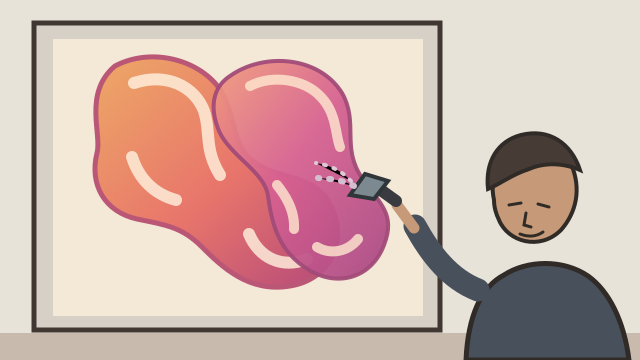
Craig Kauffman was an American artist known for spray-applied acrylic lacquer on vacuum-formed Plexiglass wall reliefs associated with Finish Fetish and Light and Space.

Ronald Davis was an American painter known for colored polyester-resin and fiberglass abstractions, shaped panels, optical geometry, and acrylic painting.