
Mary Corse
Mary Corse is an American painter whose white acrylic paintings incorporate reflective glass microspheres, shifting with light and the viewer's position.

Painter
Lita Albuquerque is an American artist known for ultramarine pigment, gold-leaf panels, and landscape installations exploring light and the cosmos.
Albuquerque's work spans paintings with powdered pigment, reflective gold-leaf panels, and environmental projects connecting color, light, and place.
| Born | 1946 · Santa Monica, California, U.S. |
|---|---|
| Died | — |
| Nationality | American |
| Movements | Light and Space · Environmental art |
| Paint types | Oil paint (documented in earlier works) |
| Other materials | Loose colored pigment, ultramarine blue pigment, gold leaf, and resin; loose pigment and metal leaf are not paint types |
| Painting surfaces | Painting board (pigment on panel) · Paper (early oil-and-pigment drawings) · earth and sand for site-specific pigment works |
| Painting methods | Applying powdered pigment to panels, combining pigment with gold-leaf-covered resin forms, and placing pigment directly into outdoor landscapes |
| Common subjects | Stars, astronomy, light, elemental color, celestial alignment, and the relationship between people and landscape |
| Known for | Ultramarine pigment interventions in landscapes and luminous pigment-and-gold works exploring perception |
| Notable works | Malibu Line · Stellar Axis: Antarctica · Auric Field of Gold (Au 79) |
Sources: Getty Research Institute: artist record, Getty: materials and environmental practice, Artist website: Embodiment series, UCLA: Auric Field of Gold, Christie's: Four Part Drawing (oil and pigment on paper), Artist website: Sol Star.
LACMA identifies oil and powdered pigment in Albuquerque's early Je t'aime (1978); later loose-pigment works use materials through separate processes.

In Je t’aime (1978), LACMA records oil alongside powdered pigment on Kimdura, a synthetic sheet material. Albuquerque’s later pigment interventions and gold-leaf forms belong to separate material practices, not additional paint binders. This specific work documents oil as part of an experimental mixed-media surface.
Sources: LACMA: Je t’aime (1978), oil and powdered pigment on Kimdura; U.S. Department of State: Lita Albuquerque; Laguna Art Museum: Emergence.
Lita Albuquerque's work spans painting board, paper, and earth and sand; examples below clarify how she uses each surface or material across projects.

Albuquerque uses pigment on rigid panels, including painted works on board. These panels carry composed fields of color and mark, distinct from her pigment drawings on paper and from site-specific works using natural materials; collection records document the board support for specific pieces.

Albuquerque’s early drawings and mixed-media works include paper supports. LACMA’s Je t’aime records oil and powdered pigment on Kimdura, a synthetic sheet, while other works on paper document a separate flexible format for her drawn and painted experiments. The synthetic sheet is separately identified in the record.
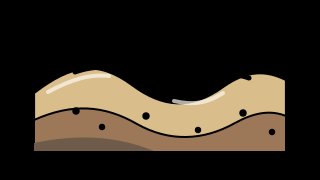
Albuquerque’s site-specific works use earth and sand as part of the painted field, bringing pigment into direct relation with the landscape. In projects such as Earthworks and Stellar Axis, the ground becomes the working support for arrangements of color and light, unlike the portable paper and panel works in museum collections.
Sources: Getty Research Institute: artist record, Getty: materials and environmental practice, Artist website: Embodiment series, UCLA: Auric Field of Gold, Christie's: Four Part Drawing (oil and pigment on paper).
Explore Southern California artists interested in reflected light, perceptual shifts, unusual materials, and painting that extends into physical space.
Mary Corse is an American painter whose white acrylic paintings incorporate reflective glass microspheres, shifting with light and the viewer's position.

Robert Irwin was an American artist whose oil paintings and sprayed acrylic discs led to pioneering work with light and perception in California.

Billy Al Bengston was a Los Angeles painter who adapted automotive lacquer, enamel, metallic paint, and aluminum to fine art and high-gloss surfaces.