
Vincent van Gogh
Vincent van Gogh was a Dutch Post-Impressionist painter known for expressive color, energetic brushwork, and a highly visible paint surface.

Painting Surface
Paper is an absorbent sheet material made from pressed fibers, with weight, sizing, and surface texture controlling moisture tolerance and paint behavior.
Paper works naturally with watercolor, gouache, markers, and many acrylics, while heavier or better-prepared sheets are needed for wetter or oil-based media.
| Paint | Compatibility | Preparation | Primer or ground | Finish | Guide |
|---|---|---|---|---|---|
| Watercolor paint | Excellent on watercolor paper | Choose paper with enough weight and sizing for the amount of water; stretch lighter sheets when needed to reduce buckling. | Usually not required on watercolor paper. | Normally displayed behind glazing rather than varnished. | — |
| Gouache paint | Excellent on suitable art paper | Use sturdy watercolor or mixed-media paper that can handle the planned amount of water. | Usually not required. | Normally displayed behind glazing rather than varnished. | — |
| Acrylic gouache | Excellent on suitably heavy art paper | Use clean, stable paper heavy enough for the amount of moisture and paint being applied. | Usually none; acrylic ground is optional when a less absorbent or more uniform surface is wanted. | Permanent, flat matte acrylic film after drying; protect finished artwork from abrasion as appropriate. | — |
| Fluorescent paint | Excellent with fluorescent artist acrylics on suitable art paper | Use clean, stable paper heavy enough for the planned paint application. | Usually none; a white acrylic ground can increase brightness and control absorbency. | Protect from abrasion and prolonged intense light when color preservation matters. | — |
| Iridescent paint | Excellent on suitable art paper | Use clean, stable paper heavy enough for the planned acrylic application. | Usually none; acrylic ground can control absorbency or establish a chosen base color. | Protect from abrasion as appropriate; glossy media can increase visible luster. | — |
| Paint markers | Excellent with many water-based paint markers | Use clean, dry paper that is heavy enough for the amount of paint being applied. | Usually none. | Usually none; a compatible spray varnish can be used when extra protection is wanted. | — |
| Tempera paint | Excellent for school art and crafts | Use paper sturdy enough for the amount of paint and water. | Usually not required. | Decorative; protect finished work from water and abrasion. | — |
| Acrylic paint | Good | Use sufficiently heavy paper to reduce buckling. | Optional gesso. | Usually optional. | — |
| Oil paint | Good with preparation | Use sturdy watercolor, mixed-media, or suitable printmaking paper and seal the painting side first. | PVA size followed by a suitable ground. | Optional final varnish. | — |
Sources: Winsor & Newton watercolor guidance, Royal Talens gouache guidance, Crayola Artista II Washable Tempera Paint, Liquitex Professional Acrylic Gouache, POSCA paper and cardboard guidance, Liquitex BASICS Fluorescent Yellow, and Golden High Flow Acrylic Colors.
Browse PaintZeal painter profiles featuring artists who worked on paper, with examples of watercolor, gouache, drawing media, collage, and layered paint surfaces.
Vincent van Gogh was a Dutch Post-Impressionist painter known for expressive color, energetic brushwork, and a highly visible paint surface.

Pablo Picasso was a Spanish artist whose long career moved through many styles and media, from the Blue and Rose periods to Cubism, classicism, Surrealism, sculpture, printmaking, and ceramics.

Andy Warhol was an American Pop artist known for transforming consumer products, celebrities, and mass-media photographs into paintings and repeated screen-printed images.

Georgia O'Keeffe was an American modernist known for close-up flowers, New Mexico landscapes, bones, architecture, and simplified natural forms.

David Hockney was a British artist known for vivid portraits, landscapes, and California swimming-pool scenes, as well as decades of experimentation with printmaking, photography, and digital drawing.

J. M. W. Turner was a British Romantic artist known for luminous landscapes, turbulent seas, dramatic weather, and increasingly expressive treatments of light and color.

Albrecht Dürer was a German Renaissance artist whose precise watercolors, drawings, engravings, and woodcuts combined close observation with exceptional technical control.
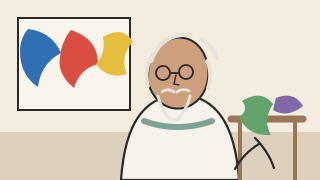
Henri Matisse was a French artist known for vivid color, simplified forms, Fauvist painting, and the gouache-painted paper cut-outs of his later career.

Edgar Degas was a French artist associated with the Impressionists who became known for ballet dancers, horse racing, portraits, and carefully observed scenes of modern Parisian life.
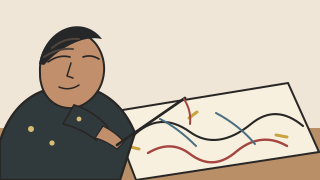
Jackson Pollock was an American Abstract Expressionist known for pouring, dripping, and flinging fluid paint across canvases laid on the floor.
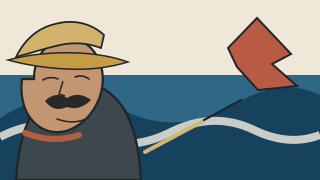
Winslow Homer was an American painter and illustrator known for direct, powerful scenes of the sea, coastal life, rural America, and people confronting the forces of nature.
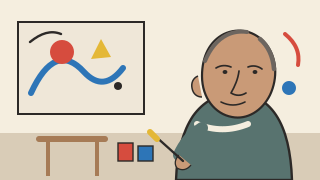
Joan Miró was a Spanish artist known for poetic symbols, biomorphic forms, vivid color, playful abstraction, and a highly personal visual language associated with Surrealism.
Andrew Wyeth was an American painter known for closely observed landscapes, interiors, and people from Chadds Ford, Pennsylvania, and coastal Maine.

Ben Shahn was an American painter and graphic artist known for socially engaged imagery, expressive line, and paintings made with tempera.

Cy Twombly was an American painter known for spare, gestural works that often combined oil-based house paint with crayon, pencil, and other drawing materials.

Devon Rodriguez is an American portrait painter from the South Bronx known for realistic paintings and drawings of New York City subway riders and for sharing his portrait process with a large social-media audience.

Dia al-Azzawi is an Iraqi artist whose wide-ranging practice combines modern painting and drawing with imagery rooted in the ancient art and literature of Iraq. The Metropolitan Museum of Art documents metallic paint throughout his 1965–67 Studies for The Epic of Gilgamesh.

Edward Hopper was an American realist known for quiet city interiors, roadside buildings, coastal landscapes, and scenes shaped by strong light, geometry, and psychological distance.

Helen Frankenthaler was an American painter whose soak-stain technique helped reshape postwar abstraction by allowing thinned paint to soak directly into raw canvas.

Jacob Lawrence was an American painter known for vivid narrative series about Black life and history, especially The Migration Series, created with quick-drying tempera on hardboard panels.
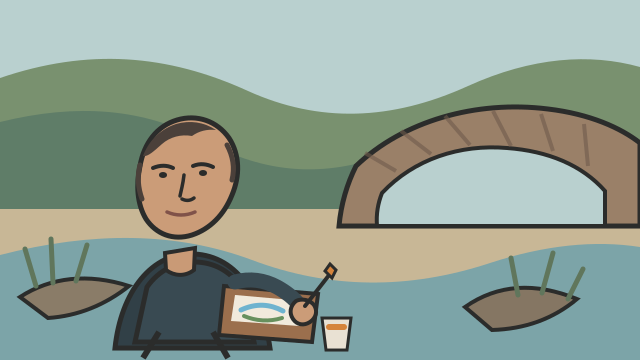
James Gurney is an American painter, illustrator, and author known for imaginative realism, outdoor sketching, and extensive work in casein, gouache, watercolor, and oil.

Jean Dubuffet was a French painter and sculptor who challenged conventional ideas of artistic refinement through rough surfaces, unruly figures, unconventional materials, and a long-running interest in Art Brut.
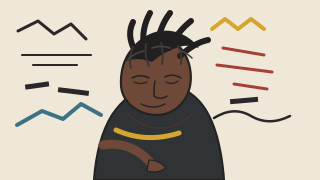
Jean-Michel Basquiat was an American artist whose paintings combined intense color, handwritten text, anatomy, crowns, cultural references, music, history, and the energy of New York street culture.

Keith Haring was an American artist known for energetic outlined figures, public murals, subway drawings, vivid color, and an instantly recognizable visual language used to address social and political themes.
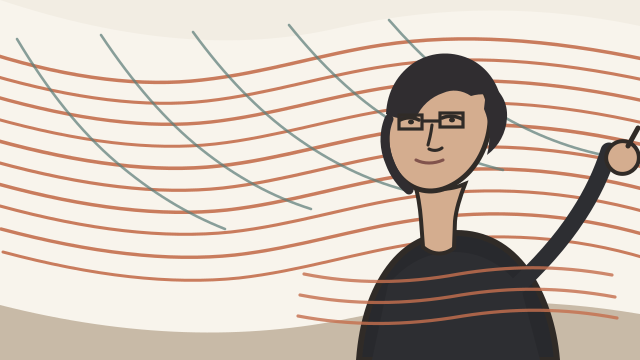
Linn Meyers is an American artist known for drawings and site-specific installations built from thousands of closely spaced, rippling lines. The Hirshhorn documents her use of a type of paint marker commonly used by graffiti artists.
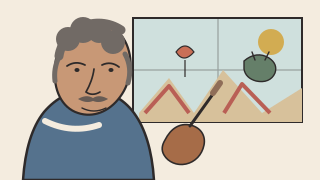
Marc Chagall was a Belarus-born French artist known for dreamlike scenes combining village memories, lovers, animals, folklore, religion, music, and vivid color.
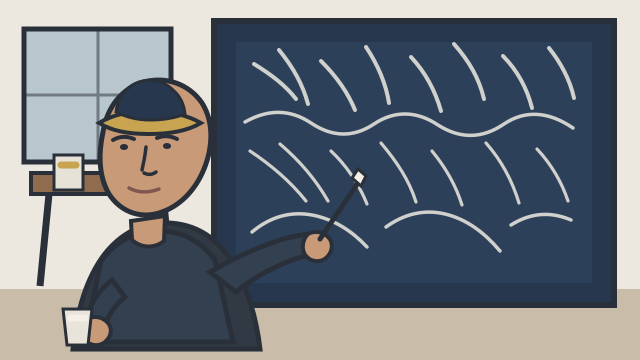
Mark Tobey was an American painter known for atmospheric abstractions built from dense networks of gestural marks and for working in casein, tempera, and other media.

Paul Klee was a Swiss-born German artist and Bauhaus teacher whose highly experimental work combined color, geometry, symbols, humor, music, and observations of nature.
Raqib Shaw is an Indian painter known for densely detailed, jewel-like scenes made with industrial enamel, raised acrylic liner, and painstaking techniques that transform Old Master references into elaborate personal worlds.

Reginald Marsh was an American painter and illustrator known for energetic scenes of New York City crowds, Coney Island, burlesque theaters, and street life.

Roy Lichtenstein was an American Pop artist known for enlarging comic-book and advertising imagery into carefully constructed paintings using bold outlines, flat color, and patterns inspired by commercial printing.

Tom Holland is an American painter and sculptor known for brightly colored works that combine painting with shaped aluminum or fiberglass, often finished with lustrous epoxy paint.

Tschabalala Self is an American artist known for layered figurative paintings that combine painted and sewn materials. Her 2018 painting Lite includes acrylic, Flashe, milk paint, fabric, and gum on canvas.

Ushio Shinohara is a Japanese artist known for energetic action-based painting, Neo-Dada and Pop experimentation, and works using fluorescent Day-Glo color, lacquer, and unconventional materials.

Wassily Kandinsky was a Russian-born painter, teacher, and theorist who became a major pioneer of abstract art and explored how color, line, shape, and rhythm could convey emotion without relying on recognizable subjects.

Yayoi Kusama is a Japanese contemporary artist known for repeated dots and nets, large-scale installations, mirrored environments, sculpture, and paintings centered on ideas of infinity and self-obliteration.
No related PaintZeal articles are currently available.