Paint Type
Gouache Paint
Gouache is an opaque, water-based art paint made with pigment and a water-soluble binder; it dries matte and can be reactivated with water later.
Gouache paint surface compatibility
Gouache works well on sturdy art paper; canvas or wood may need an absorbent ground to control water and support more predictable application of paint.
| Surface | Compatibility | Preparation | Primer or ground | Finish | Guide |
|---|---|---|---|---|---|
| Paper | Excellent on suitable art paper | Use sturdy watercolor or mixed-media paper that can handle the planned amount of water. | Usually not required. | Normally displayed behind glazing rather than varnished. | — |
| Canvas | Good when the product approves canvas | Use clean, dry, prepared canvas and avoid heavy paint buildup that may crack as the support flexes. | Use a suitable absorbent ground when required. | Keep dry and protect from abrasion; traditional gouache remains water-sensitive. | — |
| Wood | Good for suitable art and decorative projects | Use clean, dry, stable wood and smooth rough areas before painting. | A compatible absorbent ground can make application more predictable. | Best for protected decorative work rather than wet or heavily handled surfaces. | — |
Sources: Royal Talens gouache guidance, Talens Art Creation Gouache, and Winsor & Newton Designers Gouache.
Painters who used gouache paint
Browse PaintZeal painter profiles featuring artists who used gouache, with attention to opaque color, matte surfaces, layering, and working methods.
-
Winslow Homer
Homer sometimes combined gouache with watercolor, as in Warm Afternoon. Opaque passages strengthen forms over transparent washes and exposed paper, documenting a mixed-media approach on a sheet rather than oil on canvas. The National Gallery of Art records both media in the work.
-
Paul Klee
In Static-Dynamic Gradation (1923), Klee used oil and gouache on paper, with watercolor and ink in the border. For Passing By Red Pillars (1928), he stamped gouache over watercolor, casein, and colored gesso. Museum records distinguish these materials in his paper works.
-
Henri Matisse
For late cut-outs such as The Swimming Pool (1952), studio assistants applied gouache to large paper sheets in colors chosen by Matisse. He cut and arranged the shapes, often pinning them before mounting. Gouache colored the paper; the final work is a cut-paper composition.
-
J. M. W. Turner
Turner combined watercolor with bodycolor, or gouache, in works such as the Met’s The Lake of Zug. Opaque passages sit alongside transparent washes and graphite, while scraping and reserves help intensify reflected light. This layered use of gouache is distinct from watercolor alone.
-
Joan Miró
In The Escape Ladder (1940), part of Miró’s Constellations series, opaque gouache shares paper with watercolor and ink. Dense color accents sit among fine lines, stars, and figures; this mixed-media sheet is distinct from his oil paintings on canvas and rigid supports.
-
Edgar Degas
In Dancer Onstage (around 1877), Degas applied opaque gouache over a graphite underdrawing on coated yellow paper mounted on board. The water-based paint contributes to a small study of a performer, showing a different working method from his oil canvases.
-
Marc Chagall
Gouache appears alongside watercolor in MoMA’s record for A Street Dancer and Gypsies. The opaque paint is a separately documented medium in this paper composition, not another name for transparent watercolor. Its presence sits within Chagall’s broader works-on-paper practice.
-

Wassily Kandinsky
MoMA identifies gouache alongside oil in White – Soft and Hard (1932). Its collection also describes the opaque water-based passages in Study for Painting with White Form as “opaque watercolor,” a related museum term. Neither label makes the accompanying ink or pencil a separate paint medium.
-
Pablo Picasso
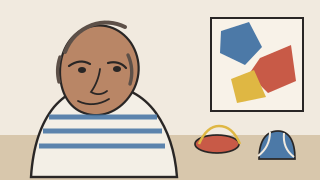
Picasso used opaque gouache in Head of a Woman (spring 1909), painted on paper. He also combined gouache with watercolor in his Head of the Medical Student study (1907) for Les Demoiselles d'Avignon. These documented works on paper are distinct from his oil paintings.
-

Alicia McCarthy
SFMOMA records gouache, spray paint, and house paint on wood in McCarthy’s Untitled (2017). The catalog identifies gouache as one of several distinct materials in the same layered work; it does not assign every woven line or color band to gouache alone.
-
James Gurney
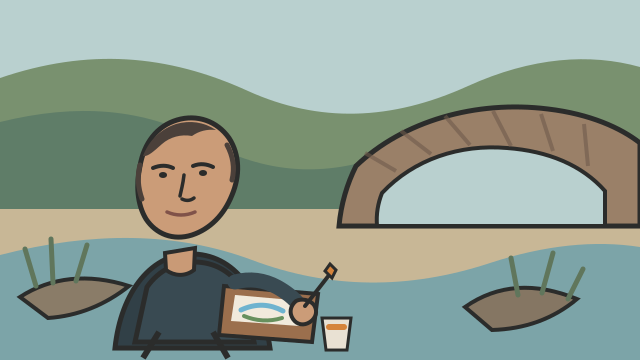
Gurney uses gouache for opaque color studies, including compact field work in which solid passages can be layered over earlier marks. Its coverage differs from the transparent washes in his watercolors, while the medium’s portability suits the same outdoor practice of observing changing light and color.
-
Alphonse Mucha
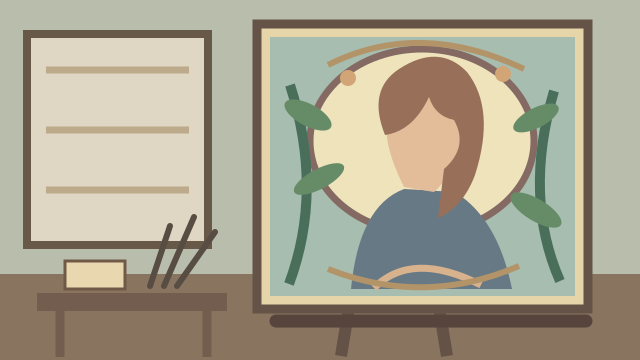
The Mucha Foundation records gouache together with watercolor in a study for The Slav Epic cycle No. 19, on paper. The two media are both named in the catalog, so gouache is documented as part of the study’s painted surface rather than inferred from appearance or grouped generically as watercolor.
-
El Lissitzky
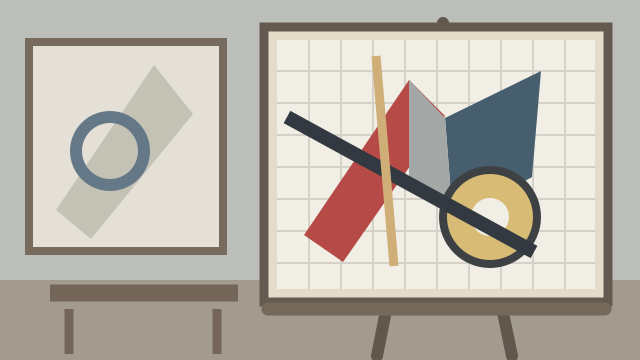
The Centre Pompidou identifies Proun R.V. (étude) (1923) as gouache and graphite on laid paper. In this much smaller study, solid painted planes and drawn lines organize a projected architectural space. It is a separate paper work, not a gouache layer documented in MoMA's mixed-media Proun 19D.
-
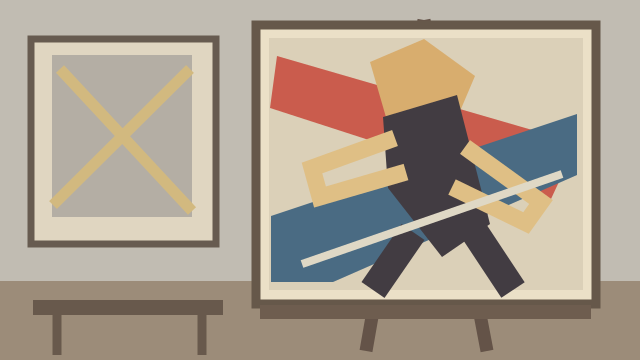
Varvara Stepanova
MoMA catalogues Stepanova's Untitled (1919) as gouache on paper. The flatly colored geometric arrangement shows her use of opaque water-based paint in a small work before larger Constructivist figures. Its paper support and gouache binder differ from the oil canvases Billiard Players and Figure.
-
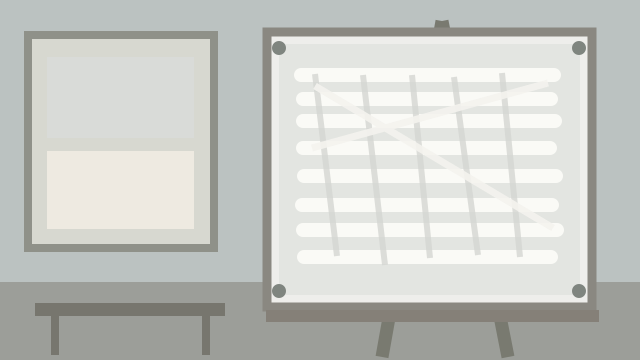
Robert Ryman
MoMA catalogs a 1961 Ryman work on paper as gouache. This sheet-based work is distinct from his oil and enamel paintings on linen or fiberglass, and documents a water-based medium within his early practice. The record distinguishes opaque gouache from transparent watercolor.
-
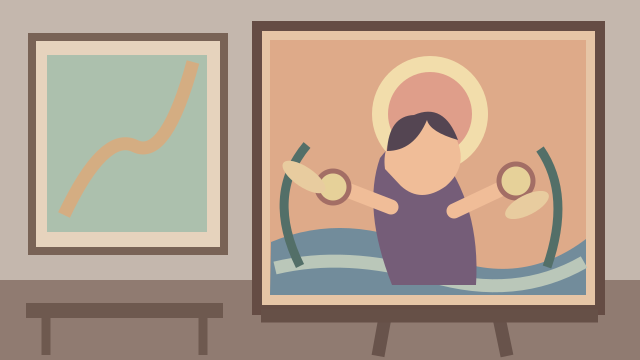
Francesco Clemente
The multi-sheet work Moon is cataloged as gouache on paper with fabric. The fabric is a separate support material, while gouache provides the opaque paint passages. This work documents gouache in Clemente’s works on paper, distinct from his tempera and oil paintings on linen.
-
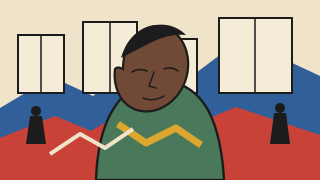
Jacob Lawrence
In The Photographer, the Met records gouache alongside watercolor and graphite. The opaque paint provides denser color passages within the paper composition, contrasting with the watercolor’s more transparent handling. This documented sheet shows Lawrence using gouache in works on paper as well as casein on panel.
-
Ben Shahn
MoMA catalogs Handball as gouache on paper on board. The opaque water-based paint documents a medium in Shahn’s works on paper, distinct from his tempera paintings and oils. The museum record specifies the layered support and the use of gouache without requiring assumptions about the exact sequence of application.
-
Mark Tobey
Space Wall (1960) is a small gouache on board, subsequently mounted on another board. Tobey's dense, pale marks work across the opaque ground in miniature, a different support and paint from the larger casein painting Edge of August. The board support is confirmed by the collection record.
-

Jean Dubuffet
Dubuffet made gouache works on paper, including compositions that combine opaque color with drawing and collage. The medium let him establish dense, flat passages alongside his more heavily textured oil paintings; his collection records document this separate works-on-paper practice. This keeps opaque color distinct from his oil paintings.
-
Bridget Riley
MoMA's Scale Study for Cataract Series (1967) uses gouache and pencil on graph paper. The opaque color shapes let Riley test the widths, bends, and intervals of repeated stripes before painting on canvas. The pencil grid served as a planning tool, not another paint medium.
-
Pierre Bonnard
Gouache appears alongside watercolor and graphite in Bonnard’s Le Port de Cannes. Its opaque passages are documented as one medium in a mixed sheet, not another name for transparent watercolor. The museum record supports this technique within his works on paper.
-
Édouard Vuillard
Opaque gouache appears alongside watercolor in Le Peintre Forain dans son atelier. The museum's medium record supports listing both materials, but not treating the paper work as an oil painting or assuming all Vuillard interiors used gouache. The museum record documents both paints on the same sheet.
-
Egon Schiele
MoMA explicitly lists opaque gouache alongside watercolor and pencil for Girl with Black Hair (1911). Schiele combined those media on paper for an expressive figure drawing; the pencil is a drawing material, not an additional paint type, and the gouache is not evidence that his oils used water-based paint.
-
René Magritte
Magritte's Le poison (1939) is gouache on paper, an early day-and-night scene later developed in his Empire of Light paintings. A c. 1935–36 gouache at the National Galleries of Scotland combines clouds, bells, and an interior for a Surrealist fundraising portfolio. These paper works document his use of gouache.
-
Kurt Schwitters
In Mz 26, 48. Berlin, Schwitters combined gouache with paper fragments on paper. The opaque paint remains distinct from the collage elements, which add texture and printed imagery to the sheet. This work documents gouache as part of his painted collage practice.
-
Hannah Höch
In With Seaweed (1950), Höch painted with gouache on paper among cut-and-pasted and torn paper pieces. The collage fragments are separate materials; gouache supplies the painted passages. The work documents her use of opaque paint within a photomontage practice that combines painting and found printed imagery.
-
Sonia Delaunay
The Musée d'Art Moderne de Paris catalogues La marchande d'oranges (1915) as gouache on paper. For Costume Design for Cleopatra (1918), Delaunay combined gouache with watercolor, metallic paint, and graphite on paper, carrying her color vocabulary into stage costume design.
-
Francis Picabia
New York (1913), painted during Picabia's extended visit to the city, combines opaque gouache and watercolor with pencil on paper. MoMA links the largely abstract imagery to impressions of the city; the pencil drawing remains a different medium from either water-based paint.
-
Maurice Denis
The Musée d’Orsay record for L’Éternel Été also notes gouache, used alongside distemper and drawing media in the decorative panels. Opaque passages contribute to the planned color arrangement on paper, documenting gouache as a separate material in this mixed-media work.
-
Pierre Puvis de Chavannes
The Met’s Christian Inspiration study also includes gouache alongside watercolor and pastel. The opaque paint reinforces selected areas within the preparatory composition, while the museum lists pastel separately as another medium on paper. This study documents a mixed works-on-paper process.
-
Gino Severini
MoMA records Oval Composition (1913) as gouache on paper, a compact arrangement of fractured color planes. In Still Life: Bottle + Vase + Journal + Table (about 1914–15), Severini combined gouache and charcoal with pasted newsprint. The collage brings Futurist diagonals into another work on paper.
-
Georges Braque
Braque's Fruit Dish and Glass (autumn 1912) combines gouache and charcoal with cut-and-pasted wood-grain wallpaper on paper mounted to paperboard. One of his earliest papiers collés, it places commercially printed imitation wood beside drawing and opaque painted marks; the wallpaper is collage material, not paint.
-
Max Ernst
La Chanson de la chair (1920) combines gouache and graphite with cut-and-pasted magazine illustrations on paper. The Centre Pompidou classifies it as a drawing and collage; the opaque paint alters the imagery while graphite and magazine fragments remain distinct materials. This is a paper work from Ernst’s collage practice.
-
Sophie Taeuber-Arp
Vertical, Horizontal, Square, Rectangular (1917) combines gouache with metallic paint and pencil on paper. Taeuber-Arp’s colored geometry turns a small sheet into a carefully balanced abstract composition, documenting opaque paint alongside reflective material and drawing. The record distinguishes opaque gouache from transparent watercolor.
-
Cy Twombly
MoMA holds several Untitled works from 1954 made with gouache, crayon, and colored pencil on paper. The opaque water-based passages share the sheet with restless drawing marks, showing how Twombly worked across painting and drawing well before his monumental gray-ground canvases.
-
Sarah Cain
The National Gallery of Art identifies gouache in Self Portrait, alongside acrylic and latex on canvas. This opaque water-based paint is separately documented in the mixed-media work; the record does not assign individual passages to a specific binder. The record distinguishes opaque gouache from transparent watercolor.
-
Salvador Dalí
Bathers at the Beach (1939) uses gouache with brush and black ink on illustration board. The Gala-Salvador Dalí Foundation also records an Untitled work (c. 1979) in gouache on cardboard mounted on plywood. These examples document opaque water-based paint on rigid supports, not the medium of his better-known oil canvases.
-
George Grosz
Gouache appears alongside watercolor in Dune Country, Cape Cod (1939). MoMA calls the opaque paint in Punishment “opaque watercolor,” an overlapping museum term; the record does not name its binder. Both works use water-based color on paper, not gouache applied to Grosz's oil canvases.
-
Robert Delaunay
For the Ballets Russes production Cleopatra, Delaunay made a Stage Design (about 1918) using gouache and metallic paint over a graphite drawing on paper. The opaque gouache allowed him to organize bold color blocks in a theatrical setting; the graphite remains drawing material rather than a further paint type.
-
Albrecht Dürer
The National Gallery of Art identifies Tuft of Cowslips (1526) as gouache on parchment. Its close attention to a small cluster of wildflowers shows Dürer applying opaque water-based paint to a prepared sheet, a different documented example from the Albertina’s watercolor-and-bodycolor Hare.
-
André Derain
The Met catalogs The Artist in his Studio (1920) as gouache and watercolor over charcoal on paper. Gouache supplies an opaque water-based component in a layered sheet that also includes drawing. This mixed-media work documents both paints in Derain’s works on paper.
-
Andrew Wyeth
In Overgrown Orchard, the Met records watercolor and gouache on paper. The catalog identifies both media in one work, documenting gouache as part of Wyeth’s practice alongside watercolor. This sheet-based process differs from his tempera paintings on board and egg-tempera works.
-
Angelica Kauffmann
For Study of a Standing Woman, Kauffmann prepared the paper with gray-blue gouache before modeling the dress in black and white chalk. The Met identifies gouache as the ground beneath the drawing, rather than a finished opaque painting by itself. This specific use distinguishes it from her oil history paintings.
-
Bart van der Leck
In Study for Compositions No. 7 and No. 8 (1917), van der Leck applied gouache to tracing paper, reducing a landscape into rectangles and colored lines while mountain forms remain visible. Opaque paint let him test a simplified composition on a translucent sheet, distinct from the finished oil painting Woodhackers.
-
Bernard Perlin
MoMA catalogs Perlin’s The Lovers (1946) as gouache and ink on paper-faced board. The opaque paint and ink are named separately, documenting a mixed-media image on a rigid support. This work differs from his later casein and oil paintings and shows gouache in an early figurative composition.
-
Charles Sheeler
The Met records American Interior (1935) as gouache and graphite on paper. The opaque paint is combined with drawing in a carefully ordered interior study, distinct from Sheeler’s oil paintings on canvas. This entry follows the collection’s specific identification of gouache and preserves graphite as a separate drawing material.
-
Dante Gabriel Rossetti
The Met identifies watercolor with gouache, or bodycolor, in its record for Rossetti’s Lady Lilith replica. The opaque bodycolor passages differ from transparent watercolor washes, and the museum names both media in the same work. This supports gouache as part of his mixed water-based painting practice.
-
David Hockney
Seattle Art Museum records Gouache Study for a Closer Grand Canyon as gouache. The named medium documents an opaque water-based paint in Hockney’s studies of the landscape, distinct from watercolor and his acrylic or oil paintings. This entry relies on the collection’s identification of the specific study.
-
Dia al-Azzawi
On the Ashmolean’s [A Personal Dialogue in] Samarqand: Mahmoud Darwish (2001), ink and gouache appear on paper, while a separate acrylic work uses fabric-covered paperboard. The records distinguish the media and supports, documenting gouache as a specific paint in al-Azzawi’s practice.
-
Dwight William Tryon
In Pasture Lands: Early Spring, the Smithsonian records gouache alongside watercolor on the panel. The opaque paint complements watercolor in a mixed-media landscape rather than replacing it. This specific record documents gouache on a rigid wooden support, distinct from Tryon’s oil panel paintings.
-
Edward Burne-Jones
The Met records gouache and watercolor in The Vision of St. Francis. Opaque gouache forms part of the work’s layered paper surface, alongside transparent watercolor and drawing. The specific medium record distinguishes this sheet from Burne-Jones’s oil paintings on canvas.
-
Edward Hopper
The Art Institute’s record for Streetwalker also identifies touches of gouache alongside watercolor and graphite on paper. The opaque paint adds a distinct water-based medium to the sheet. The catalog documents the combination directly, without implying that Hopper used gouache in his oil paintings.
-
Eleanor Fortescue-Brickdale
The Posthumous Child includes gouache alongside watercolor; its opaque passages are part of the documented mixed technique on paper. The record names both paints, so gouache is listed separately from transparent watercolor. This work differs from Brickdale’s larger oil-on-canvas allegories.
-
Elizabeth Siddal
Gouache appears alongside watercolor in the Delaware Art Museum’s record for Madonna and Child with Angel. The mixed-media attribution documents opaque paint in Siddal’s practice, distinct from the watercolor-only records for Lady Clare and Sir Galahad and the Holy Grail. The sources do not assign each medium to particular passages.
-
Ernst Ludwig Kirchner
Self-Portrait with Pipe (1914) uses gouache alongside watercolor, ink, and crayon on paper. MoMA records both water-based paints explicitly; the crayon and ink are drawing materials, not additional paint types. Gouache contributes opaque passages to this sheet, distinct from the oil-on-canvas city scenes.
-
Eugène Delacroix
In Wild Horse Felled by a Tiger, Delacroix combined watercolor and gouache over pen and ink, with touches of gum arabic. The opaque bodycolor passages are separately identified from transparent watercolor. This mixed-media sheet documents gouache as a distinct paint in his works on paper.
-
Félix Vallotton
The National Gallery of Art catalogs Street Scene in Paris as gouache and oil on cardboard. The record distinguishes opaque gouache from the oil used in the same work, documenting both paints on a rigid paper-based support. This mixed-media street scene differs from Vallotton’s oil-only landscapes on canvas.
-
Fernand Khnopff
White, Black and Gold includes gouache alongside watercolor and pastel. The opaque paint is one layer of a mixed-media work on paper mounted to canvas. The museum record documents gouache in this specific composition, distinct from the oil medium used for Khnopff’s finished portraits.
-
Fernand Léger
Léger's Study for a mural (1938) combines gouache and watercolor on paper. In Study for Cinematic Mural, Study VII (1938–39), he used gouache and pencil on board. Their opaque passages and sharply separated colors helped develop ideas for monumental projects; neither study is itself a finished oil-on-canvas mural.
-
François Boucher
Boucher’s Adoration of the Shepherds is gouache over black chalk; opaque, creamy passages and small red accents model the figures and luminous clouds. This paper work documents gouache as a distinct medium, unlike the oil-on-canvas pastorals for which he is better known.
-
Frank Stella
Moutonboro (1971), a study from Stella's Irregular Polygon series, is gouache on paper in the Museum of Fine Arts, Houston. The Judd Foundation also holds Study for River of Ponds III (1971), gouache, graphite, and tape on paper. Both are preparatory works, not finished enamel-on-canvas paintings.
-
František Kupka
In a 1912 study for Amorpha: Fugue in Two Colors, Kupka used gouache and ink on paper to test interlocking red and blue ribbons. The study traces a shift from a girl playing with a ball toward nonrepresentational movement. A separate 1928 sheet combines gouache with watercolor and pencil.
-
Franz Marc
Opaque gouache is part of the medium recorded for St. Julian the Hospitaler, complementing watercolor in this 1913 composition. The Guggenheim’s record identifies the mixed media on paper and distinguishes the work from Marc’s larger oil paintings. Gouache should not be inferred from the strong colors of his other canvases.
-
George Inness
The Met records gouache alongside watercolor in Olive Trees at Tivoli and Across the Campagna, confirming his use of both media on paper. The opaque paint is identified separately from transparent watercolor, and these works differ from the oil paintings on canvas that make up much of his practice.
-
Gustave Moreau
Moreau combined opaque gouache with watercolor in Saint Cecilia, using the two distinct media over graphite rather than treating gouache as transparent watercolor. The paper was mounted to a wood panel, which is the backing rather than the painted sheet. The Met record documents the construction.
-
Jackson Pollock
Gouache appears with watercolor in the Met's cardboard Untitled (c. 1938–41). The museum also holds a separate Untitled from the same period made in gouache on paper. These opaque studies should not be confused with the oil-and-enamel mixtures of his mature canvases.
-
Jacques-Louis David
David used white gouache in a preparatory drawing for The Lictors Bringing Brutus the Bodies of His Sons, alongside black chalk, ink, and gray-brown washes. Opaque highlights articulate selected forms in the paper study; they belong to the drawing process, not the finished oil painting.
-
James McNeill Whistler
Whistler combined opaque gouache and transparent watercolor in Variations in Violet and Grey—Market Place, Dieppe. Stronger accents sit beside fluid washes in the sheet, a mixed-media approach in his works on paper, distinct from the oil nocturnes on canvas.
-
Jasper Francis Cropsey
The Met records white gouache in Cropsey’s Hackensack Meadows and American Falls, Niagara, alongside watercolor or graphite on paper. The opaque white creates highlights over the more transparent passages, clarifying light on water and land. These museum records document gouache as part of his works-on-paper practice.
-

Jasper Johns
Johns also used opaque gouache in the 2001 Untitled works on paper. MoMA identifies it alongside watercolor, acrylic, and collaged print fragments; that combination shows how his later drawn and painted variations differed materially from the earlier encaustic targets. MoMA’s materials list makes this combination explicit.
-
Jean Arp
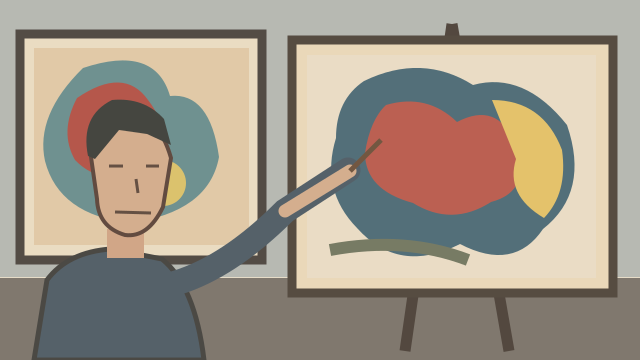
Arp used gouache in works on board and paper. MoMA’s Mountain, Navel, Anchors, Table combines gouache on board with cutouts, while the MFAH records gouache on paper; the opaque medium lets him establish flat, vivid shapes before arranging or overlaying separate forms.
-
Jean-Auguste-Dominique Ingres
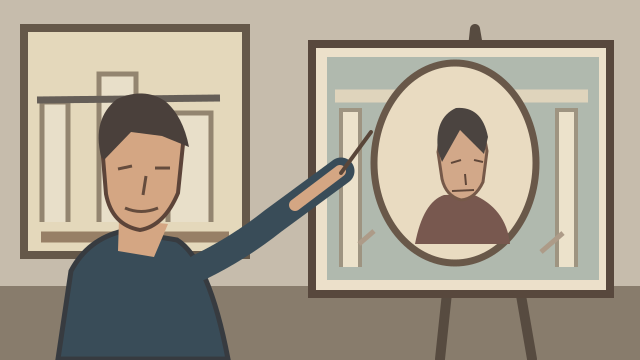
Ingres used gouache in drawings on translucent paper, including the Met’s Niccolò Paganini, made with graphite and gouache. Opaque white and color passages sit within the drawn image, distinct from the smooth oil finish of his portraits. The sheet documents a works-on-paper medium, not a paint layer on canvas.
-
José Clemente Orozco
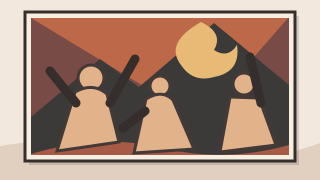
The Met records Orozco’s Self-Portrait (1940) as oil and gouache on cardboard. The opaque medium contributes to a compact, direct image on a portable support; its use here is distinct from fresco applied to plaster walls in his public commissions.
-
Juan Gris
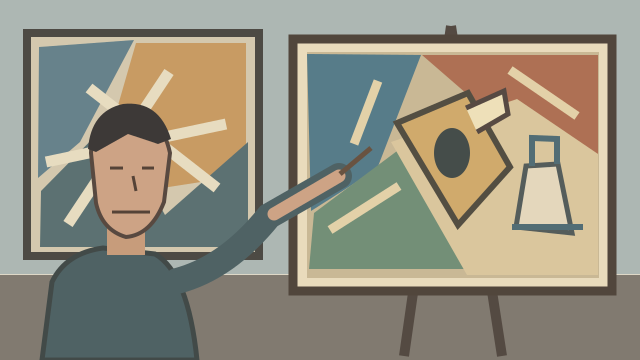
In Breakfast (Le Petit déjeuner) (1914), Gris combined gouache and oil with crayon and collaged printed paper on canvas. Bottle of Rum and Newspaper (June 1914) likewise layers gouache with drawing, newspaper, and paper collage. The pasted fragments remain distinct from the painted passages.
-
Marie Spartali Stillman
The National Gallery of Art records The Old Barn as watercolor and gouache on paper mounted on a stretcher. Stillman combined the opaque medium with watercolor in a detailed landscape, using the paper support for both transparent and denser passages. This example documents gouache apart from her tempera work.
-
Maurice de Vlaminck
Opaque gouache appears alongside watercolor and ink in Courtyard in Auvers. The Met identifies these media separately on the work's paper support; the same record does not imply that his oil-on-canvas Seine paintings contained gouache. The Met lists gouache separately from watercolor and ink.
-
Max Beckmann
The Feast of the Prodigal Son (around 1918) combines opaque gouache and watercolor over an ink-and-pencil drawing on parchment. MoMA identifies the paint media separately from the underlying drawing; its small, worked surface differs markedly from Beckmann's large oil canvases.
-
Paul Cézanne
The Met records In the Oise Valley (1878–80) as graphite, gouache, and watercolor. The opaque gouache contributes to this mixed-media landscape study, but should not be assumed to have been used in Cézanne's oil paintings or in every watercolor drawing.
-
Paul Gauguin
In Nave Nave Fenua (probably 1894), Gauguin used gouache and India ink on dark tan paper. Opaque color and drawn marks document his graphic practice, while the work should be distinguished from his major Tahitian oil paintings.
-
Pierre-Auguste Renoir
In Young Girl in a Blue Dress, Renoir added opaque gouache highlights over watercolor. Landscape with a Path between Trees (around 1886) likewise combines watercolor with small touches of white gouache. Both are works on paper rather than oil paintings.
-
Reginald Marsh
Marsh combined gouache and watercolor with graphite in the Met’s Oil Cars. This mixed-media work on paper uses opaque and transparent paint together, with graphite remaining a drawing medium. The record documents gouache in his urban studies rather than in his tempera paintings.
-
Robert Henri
Gouache appears with watercolor and ink in Henri’s Dancer in a Red Skirt, No. 2, a mixed-media work on paper documented by the National Gallery of Art. The opaque paint adds denser passages beside fluid washes, while ink remains a separate drawing medium.
-
Rosa Bonheur
The Cleveland Museum of Art records gouache with watercolor in Return from the Horse Fair. Opaque passages sit alongside transparent washes in this study, helping Bonheur describe form and movement on paper. The museum record documents gouache separately from the oils on canvas.
-
Simeon Solomon
The Met identifies the opaque component in Portrait of a Cleric as gouache, or bodycolor. Solomon used opaque white and color to give the small figure study a denser finish over the watercolor; the record distinguishes gouache from the transparent washes.
-
Theo van Doesburg
Van Doesburg used gouache, pencil, and ink on tracing paper for Construction in Space-Time II (1924), and gouache on board for Composition décentralisée (1924). These geometric designs explore painted spatial relationships; pencil and ink in the first work are drawing materials, not extra paints.
-
Thomas Moran
Moran added gouache to watercolor studies such as Above Tower Falls, Yellowstone, using opaque passages alongside transparent washes rather than as a synonym for watercolor. The combination lets him reinforce rock and water forms within a portable landscape study.
Sources: National Gallery of Art: Warm Afternoon, National Gallery of Art: Passing By Red Pillars, casein and other paints on paper, MoMA: gouache-painted paper and cut-out process, The Met: The Lake of Zug, MoMA: The Escape Ladder, gouache, watercolor, and ink on paper, The Met: Dancer Onstage, MoMA: A Street Dancer and Gypsies, gouache, watercolor, and pencil on paper, MoMA: oil and gouache in White – Soft and Hard, MoMA: gouache Head of a Woman, SFMOMA: Untitled, James Gurney: artist biography and media, Mucha Foundation: Study for Slav Epic cycle No. 19, watercolor and gouache on paper, MoMA: Proun 19D, Thyssen-Bornemisza: Billiard Players, MoMA: 1961 gouache on paper, MoMA: Moon, The Met: The Photographer, MoMA: Handball, gouache, MoMA: Edge of August, MoMA: The Anachronism, MoMA: Scale Study for Cataract Series, gouache, The Met: Le Port de Cannes, Musée d'Orsay: Le Peintre Forain dans son atelier, MoMA: Girl with Black Hair, gouache and watercolor on paper, MoMA: The Empire of Light, II, MoMA: Mz 26, 48. Berlin, gouache and papers on paper, MoMA: With Seaweed, collage and gouache, Musée d'Art Moderne de Paris: La marchande d'oranges, gouache on paper, MoMA: New York, gouache and watercolor, Musée d’Orsay: L’Eternel Été, The Met: Christian Inspiration, watercolor and gouache on paper, MoMA: Oval Composition, gouache on paper, The Met: Fruit Dish and Glass, Centre Pompidou: La Chanson de la chair, gouache collage on paper, MoMA: Vertical, Horizontal, Square, Rectangular, gouache on paper, MoMA: Untitled (1954), gouache and drawing media, National Gallery of Art: Self Portrait, The Met: Bathers at the Beach, The Met: Dune Country, Cape Cod, watercolor and gouache on paper, The Met: Stage Design for Cleopatra, National Gallery of Art: Tuft of Cowslips, The Met: The Artist in his Studio, The Met: Overgrown Orchard, watercolor and gouache on paper, The Met: Study of a Standing Woman, gouache-prepared paper, Museo Thyssen-Bornemisza: Study for Compositions No. 7 and No. 8, gouache on tracing paper, MoMA: The Lovers, The Met: American Interior, gouache on paper, The Met: Lady Lilith, watercolor and gouache, Seattle Art Museum: Gouache Study for a Closer Grand Canyon, Ashmolean: [A Personal Dialogue in] Samarqand: Mahmoud Darwish, ink and gouache on paper, with a separate acrylic-on-board component, Smithsonian: Pasture Lands, gouache and watercolor on wood, The Met: The Vision of St. Francis, gouache and watercolor, Art Institute of Chicago: Edward Hopper works, including Streetwalker, Delaware Art Museum: The Posthumous Child, watercolor and gouache on paper, Delaware Art Museum: Madonna and Child with Angel, watercolor and gouache, MoMA: Self-Portrait with Pipe, gouache and watercolor, The Met: Wild Horse Felled by a Tiger, watercolor and gouache over ink, The Met: Street Scene in Paris, gouache and oil on cardboard, Royal Museums of Fine Arts Belgium: White, Black and Gold, MoMA: Study for a mural, gouache and watercolor on paper, The Met: Adoration of the Shepherds, gouache over chalk, MFA Houston: alkyd and gouache works, MoMA: Amorpha study, Guggenheim: St. Julian the Hospitaler (watercolor, gouache, metallic paint), The Met: Olive Trees at Tivoli, gouache and watercolor on paper, The Met: Saint Cecilia, gouache and watercolor, The Met: Untitled (ca. 1938–41), The Met: The Lictors Bringing Brutus study, The Met: Market Place, Dieppe, watercolor and gouache on paper, The Met: Hackensack Meadows, watercolor and gouache on paper, MoMA: Untitled (2001 series), MoMA: Mountain, Navel, Anchors, Table, gouache on board, The Met: Niccolò Paganini, graphite and gouache on translucent paper, Smithsonian: 1940 Self-Portrait, Guggenheim: Bottle of Rum and Newspaper, paper collage and gouache, National Gallery of Art: The Old Barn, watercolor and gouache on paper, The Met: Courtyard in Auvers, MoMA: The Feast of the Prodigal Son, gouache and watercolor on parchment, The Met: In the Oise Valley, National Gallery of Art: Nave Nave Fenua, gouache on paper, The Met: Young Girl in a Blue Dress, watercolor and gouache, The Met: Oil Cars, National Gallery of Art: Selected works and media, Cleveland Museum of Art: Return from the Horse Fair, watercolor and gouache on paper, The Met: Portrait of a Cleric, watercolor and gouache on card, Museo Thyssen-Bornemisza: Construction in Space-Time II, gouache on tracing paper, Smithsonian American Art Museum: Above Tower Falls, Yellowstone
Gouache paint articles
Explore PaintZeal guides to gouache techniques, paper, pigments, and display, with advice on choosing materials and preparing supports for opaque color.