
Oil Paint
Oil paint is a slow-drying art medium made with pigment and a drying-oil binder that allows extended working time, smooth blending, and layered application.
Painter
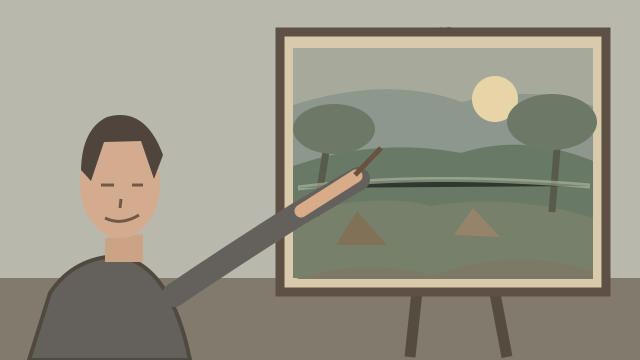
Dwight William Tryon was an American Tonalist painter known for quiet fields, early-spring twilight, moonrise scenes, and subtle harmonies of muted color.
Tryon studied French Barbizon painting but often worked from memory, using subtle color harmonies rather than strict transcription of scenery.
| Born | 1849 · Hartford, Connecticut, United States |
|---|---|
| Died | 1925 · South Dartmouth, Massachusetts, United States |
| Nationality | American |
| Movements | Tonalism (associated aesthetic and period) |
| Paint types | Oil Paint · Watercolor Paint · Gouache Paint |
| Painting surfaces | Wood · Paper |
| Painting methods | Simplified landscapes recalled from memory, delicate tonal gradations, soft chiaroscuro, and quiet arrangements of sky, trees, and fields |
| Common subjects | Moonrise, harbor evenings, haystacks, early spring, autumn meadows, and quiet rural horizons |
| Notable works | Dawn—Early Spring · Moonrise at Sunset · Pasture Lands: Early Spring · Morning Off Narragansett Pier |
Sources: The Met: Dawn—Early Spring, oil on wood, The Met: Moonrise at Sunset, oil on wood, Smithsonian: Pasture Lands, gouache and watercolor on wood, Akron Art Museum: Morning Off Narragansett Pier, watercolor on paper.
The Met documents Tryon's oil paintings on wood; Smithsonian records watercolor and gouache on wood, while Akron Art Museum catalogs a watercolor on paper.
Oil paint is a slow-drying art medium made with pigment and a drying-oil binder that allows extended working time, smooth blending, and layered application.

Watercolor paint is a water-based art medium made with pigment and a water-soluble binder, typically applied in transparent washes on absorbent paper.

Gouache paint is an opaque, water-based art medium made with pigment and a water-soluble binder, drying to a matte finish that can be reactivated with water.
Tryon's Dawn—Early Spring is oil on wood; Pasture Lands: Early Spring is gouache and watercolor on wood, while Morning Off Narragansett Pier is watercolor on paper.

Wood is a natural, porous material whose grain, absorbency, knots, resin, species, and existing finish all influence paint preparation and adhesion.

Paper is an absorbent sheet material made from pressed fibers, with weight, sizing, and surface texture controlling moisture tolerance and paint behavior.
Inness and Ryder shared Tryon's interest in expressive atmospheres, although Ryder favored more mysterious literary subjects.
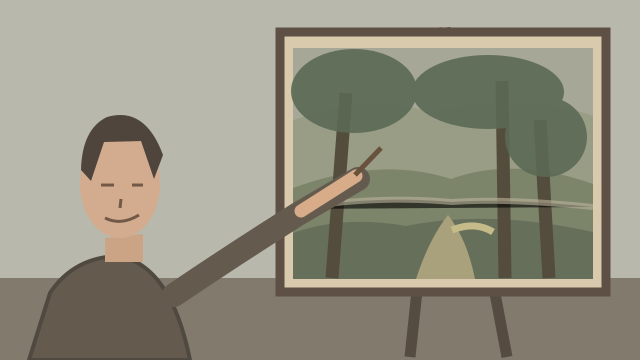
George Inness was an American landscape painter whose atmospheric late oils and poetic light helped shape Tonalism after his early Hudson River School influences.
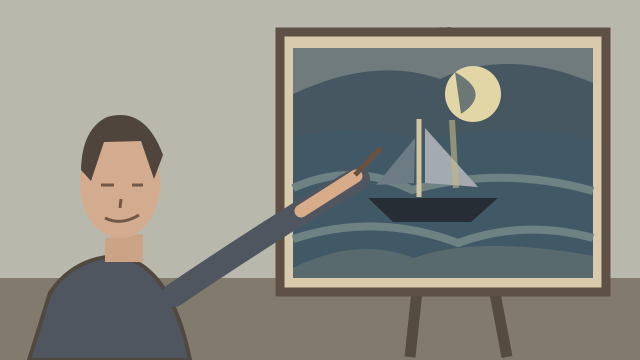
Albert Pinkham Ryder was an American painter associated with Tonalism whose moonlit seascapes and mysterious literary images used dense, richly layered oil paint.