
Oil Paint
Oil paint is a slow-drying art medium made with pigment and a drying-oil binder that allows extended working time, smooth blending, and layered application.
Painting Movement
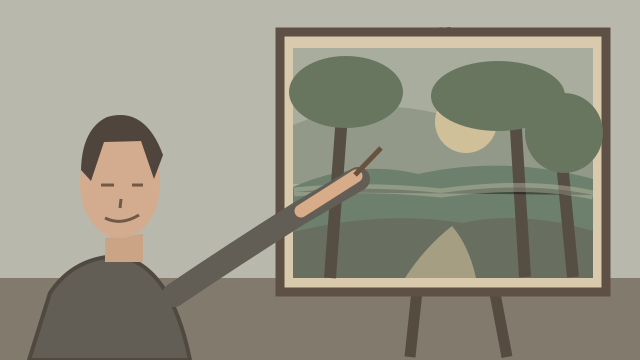
Tonalism was a late-nineteenth-century American painting approach that used muted colors, soft edges, and atmospheric light to suggest mood rather than precise detail.
American painters developed Tonalist effects in different ways; it is an overlapping aesthetic, not a formally founded or uniform group.
| Approximate period | 1880s–early 1910s, with earlier roots and later influence |
|---|---|
| Origin | United States, especially painters active around New York and New England |
| Identity | Loose approach to mood and color, rather than a formal school or manifesto-driven movement |
| Visual characteristics | Restrained palettes, softly merging edges, delicate light changes, mist, haze, and quiet or mysterious atmosphere |
| Painting methods | Blended oils, nuanced color harmonies, layered surfaces, and simplified forms; approaches differed across painters |
| Typical subjects | Twilight fields, moonlit rivers, woodland clearings, pastoral scenes, symbolic seascapes, and dreamlike horizons |
| Historical paint | Oil paint was important; artists also used watercolor and gouache |
| Documented surfaces | Canvas, wood panels, and paper, depending on the painter and medium |
| Historical relationships | Overlaps the Hudson River School's American landscape history; French Barbizon painting and Whistler's tonal harmonies helped shape some artists |
Sources: The Met: Inness and the Tonalist aesthetic, The Met: Tryon, Dawn—Early Spring, oil on wood, The Met: Ryder, The Toilers of the Sea, oil on wood, The Met: Inness, gouache and watercolor on paper, Smithsonian: Tryon, gouache and watercolor on wood.
Oil paint is central to historic Tonalist work; watercolor and gouache served some artists' studies, while modern acrylics, water-mixable oils, and acrylic gouache can recreate subdued harmonies today.
Oil paint is a slow-drying art medium made with pigment and a drying-oil binder that allows extended working time, smooth blending, and layered application.

Water-mixable oil paint is oil paint made with modified drying oils that allow mixing and cleanup with water while retaining the working properties of traditional oils.

Acrylic paint is a fast-drying, water-based paint made with pigment and an acrylic polymer binder that forms a durable film on many prepared surfaces.

Watercolor paint is a water-based art medium made with pigment and a water-soluble binder, typically applied in transparent washes on absorbent paper.

Gouache paint is an opaque, water-based art medium made with pigment and a water-soluble binder, drying to a matte finish that can be reactivated with water.

Acrylic gouache is an opaque acrylic paint that dries to a flat matte finish while forming a permanent, water-resistant film unlike traditional gouache.
Inness, Tryon, Murphy, and Eaton explored quiet landscapes; Ryder and Blakelock favored moonlit mysteries, Dewing painted muted figures, and Twachtman's early Tonalist work preceded his later Impressionist style.
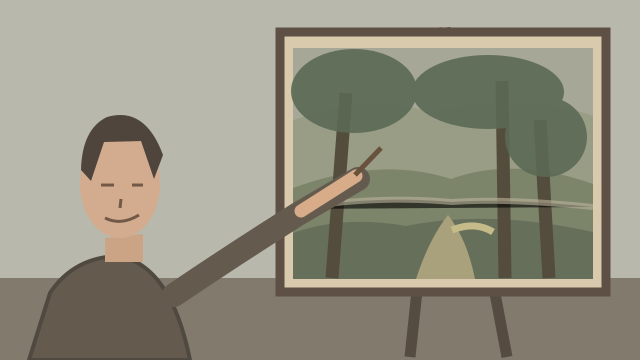
George Inness was an American landscape painter whose atmospheric late oils and poetic light helped shape Tonalism after his early Hudson River School influences.
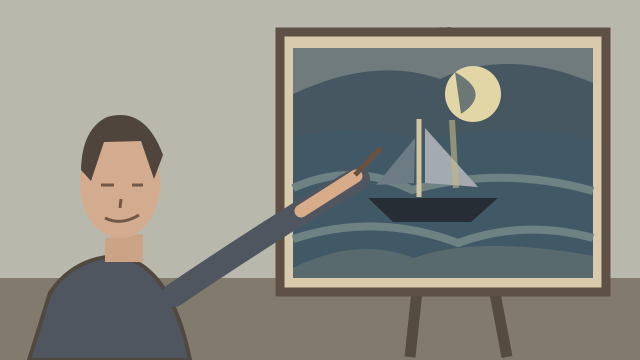
Albert Pinkham Ryder was an American painter associated with Tonalism whose moonlit seascapes and mysterious literary images used dense, richly layered oil paint.
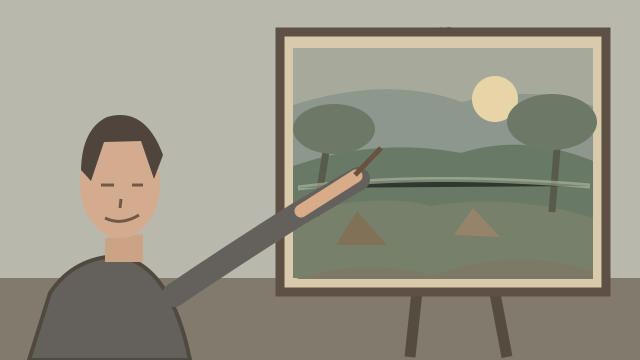
Dwight William Tryon was an American Tonalist painter known for quiet fields, early-spring twilight, moonrise scenes, and subtle harmonies of muted color.
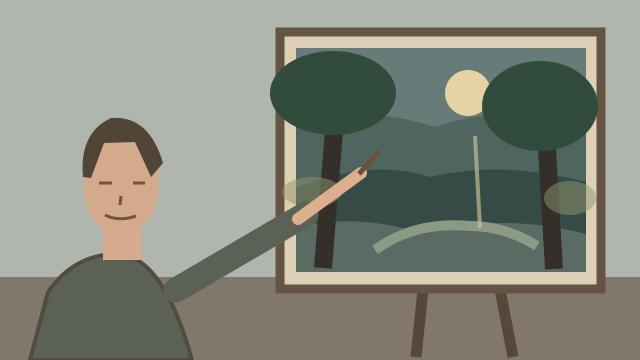
Ralph Albert Blakelock was an American Tonalist painter known for moonlit forests, glowing waterways, and richly textured oil landscapes.
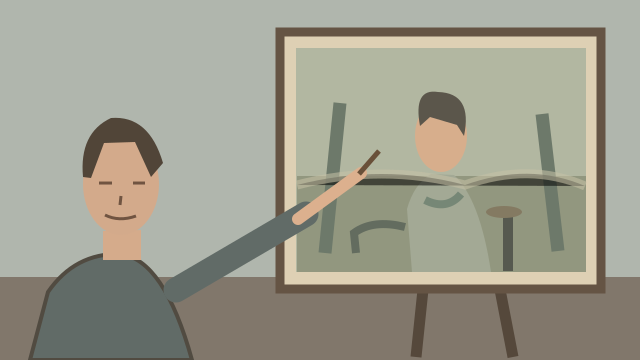
Thomas Wilmer Dewing was an American Tonalist painter known for dreamlike figures, muted interiors, and delicate color harmonies.
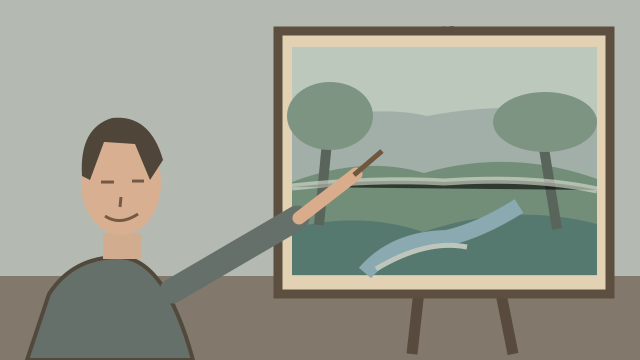
John Henry Twachtman was an American painter whose misty French landscapes reflect Tonalism, while later Connecticut scenes became increasingly Impressionist.
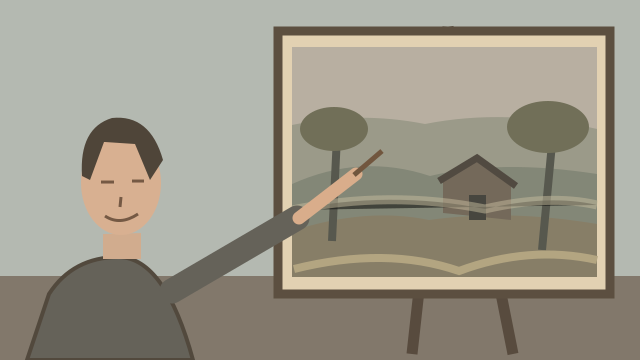
John Francis Murphy, often credited as J. Francis Murphy, was an American Tonalist painter known for intimate, subdued scenes of old barns, open fields, and autumn haze.
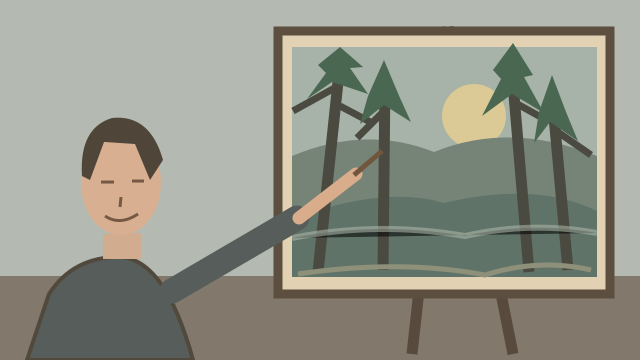
Charles Warren Eaton was an American Tonalist painter known for shadowy pine groves, quiet marshes, twilight skies, and delicate watercolor studies.
Whistler's musical color harmonies, softly painted nocturnes, and atmospheric figure arrangements influenced American artists including Dewing and Tryon. He was an American-born artist working chiefly in Europe, not a founding member of a formal Tonalist movement. The Met documents Whistler's influence on Dewing, and The Met describes his influence on Tryon.
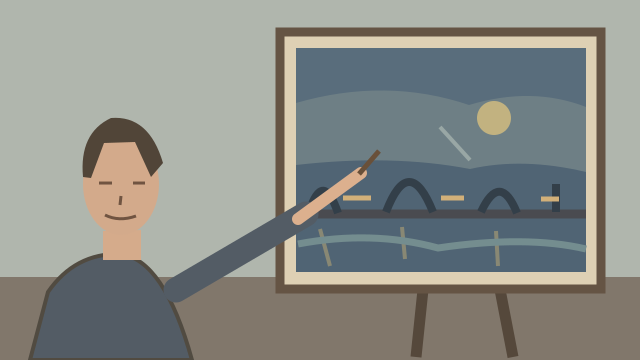
James McNeill Whistler was an American-born painter active in Europe whose nocturnes, portraits, and subtle color harmonies influenced American Tonalism.
The Hudson River School's expansive landscapes and the French Barbizon School's quiet studies provide useful contrasts for Tonalism's focus on atmosphere and mood.
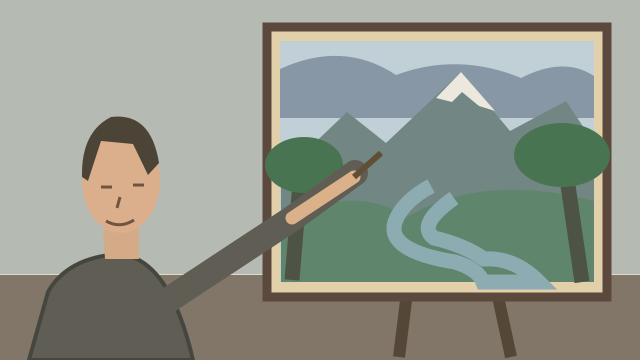
The Hudson River School was a nineteenth-century American landscape movement known for dramatic wilderness, detailed observation, and expansive river and mountain scenes.
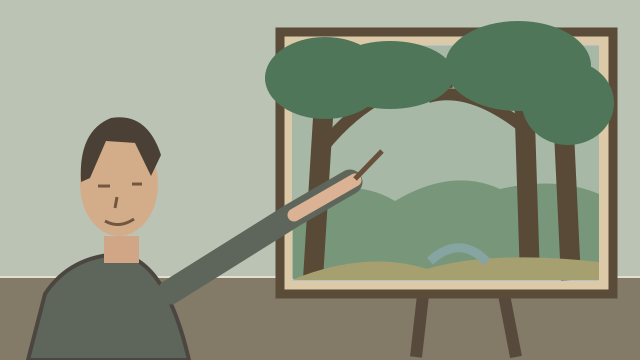
The Barbizon School was a loose circle of nineteenth-century French painters who studied forests, fields, and rural life directly from nature.