
Oil Paint
Oil paint is a slow-drying art medium made with pigment and a drying-oil binder that allows extended working time, smooth blending, and layered application.
Painter
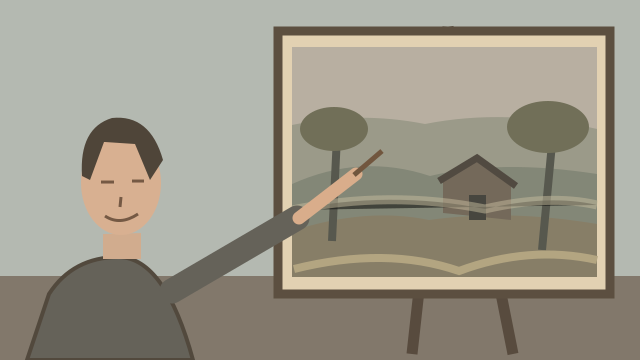
John Francis Murphy, often credited as J. Francis Murphy, was an American Tonalist painter known for intimate, subdued scenes of old barns, open fields, and autumn haze.
Murphy was noted for small, poetic landscapes. Smithsonian accounts describe a process of recording a landscape's overall color outdoors and completing the canvas much later in his studio.
| Born | 1853 · Oswego, New York, United States |
|---|---|
| Died | 1921 · New York City, United States |
| Nationality | American |
| Movements | Tonalism (associated landscape tradition) |
| Paint types | Oil Paint |
| Painting surfaces | Canvas |
| Painting methods | Studies of dominant landscape colors outdoors followed by slowly developed oil surfaces in the studio, muted browns, grays, and remembered countryside |
| Common subjects | Weathered barns, neglected fields, late autumn pastures, small trees, rural pathways, and atmospheric clouds |
| Notable works | Landscape · The Old Barn · Indian Summer · The Sprout Lot |
Sources: The Met: Landscape, oil on canvas, The Met: The Old Barn, oil on canvas, Smithsonian: Indian Summer, oil on canvas and documented process, Smithsonian: The Sprout Lot, oil on canvas, Princeton: Landscape, oil on canvas backed by wood.
The Met and Smithsonian document Murphy's intimate landscapes and later seasonal paintings as oil on canvas, with thin, carefully modulated tonal color.
Oil paint is a slow-drying art medium made with pigment and a drying-oil binder that allows extended working time, smooth blending, and layered application.
Museum records consistently identify canvas as the original painting support; one Princeton painting has an added wood backing that should not be confused with oil painted directly on wood.

Canvas is a woven fabric support, commonly cotton or linen, used for painting and sold either raw or prepared with a compatible ground layer.
Inness and Eaton also valued restrained color and suggestive light, though Murphy was particularly drawn to small, unassuming rural scenes.
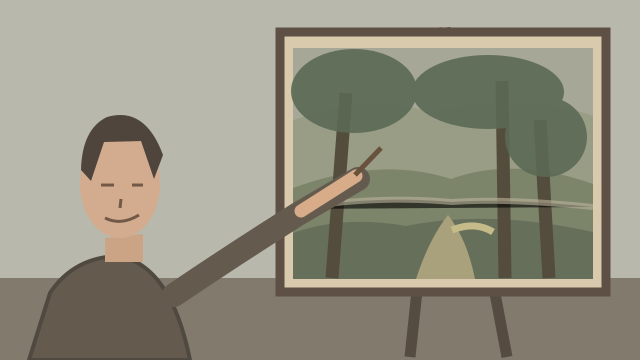
George Inness was an American landscape painter whose atmospheric late oils and poetic light helped shape Tonalism after his early Hudson River School influences.
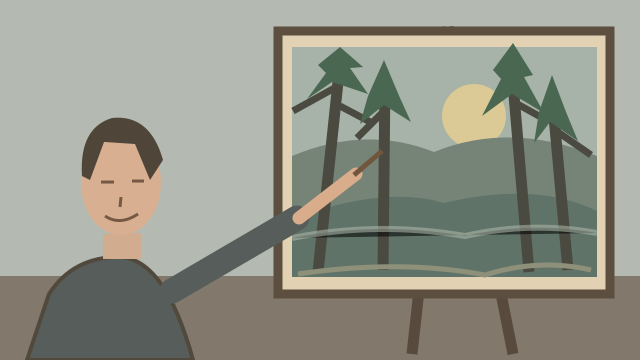
Charles Warren Eaton was an American Tonalist painter known for shadowy pine groves, quiet marshes, twilight skies, and delicate watercolor studies.