
Oil Paint
Oil paint is a slow-drying art medium made with pigment and a drying-oil binder that allows extended working time, smooth blending, and layered application.
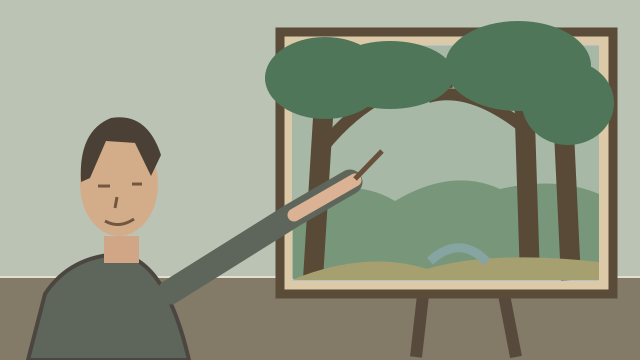
Painting Movement
The Barbizon School was a loose circle of nineteenth-century French painters who studied forests, fields, and rural life directly from nature.
The school took its name from Barbizon village near the Forest of Fontainebleau; it was not a single organized group with a formal founding date.
| Approximate period | 1830s–1870s |
|---|---|
| Origin | France, especially the village of Barbizon and the Forest of Fontainebleau |
| French name | École de Barbizon |
| Type | Informal landscape-painting circle; the shared school name became established retrospectively |
| Main subjects | Forests, rural fields, trees, rivers, cattle, village life, and agricultural labor |
| Painting methods | Observation and oil studies outdoors, sometimes developed into larger studio paintings; approaches varied by painter |
| Visual characteristics | Naturalistic earth colors, attention to changing light, varied brushwork, and landscapes treated as subjects in their own right |
| Historical paint | Oil Paint, including documented examples on canvas, wood, and paper; related artists also used drawing and water-based studies |
| Relationship | Overlaps nineteenth-century Realism and helped establish outdoor landscape practices later developed by Impressionism |
Sources: The Met: Barbizon School history and outdoor working methods, National Galleries of Scotland: Barbizon School, The Met: Rousseau's oil on wood, The Met: Daubigny's oil on canvas.
Oil paint matches the historical landscape technique; acrylic can recreate its earthy layers, while watercolor and gouache suit portable studies of terrain and light today.
Oil paint is a slow-drying art medium made with pigment and a drying-oil binder that allows extended working time, smooth blending, and layered application.

Acrylic paint is a fast-drying, water-based paint made with pigment and an acrylic polymer binder that forms a durable film on many prepared surfaces.

Watercolor paint is a water-based art medium made with pigment and a water-soluble binder, typically applied in transparent washes on absorbent paper.

Gouache paint is an opaque, water-based art medium made with pigment and a water-soluble binder, drying to a matte finish that can be reactivated with water.
Rousseau and Millet lived and worked near Barbizon; Diaz painted with Rousseau, while Corot and Daubigny also belonged to the wider landscape circle.
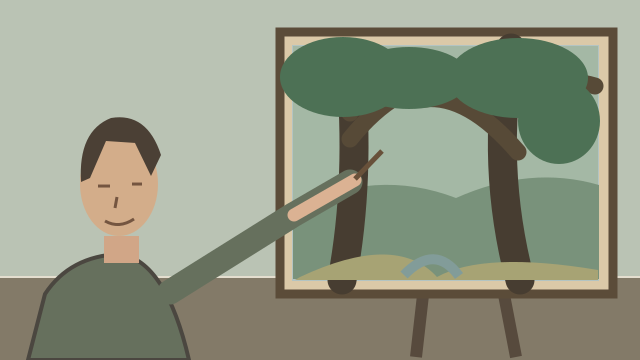
Théodore Rousseau was a French Barbizon School painter whose richly observed forests, old trees, and changing skies gave landscape a commanding presence.
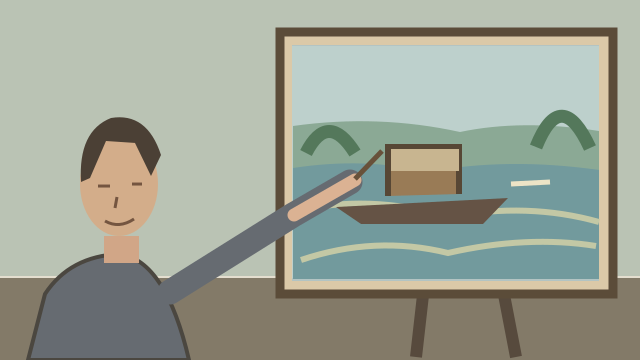
Charles-François Daubigny was a French Barbizon-associated landscape painter known for river views, flowering orchards, and direct studies of changing light.
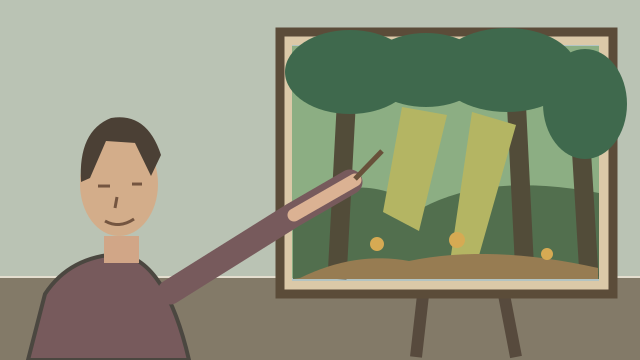
Narcisse-Virgile Diaz de la Peña was a French Barbizon painter celebrated for dense Fontainebleau woods, glowing color, and romantic mythological scenes.
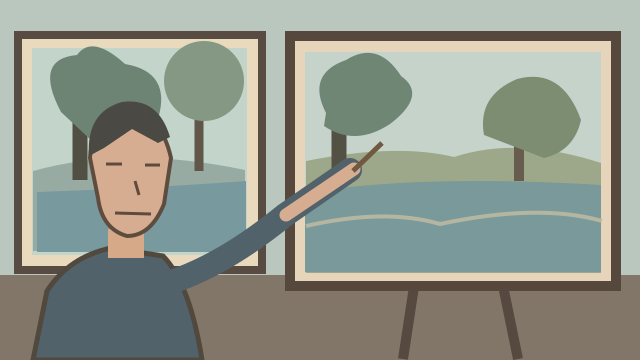
Jean-Baptiste-Camille Corot was a French landscape painter associated with Barbizon whose direct outdoor studies and quiet wooded scenes anticipated Impressionism.

Jean-François Millet was a French Realist painter associated with Barbizon, best known for paintings of agricultural workers and rural life.
Barbizon painters favored intimate French landscapes, influencing some American Tonalists; the Hudson River School often celebrated grander wilderness views.
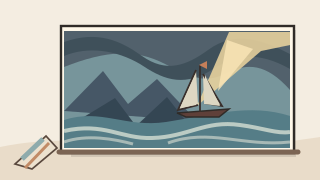
Romanticism spread across Europe in the early nineteenth century, using dramatic landscapes, vivid emotion, and imaginative subjects to challenge artistic restraint.
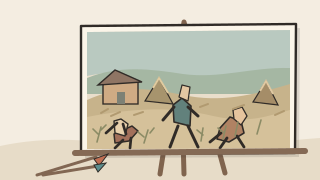
Realism emerged in nineteenth-century France as painters depicted ordinary people, rural labor, and contemporary life without idealization or heroic subjects.

Impressionism was a French painting movement that brought changing daylight, visible brushstrokes, and scenes of everyday life to the foreground.
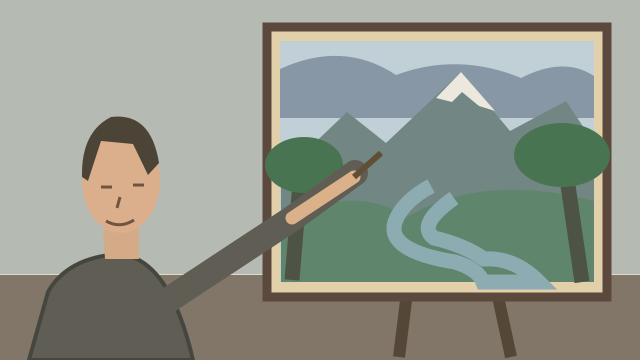
The Hudson River School was a nineteenth-century American landscape movement known for dramatic wilderness, detailed observation, and expansive river and mountain scenes.
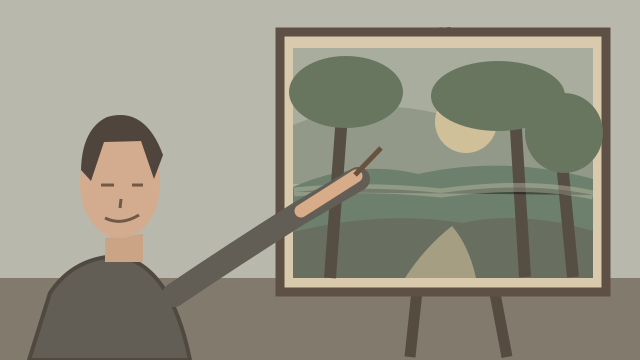
Tonalism was a late-nineteenth-century American painting approach that used muted colors, soft edges, and atmospheric light to suggest mood rather than precise detail.