
Oil Paint
Oil paint is a slow-drying art medium made with pigment and a drying-oil binder that allows extended working time, smooth blending, and layered application.
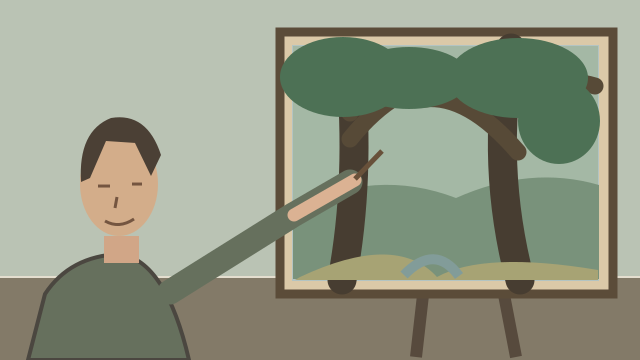
Painter
Théodore Rousseau was a French Barbizon School painter whose richly observed forests, old trees, and changing skies gave landscape a commanding presence.
Rousseau spent long periods studying the Forest of Fontainebleau and helped establish landscape as a subject worthy of large, ambitious paintings.
| Born | 1812 · Paris, France |
|---|---|
| Died | 1867 · Barbizon, France |
| Nationality | French |
| Movements | Barbizon School |
| Paint types | Oil Paint |
| Painting surfaces | Canvas · Wood · Paper |
| Painting methods | Outdoor studies of trees and skies, carefully observed terrain, layered oil color, and studio development of large landscapes |
| Common subjects | Fontainebleau forest, ancient oaks, ponds, meadows, woodland paths, and unsettled weather |
| Notable works | The Forest in Winter at Sunset · A Meadow Bordered by Trees · A River Landscape · The Pond (La Mare) |
Sources: The Met: The Forest in Winter at Sunset, oil on canvas, The Met: A Meadow Bordered by Trees, oil on wood, The Met: A Stream in the Auvergne, oil on paper later laid down on canvas, The Met: Barbizon School history.
The Met records Rousseau's woodland paintings and outdoor studies as oils, including works on canvas, wood, and paper.
Oil paint is a slow-drying art medium made with pigment and a drying-oil binder that allows extended working time, smooth blending, and layered application.
Rousseau used wood panels for compact landscapes, canvas for monumental forest scenes, and paper for oil studies later mounted on canvas.

Canvas is a woven fabric support, commonly cotton or linen, used for painting and sold either raw or prepared with a compatible ground layer.

Wood is a natural, porous material whose grain, absorbency, knots, resin, species, and existing finish all influence paint preparation and adhesion.

Paper is an absorbent sheet material made from pressed fibers, with weight, sizing, and surface texture controlling moisture tolerance and paint behavior.
Diaz often painted alongside Rousseau in Fontainebleau; Corot shared his commitment to observing French landscapes.
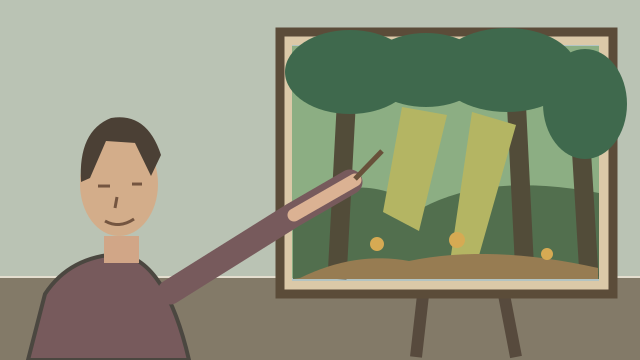
Narcisse-Virgile Diaz de la Peña was a French Barbizon painter celebrated for dense Fontainebleau woods, glowing color, and romantic mythological scenes.
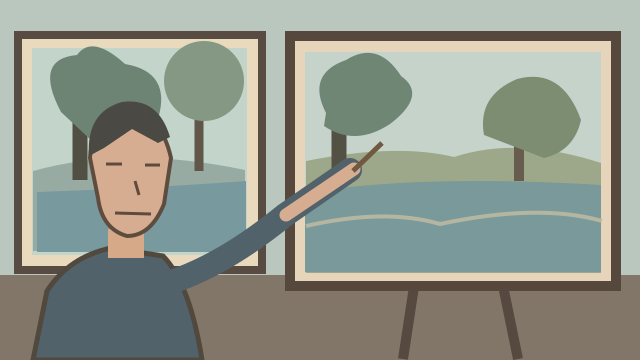
Jean-Baptiste-Camille Corot was a French landscape painter associated with Barbizon whose direct outdoor studies and quiet wooded scenes anticipated Impressionism.