Gustave Courbet
Gustave Courbet was a French Realist painter known for large scenes of ordinary life, rugged landscapes, and thick oil paint worked with a palette knife.
Painter
Jean-Baptiste-Camille Corot was a French landscape painter whose direct studies and quiet wooded scenes linked Barbizon practice with Impressionism.
Corot painted oil sketches directly from nature and developed atmospheric studio landscapes, linking Barbizon practice with the Impressionist landscapes.
| Full name | Jean-Baptiste-Camille Corot |
|---|---|
| Born | 1796 · Paris, France |
| Died | 1875 · Paris, France |
| Nationality | French |
| Movements | Barbizon School; Realism (related landscape tradition) |
| Paint types | Oil Paint |
| Other media | — |
| Other materials | — |
| Painting surfaces | Canvas · Paper · Wood |
| Painting methods | Made outdoor oil studies, then refined studio paintings with soft tonal transitions and reflected light |
| Common subjects | Ponds, trees, villages, Italian hillsides, rural figures, and misty landscapes |
| Notable works | Ville-d'Avray · Italian Landscape · The Bridge at Narni · The Muse: History |
Sources: The Met: Ville-d'Avray, The Met: Italian Landscape, The Met: The Muse: History.
Corot worked mainly in oil for landscapes and figures; records also document watercolor studies and oil paintings transferred from paper to rigid supports.

Corot painted landscapes and figures in oil, including the Met’s Hagar in the Wilderness on canvas. His oil practice also includes works begun on paper and later laid down on canvas or wood, as in the Met’s Italian Landscape and Waterfall at Terni; those composite supports need to be distinguished from direct canvas painting.
Sources: The Met: Italian Landscape, oil on paper laid down on canvas, The Met: Waterfall at Terni, oil on paper laid down on wood, The Met: Hagar in the Wilderness, oil on canvas.
Collection records document Jean-Baptiste-Camille Corot's use of canvas, paper, and wood, while examples below connect each support to a named work.
The Met catalogs Hagar in the Wilderness as oil on canvas and records Italian Landscape as oil on paper laid down on canvas. These examples show canvas both as a direct painting support and as a backing for a painted sheet, two distinct constructions in Corot’s collection.

Corot made oil sketches on paper, including the Met’s Italian Landscape, later laid down on canvas, and Waterfall at Terni, laid down on wood. The paper is the original painted surface in each case, even though a second support was added for stability.
The Met catalogs Corot’s Waterfall at Terni as oil on paper laid down on wood, while the National Gallery of Art records his Corot’s Studio as oil on wood. Together these works document both a wooden backing beneath painted paper and a panel painted directly.
Sources: The Met: Ville-d'Avray, The Met: Italian Landscape, The Met: The Muse: History., National Gallery of Art: Corot’s Studio, oil on wood
Courbet focused on independent Realism, while Millet shared Corot’s interest in rural life, the French countryside, and outdoor painting in different ways.
Gustave Courbet was a French Realist painter known for large scenes of ordinary life, rugged landscapes, and thick oil paint worked with a palette knife.
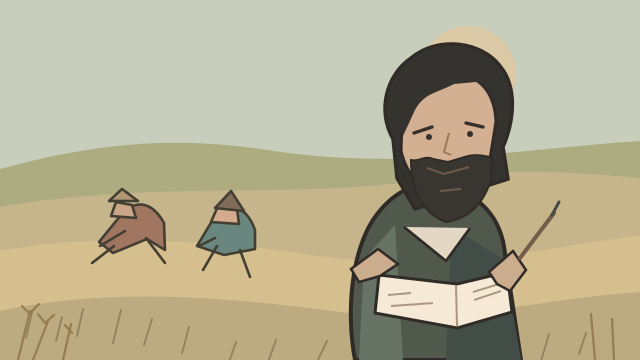
Jean-François Millet was a French Realist painter associated with Barbizon, best known for paintings of agricultural workers and rural life.