
Gustave Courbet
Gustave Courbet was a French Realist painter known for large scenes of ordinary life, rugged landscapes, and thick oil paint worked with a palette knife.

Painting Movement
Realism emerged in nineteenth-century France as painters depicted ordinary people, rural labor, and contemporary life without idealization or heroic subjects.
French Realism challenged academic painting by treating modern life and working people as serious subjects, sometimes on the scale of history paintings.
| Origin | France, especially Paris and rural French regions |
|---|---|
| Approximate period | 1840s–1880s |
| French name | Réalisme |
| Historical setting | Industrialization, social change, and the revolutions of 1848 |
| Leading painter | Gustave Courbet |
| Defining characteristics | Ordinary contemporary subjects, direct observation, unidealized figures, and attention to material detail |
| Common subjects | Farm workers, village life, urban workers, ordinary people, and landscapes |
| Exhibition milestone | Courbet's independent Pavilion of Realism in Paris, 1855 |
| Painting techniques | Visible brushwork and sometimes thick paint applied with a palette knife; approaches varied |
| Paint medium | Oil paint, among other media |
| Painting surfaces | Canvas, among other supports |
| Meaning of the name | Refers here to the French nineteenth-century movement, not all paintings made to look realistic |
Sources: The Met: Nineteenth-Century French Realism, The National Gallery: Realist, and The National Gallery: Gustave Courbet.
Courbet, Millet, and Daumier approached contemporary life through village scenes, agricultural labor, and everyday experiences in a changing society.
Gustave Courbet was a French Realist painter known for large scenes of ordinary life, rugged landscapes, and thick oil paint worked with a palette knife.

Jean-François Millet was a French Realist painter associated with Barbizon, best known for paintings of agricultural workers and rural life.
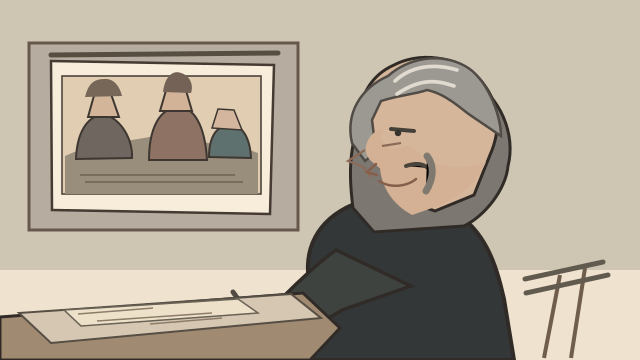
Honoré Daumier was a French Realist painter, caricaturist, and printmaker known for social observation, satirical lithographs, and scenes of ordinary people.
Realism rejected much Romantic idealization, while Impressionism later explored modern everyday subjects with greater attention to changing light.
| Movement | How it differs |
|---|---|
| Romanticism | Often drew on dramatic, historical, literary, or exotic subjects, rather than Realism's focus on ordinary contemporary experience. |
| Impressionism | Also pictured modern life but placed greater emphasis on fleeting light, atmosphere, and changing visual impressions. |
Sources: The National Gallery: Realist and The Met: French Realism.