
Oil Paint
Oil paint is a slow-drying art medium made with pigment and a drying-oil binder that allows extended working time, smooth blending, and layered application.
Painter
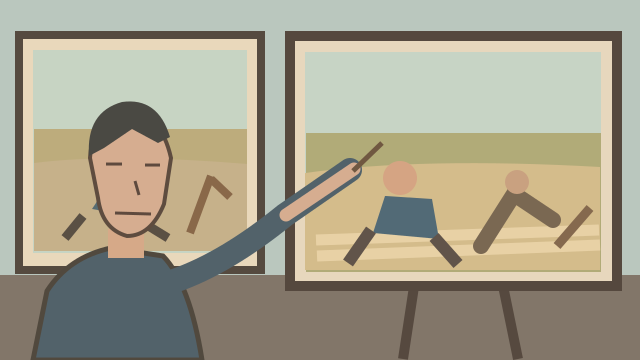
Jules Bastien-Lepage was a French Naturalist painter whose closely observed rural workers and portraits brought unidealized detail to Salon painting.
Bastien-Lepage brought close observation, subtle natural light, and unusual framing to rural subjects and ambitious Salon paintings.
| Born | 1848 · Damvillers, France |
|---|---|
| Died | 1884 · Paris, France |
| Nationality | French |
| Movements | Naturalism; Realism (related French tradition) |
| Paint types | Oil Paint |
| Painting surfaces | Canvas |
| Painting methods | Careful naturalistic modeling, understated color, observed faces, detailed vegetation, and close cropping |
| Common subjects | Haymakers, rural children, peasants, portraits, fields, and religious figures presented naturalistically |
| Notable works | The Haymakers (Les Foins) · Joan of Arc · Self-Portrait |
| Other details | Naturalism is a later related approach, not identical to the original mid-nineteenth-century French Realist movement. |
Sources: Musée d'Orsay: The Haymakers, The Met: Joan of Arc, Musée d'Orsay: Jules Bastien-Lepage.
Both The Haymakers, at the Musée d'Orsay, and Joan of Arc, at the Met, are documented as oil paintings.
Oil paint is a slow-drying art medium made with pigment and a drying-oil binder that allows extended working time, smooth blending, and layered application.
Both major naturalist paintings are oil on canvas in their respective museum catalogues.

Canvas is a woven fabric support, commonly cotton or linen, used for painting and sold either raw or prepared with a compatible ground layer.
Millet and Breton also focused on French rural life, using different degrees of idealization and observation.
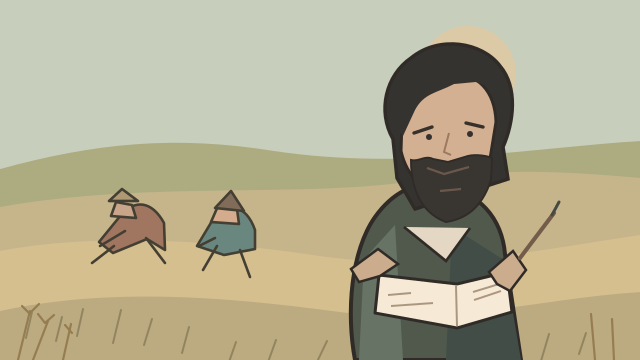
Jean-François Millet was a French Realist painter associated with Barbizon, best known for paintings of agricultural workers and rural life.

Jules Breton was a French Realist painter celebrated for sunlit fields, dignified rural workers, and quietly lyrical scenes of peasant life.