
Oil Paint
Oil paint is a slow-drying medium made from pigments in drying oil, suitable for blending, layering, and textured brushwork.
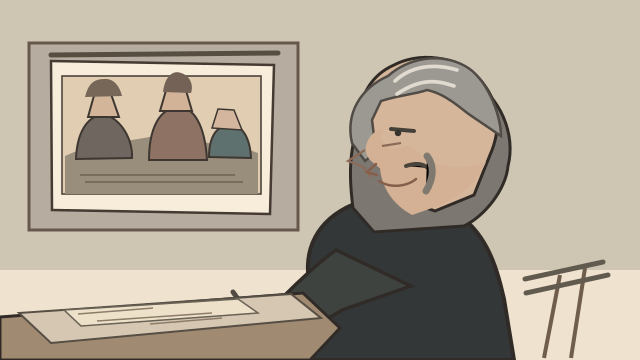
Painter
Honoré Daumier was a French Realist painter, caricaturist, and printmaker known for social observation, satirical lithographs, and scenes of ordinary people.
Key details about Honoré Daumier's painting materials, methods, subjects, and role in nineteenth-century French Realism.
| Born | 1808 · Marseille, France |
|---|---|
| Died | 1879 · Valmondois, France |
| Nationality | French |
| Movement | Realism |
| Paint types | Oil Paint |
| Painting surfaces | Canvas |
| Painting methods | Fluid brushwork in oil paintings; drawing and lithography for satirical publications |
| Common subjects | City life, passengers, working people, lawyers, judges, politics, and social types |
| Notable works | The Third-Class Carriage and Don Quixote and Sancho Panza |
Sources: The National Gallery: Daumier, The Met: The Third-Class Carriage.
Honoré Daumier worked with the following documented painting media.
Oil paint is a slow-drying medium made from pigments in drying oil, suitable for blending, layering, and textured brushwork.
These supports are documented in Honoré Daumier's work.

Canvas is a woven fabric support for paintings. Priming, sizing, and weave influence how paint absorbs and adheres.
Other painters associated with nineteenth-century French Realism.
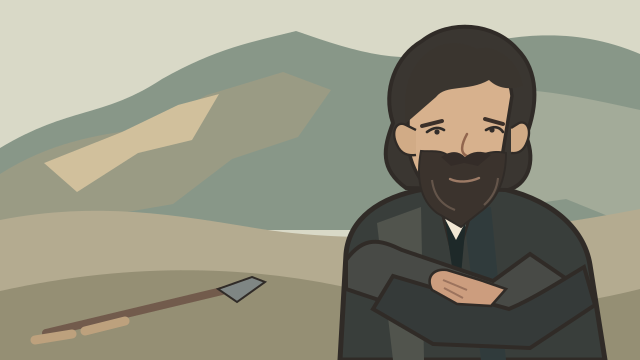
Gustave Courbet was a French Realist painter known for large scenes of ordinary life, rugged landscapes, and thick oil paint worked with a palette knife.
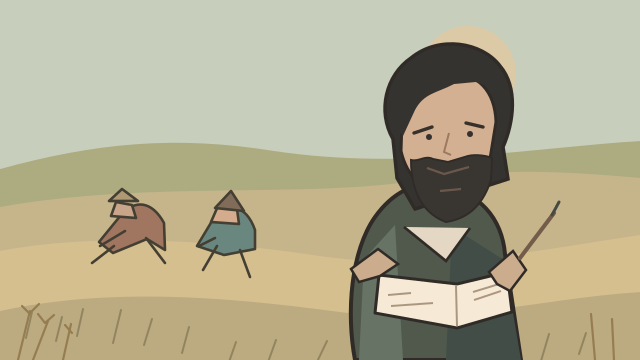
Jean-François Millet was a French Realist painter associated with Barbizon, best known for paintings of agricultural workers and rural life.