
Oil Paint
Oil paint is a slow-drying art medium made with pigment and a drying-oil binder that allows extended working time, smooth blending, and layered application.
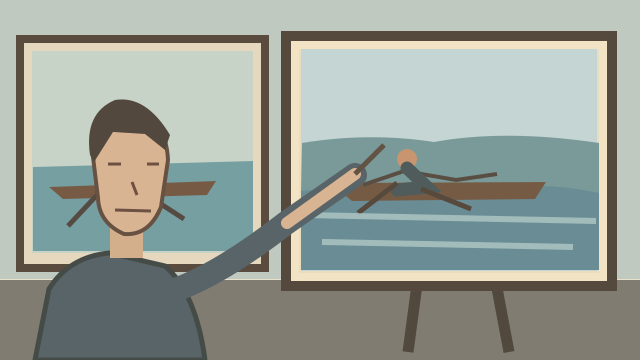
Painter
Thomas Eakins was an American Realist painter whose portraits, rowing scenes, and surgical classrooms show careful anatomy, light, and observation.
Eakins painted sporting scenes and portraits grounded in close observation, geometry, anatomy, and photographic studies.
| Born | 1844 · Philadelphia, Pennsylvania, United States |
|---|---|
| Died | 1916 · Philadelphia, Pennsylvania, United States |
| Nationality | American |
| Movements | Realism |
| Paint types | Oil Paint · Watercolor Paint |
| Painting surfaces | Canvas · Paper · Cardboard |
| Painting methods | Measured perspective, anatomical study, preparatory oil sketches, photographic references, subtle tonal modeling, and transparent watercolor |
| Common subjects | Philadelphia rowers, surgeons, students, boxers, portraits, boats, and working people |
| Notable works | The Gross Clinic · The Champion Single Sculls · John Biglin in a Single Scull · The Agnew Clinic |
| Paperboard example | The Met catalogs a watercolor-and-India-ink study of The Gross Clinic on cardboard, separate from the finished oil canvas |
Sources: Pennsylvania Academy of the Fine Arts: The Gross Clinic, oil on canvas, The Met: John Biglin in a Single Scull, watercolor on paper, The Met: The Gross Clinic study, watercolor and ink on cardboard, Philadelphia Museum of Art: Thomas Eakins, American Realist.
Eakins painted major works such as The Gross Clinic in oil, while using watercolor for detailed boating scenes and preparatory studies.
Oil paint is a slow-drying art medium made with pigment and a drying-oil binder that allows extended working time, smooth blending, and layered application.

Watercolor paint is a water-based art medium made with pigment and a water-soluble binder, typically applied in transparent washes on absorbent paper.
Museum records identify oil on canvas, watercolor on paper, and a watercolor-and-ink study on cardboard.

Canvas is a woven fabric support, commonly cotton or linen, used for painting and sold either raw or prepared with a compatible ground layer.

Paper is an absorbent sheet material made from pressed fibers, with weight, sizing, and surface texture controlling moisture tolerance and paint behavior.

Cardboard is a lightweight, absorbent paper-based sheet material whose fibers and corrugated layers can soften or warp when exposed to heavy wet coats.
Bellows also painted American sporting and urban life; Repin portrayed contemporary people with equally close Realist observation.
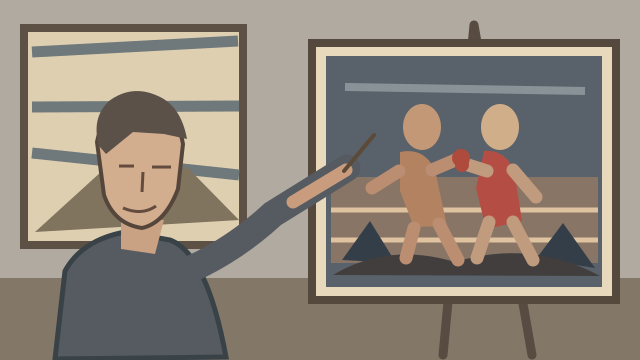
George Bellows was an American Ashcan School painter known for energetic scenes of New York City, boxing matches, crowded streets, and rough seas.
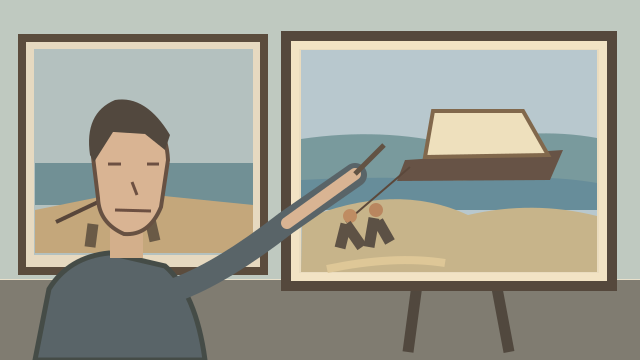
Ilya Repin was a Ukrainian-born painter of the Russian Realist school whose portraits, scenes of social struggle, and history paintings capture human expression.