
Oil Paint
Oil paint is a slow-drying art medium made with pigment and a drying-oil binder that allows extended working time, smooth blending, and layered application.
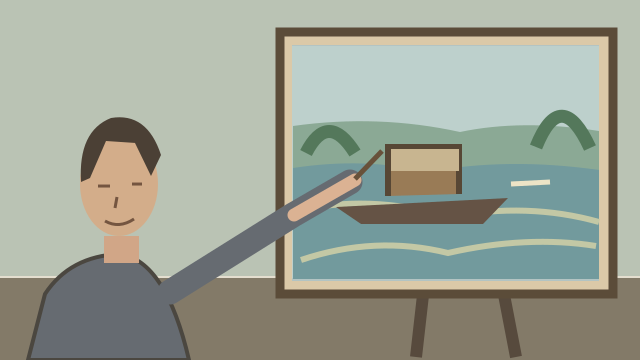
Painter
Charles-François Daubigny was a French Barbizon-associated landscape painter known for river views, flowering orchards, and direct studies of changing light.
Daubigny painted waterways from his boat-studio and helped connect naturalistic Barbizon painting to the freer handling of Impressionism.
| Born | 1817 · Paris, France |
|---|---|
| Died | 1878 · Paris, France |
| Nationality | French |
| Movements | Barbizon School |
| Paint types | Oil Paint |
| Painting surfaces | Canvas · Wood · Paper |
| Painting methods | Painting outdoors and from a floating studio on the Oise, with changing skies, reflections, and increasingly rapid brushwork |
| Common subjects | Rivers, waterways, barges, orchards, village outskirts, marsh birds, and reflections on water |
| Notable works | The Hamlet of Optevoz · The Banks of the Oise · Apple Blossoms · Landscape with a Sunlit Stream |
Sources: The Met: The Hamlet of Optevoz, oil on canvas, The Met: The Banks of the Oise, oil on wood, The Met: View at Auvers-sur-Oise, oil on paper laid down on canvas, The Met: Barbizon School and Daubigny's studio boat.
The Met documents Daubigny's landscape paintings as oils on several supports, from small wood panels to canvas and paper studies.
Oil paint is a slow-drying art medium made with pigment and a drying-oil binder that allows extended working time, smooth blending, and layered application.
Daubigny's The Banks of the Oise is oil on wood; The Hamlet of Optevoz is on canvas, with a paper-based oil study at Auvers-sur-Oise.

Canvas is a woven fabric support, commonly cotton or linen, used for painting and sold either raw or prepared with a compatible ground layer.

Wood is a natural, porous material whose grain, absorbency, knots, resin, species, and existing finish all influence paint preparation and adhesion.

Paper is an absorbent sheet material made from pressed fibers, with weight, sizing, and surface texture controlling moisture tolerance and paint behavior.
Corot and Rousseau also developed naturalistic French landscapes, although Daubigny became particularly known for river subjects.
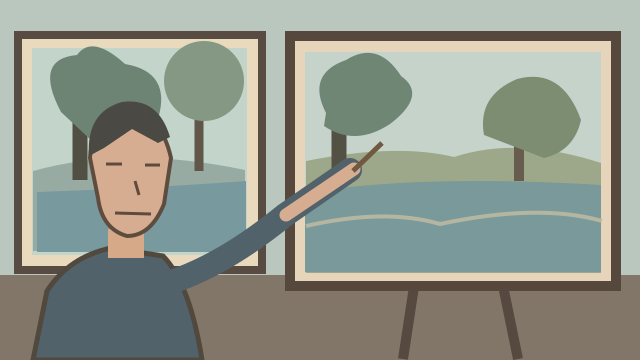
Jean-Baptiste-Camille Corot was a French landscape painter associated with Barbizon whose direct outdoor studies and quiet wooded scenes anticipated Impressionism.
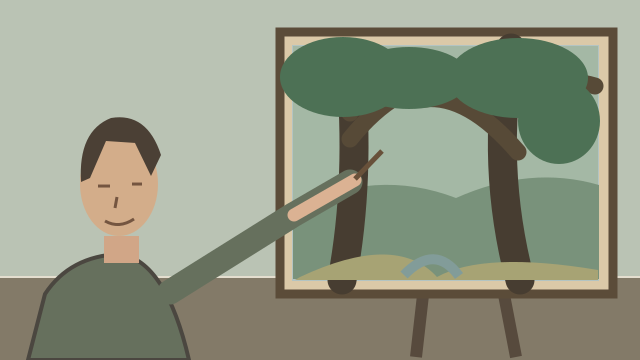
Théodore Rousseau was a French Barbizon School painter whose richly observed forests, old trees, and changing skies gave landscape a commanding presence.