
Oil Paint
Oil paint is a slow-drying art medium made with pigment and a drying-oil binder that allows extended working time, smooth blending, and layered application.
Painting Movement
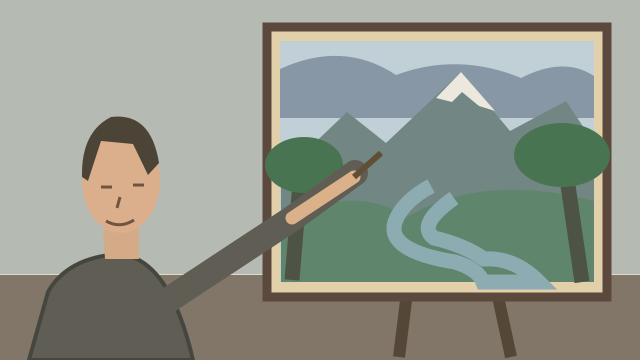
The Hudson River School was a nineteenth-century American landscape movement known for dramatic wilderness, detailed observation, and expansive river and mountain scenes.
Often traced to Cole's Catskill paintings of 1825, the school was an influential New York landscape circle, not a formally founded academy.
| Approximate period | 1825–1870s, with later associated painters |
|---|---|
| Origin | New York, United States; the Hudson River Valley and nearby Catskill Mountains |
| Identity | Informal American landscape-painting movement, not a school building or fixed-membership society |
| Historical name | The label “Hudson River School” came into use in the 1870s, after the tradition had developed |
| Leading painters | Thomas Cole, Asher B. Durand, and Frederic Edwin Church |
| Painting methods | Outdoor sketching and oil studies; closely observed trees, rocks, and light; finished studio panoramas, often combining several studies |
| Common subjects | River bends, forests, valleys, waterfalls, mountain peaks, wilderness, changing weather, and settlement |
| Documented materials | Oil paint on canvas; some preparatory studies on composition board or paper |
| Relationship | Connected to Romanticism and the sublime; the French Barbizon School offered a different, more intimate landscape tradition |
Sources: The Met: Hudson River School history, artists, and outdoor painting, Hudson River Museum: school and historical context, The Met: The Oxbow, oil on canvas, The Met: Cole's composition-board oil sketch, The Met: Heart of the Andes, oil on canvas.
Oil paint was central to Hudson River School landscapes; modern acrylics, water-mixable oils, and water-based paints can also recreate their light, depth, and outdoor studies.
Oil paint is a slow-drying art medium made with pigment and a drying-oil binder that allows extended working time, smooth blending, and layered application.

Water-mixable oil paint is oil paint made with modified drying oils that allow mixing and cleanup with water while retaining the working properties of traditional oils.

Acrylic paint is a fast-drying, water-based paint made with pigment and an acrylic polymer binder that forms a durable film on many prepared surfaces.

Watercolor paint is a water-based art medium made with pigment and a water-soluble binder, typically applied in transparent washes on absorbent paper.

Gouache paint is an opaque, water-based art medium made with pigment and a water-soluble binder, drying to a matte finish that can be reactivated with water.

Acrylic gouache is an opaque acrylic paint that dries to a flat matte finish while forming a permanent, water-resistant film unlike traditional gouache.
Cole helped establish American Romantic landscape painting, Durand championed close observation, and Church developed panoramic views on a monumental scale.
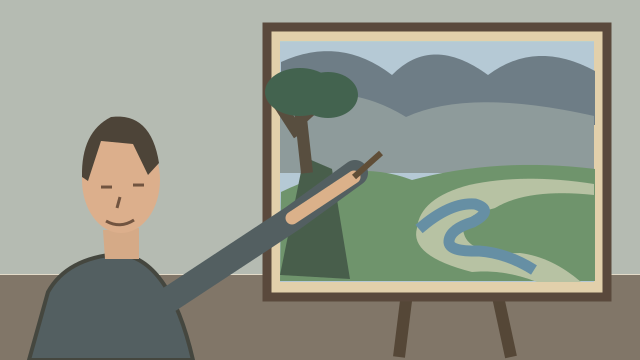
Thomas Cole was an English-born American painter whose dramatic Catskill landscapes and allegorical cycles helped establish the Hudson River School.
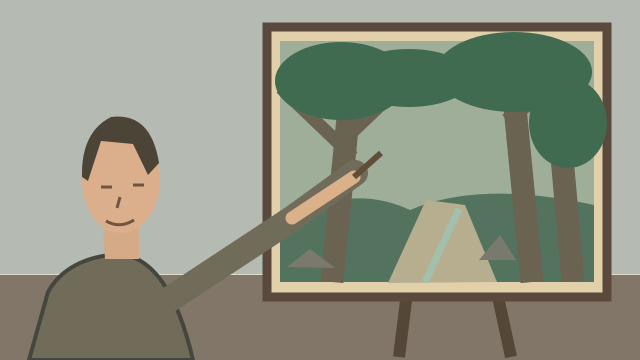
Asher B. Durand was an American Hudson River School painter who favored careful observation of trees, quiet forests, and luminous outdoor studies.
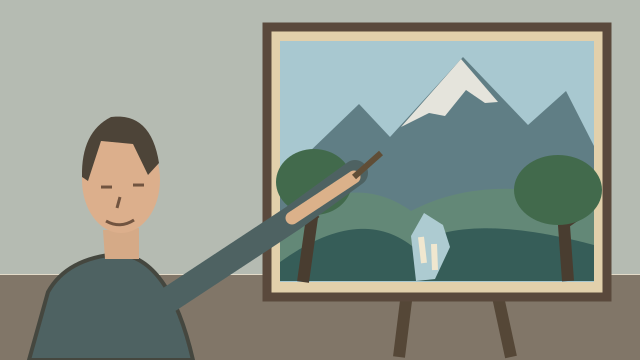
Frederic Edwin Church was an American Hudson River School painter celebrated for monumental views of the Andes, Niagara Falls, and atmospheric light.
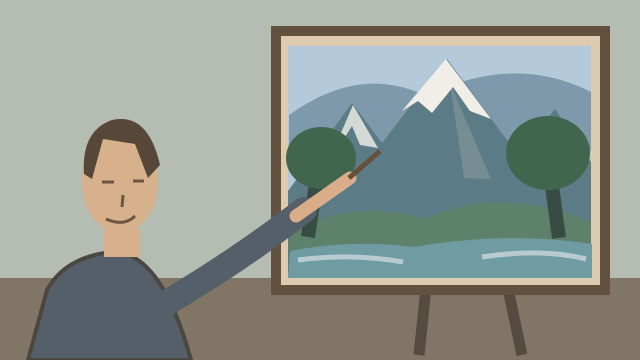
Albert Bierstadt was a German-born American Hudson River School painter known for monumental western mountain landscapes, radiant light, and dramatic skies.
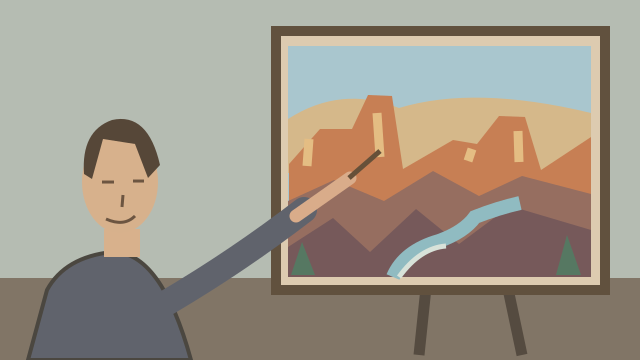
Thomas Moran was an English-born American painter associated with the Hudson River School, renowned for Yellowstone, canyon landscapes, and vivid watercolor studies.
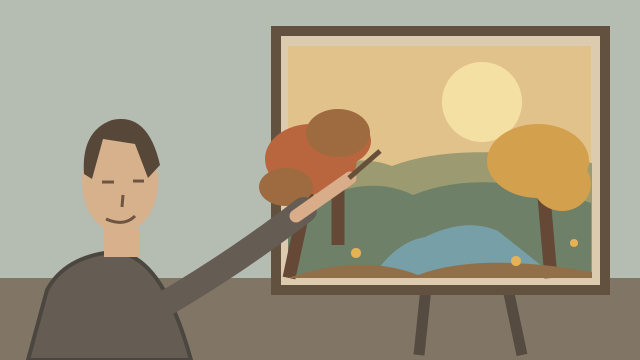
Jasper Francis Cropsey was an American Hudson River School painter celebrated for brilliantly colored autumn woods, broad river valleys, and detailed landscapes.
The Hudson River School drew on Romanticism's sublime landscapes; the French Barbizon School focused on closer studies of nature, and later Tonalism favored softened forms and atmospheric mood.
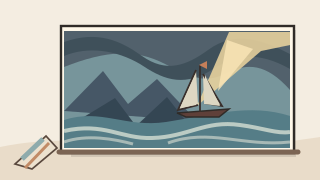
Romanticism spread across Europe in the early nineteenth century, using dramatic landscapes, vivid emotion, and imaginative subjects to challenge artistic restraint.
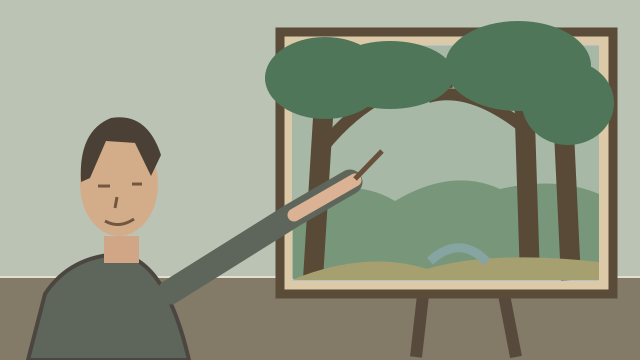
The Barbizon School was a loose circle of nineteenth-century French painters who studied forests, fields, and rural life directly from nature.
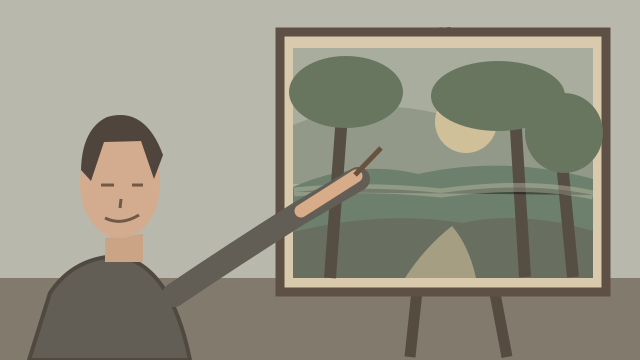
Tonalism was a late-nineteenth-century American painting approach that used muted colors, soft edges, and atmospheric light to suggest mood rather than precise detail.