
Oil Paint
Oil paint is a slow-drying art medium made with pigment and a drying-oil binder that allows extended working time, smooth blending, and layered application.
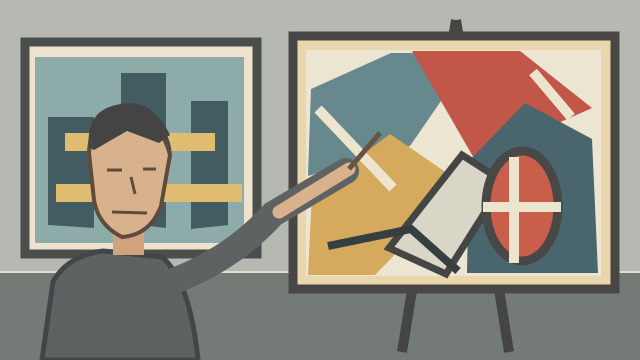
Painter
Fernand Léger was a French Cubist painter known for machine-like cylindrical shapes, high-contrast colors, modern cities, and monumental figures.
Léger developed a personal Cubist language of boldly outlined forms, rhythmic mechanical shapes, and high-contrast colors drawn from modern life.
| Born | 1881 · Argentan, France |
|---|---|
| Died | 1955 · Gif-sur-Yvette, France |
| Nationality | French |
| Movements | Cubism |
| Paint types | Oil Paint · Gouache Paint · Watercolor Paint |
| Painting surfaces | Canvas · Paper |
| Painting methods | Interlocking tubular and geometric volumes, defined outlines, flat blocks of primary color, and painted studies for large murals |
| Common subjects | Construction workers, machines, city buildings, cyclists, performers, swimmers, and manufactured objects |
| Notable works | The Village · The Builders · The Bicyclists · Study for a mural |
| Other supports | Gouache on board is documented in studies for a cinematic mural |
Sources: The Met: The Village, oil on canvas, The Met: The Builders, oil on canvas, MoMA: Study for a mural, gouache and watercolor on paper, MoMA: Study for Cinematic Mural, gouache on board.
Léger painted large works in oil and used gouache and watercolor for studies on paper, including designs for monumental murals.
Oil paint is a slow-drying art medium made with pigment and a drying-oil binder that allows extended working time, smooth blending, and layered application.

Gouache paint is an opaque, water-based art medium made with pigment and a water-soluble binder, drying to a matte finish that can be reactivated with water.

Watercolor paint is a water-based art medium made with pigment and a water-soluble binder, typically applied in transparent washes on absorbent paper.
Museum records document his oils on canvas and gouache or watercolor mural studies on paper; some gouache studies were executed on board.

Canvas is a woven fabric support, commonly cotton or linen, used for painting and sold either raw or prepared with a compatible ground layer.

Paper is an absorbent sheet material made from pressed fibers, with weight, sizing, and surface texture controlling moisture tolerance and paint behavior.
Braque and Gris also worked through Cubist forms, while Léger emphasized cylindrical volumes and the geometry of modern machines.
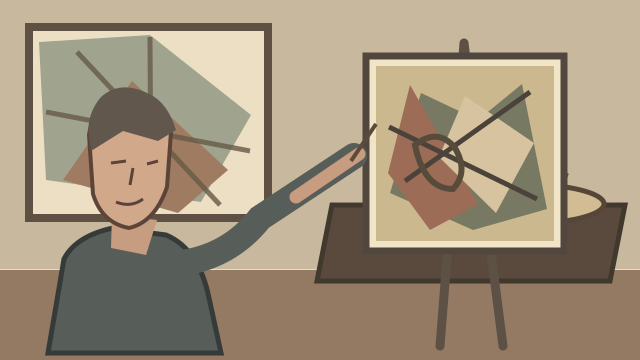
Georges Braque was a French painter who helped develop Cubism, combining fragmented still lifes with textured oil paint, stenciling, and paper collage.
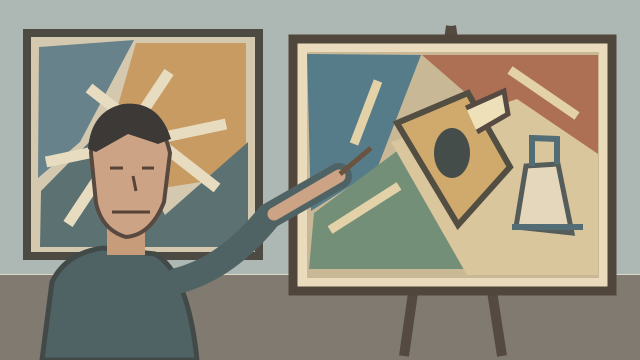
Juan Gris was a Spanish Cubist painter whose still lifes combine crystalline geometric planes, bright color, and precisely constructed paper collage.