Georges Braque
Georges Braque was a French painter who helped develop Cubism, combining fragmented still lifes with textured oil paint, stenciling, and paper collage.
Painter
Juan Gris was a Spanish Cubist painter whose still lifes combine crystalline geometric planes, bright color, and precisely constructed paper collage.
Gris developed a systematic Cubist approach in Paris, coordinating overlapping objects, painted planes, and carefully placed printed papers.
| Full name | José Victoriano Carmelo Carlos González Pérez |
|---|---|
| Born | 1887 · Madrid, Spain |
| Died | 1927 · Boulogne-sur-Seine, France |
| Nationality | Spanish |
| Movements | Cubism |
| Paint types | Oil Paint · Gouache Paint |
| Other media | Drawing · collage |
| Other materials | Newspapers · printed imitation wood-grain paper · labels |
| Painting surfaces | Canvas · Paper |
| Painting methods | Geometric division of objects, intersecting viewpoints, cut-and-pasted papers, layered gouache and oil, and imitation printed wood grain |
| Common subjects | Guitars, glasses, bottles, fruit dishes, newspapers, café tables, and occasional urban scenes |
| Notable works | Houses in Paris · Breakfast · Bottle of Rum and Newspaper · The Man at a Café |
Sources: Guggenheim: Houses in Paris, oil on canvas, MoMA: Breakfast, gouache and oil on collaged paper and canvas, Guggenheim: Bottle of Rum and Newspaper, paper collage and gouache, The Met: The Man at a Café, oil and newsprint on canvas.
Gris used oil for paintings and gouache in carefully constructed Cubist collages, where printed paper and drawing remained distinct materials.
Gris's Houses in Paris (1911) is oil on canvas, dividing Montmartre buildings into flattened geometric planes. In The Man at the Café (winter–spring 1914), he combined oil with collaged newsprint on canvas. The Met describes thick white paint at the top of a beer glass, stippled with a brush end to suggest foam; the newsprint is a separate pasted material.
In Breakfast (Le Petit déjeuner) (1914), Gris combined opaque gouache, oil, and crayon with cut-and-pasted printed paper on canvas. Bottle of Rum and Newspaper (June 1914) likewise uses gouache alongside Conté crayon, graphite, newspaper, and paper collage mounted on canvas. Both works layer actual print and painted imitation without treating pasted paper as paint.
Sources: Guggenheim: oil-on-canvas Houses in Paris, The Met: oil and newsprint in The Man at the Café, MoMA: gouache, oil, and collage in Breakfast, and Peggy Guggenheim Collection: gouache in Bottle of Rum and Newspaper.
The examples below document Juan Gris's use of canvas and paper, linking each surface to a named work and distinguishing it from other materials.
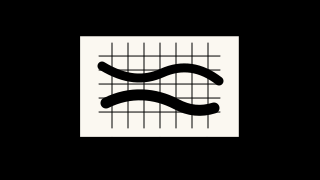
Gris painted on canvas in works such as Houses in Paris (1911) and The Man at the Café (1914). In the latter, oil paint shares the surface with pasted newsprint, so canvas carries both painted imitation and actual fragments. These works make the support part of a layered Cubist construction.
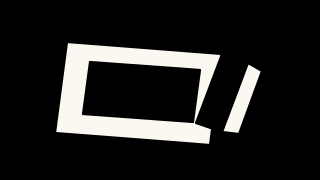
Gris used paper in collages and gouache compositions, sometimes attaching the sheets to canvas. The Met’s Breakfast (1914) combines cut-and-pasted printed paper with paint and crayon on canvas, while Bottle of Rum and Newspaper incorporates paper collage. The support can therefore be a painted sheet or one material within a larger construction.
Sources: Guggenheim: Houses in Paris, oil on canvas, MoMA: Breakfast, gouache and oil on collaged paper and canvas, Guggenheim: Bottle of Rum and Newspaper, paper collage and gouache, The Met: The Man at a Café, oil and newsprint on canvas.
Gris worked alongside Braque and Picasso as Cubism developed, sharing their interest in multiple viewpoints and the possibilities of papier collé.
Georges Braque was a French painter who helped develop Cubism, combining fragmented still lifes with textured oil paint, stenciling, and paper collage.
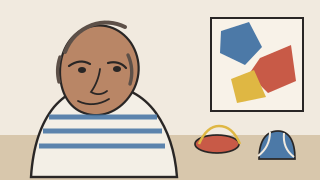
Pablo Picasso was a Spanish artist whose career ranged from the Blue and Rose periods through Cubism, Surrealism, sculpture, printmaking, and ceramics.