
Oil Paint
Oil paint is a slow-drying art medium made with pigment and a drying-oil binder that allows extended working time, smooth blending, and layered application.
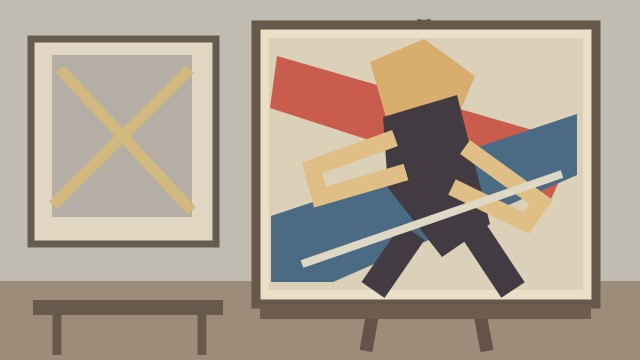
Painter
Varvara Stepanova was a Russian avant-garde artist whose geometric oil paintings of figures evolved alongside her influential Constructivist work in textiles, clothing, and graphic design.
Stepanova painted both oil-on-canvas figures and smaller gouache works on paper. Her later textiles, printed graphics, and stage work belonged to a different, production-oriented artistic practice. Birth dates vary across museum catalogs; the year 1894 is secure.
| Born | 1894 · Kovno, Russian Empire (now Kaunas, Lithuania) |
|---|---|
| Died | May 20, 1958 · Moscow, Soviet Union |
| Nationality | Russian |
| Movements | Constructivism and the Russian avant-garde |
| Paint types | Oil paint in Billiard Players (1920) and Figure (1921) · gouache in a 1919 Untitled work on paper; a 1971 MoMA catalogue also records tempera on paper |
| Painting surfaces | Canvas for oil paintings · paper for gouache and tempera works |
| Painting methods | Reduced people and objects to angular blocks, intersecting geometric shapes, and emphatic colors; later developed textile patterns and graphic arrangements for mass production |
| Common subjects | Athletes and workers, movement, geometric figures, and modern collective life |
| Notable works | Billiard Players (1920) · Figure (1921) · later textile and clothing designs (distinct from easel paintings) |
Sources: Thyssen-Bornemisza: Billiard Players, MoMA: Figure, MoMA: 1919 gouache painting, MoMA 1971 catalogue: tempera work on paper, MoMA: Varvara Stepanova, Thyssen-Bornemisza: artist biography.
Museo Thyssen-Bornemisza catalogues Billiard Players as oil on canvas, and MoMA records Figure (1921) in the same medium. MoMA also documents a 1919 gouache painting on paper and an additional tempera-on-paper work in an earlier catalogue. These painted originals are distinct from prints, typographic design, and fabric production.
Oil paint is a slow-drying art medium made with pigment and a drying-oil binder that allows extended working time, smooth blending, and layered application.

Gouache paint is an opaque, water-based art medium made with pigment and a water-soluble binder, drying to a matte finish that can be reactivated with water.
The documented figurative oil paintings use canvas, while MoMA's 1919 gouache work and a catalogued tempera work use paper. Printed textiles and typographic pages remain separate from painted papers.

Canvas is a woven fabric support, commonly cotton or linen, used for painting and sold either raw or prepared with a compatible ground layer.

Paper is an absorbent sheet material made from pressed fibers, with weight, sizing, and surface texture controlling moisture tolerance and paint behavior.
Stepanova and Rodchenko worked closely in the Soviet avant-garde, while Popova similarly moved from experimental paintings toward clothing and textile design.
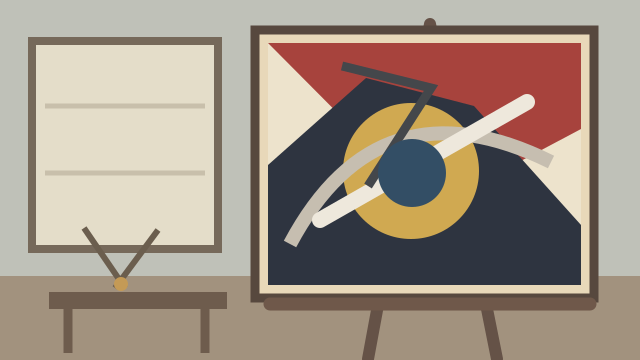
Aleksandr Rodchenko was a Russian avant-garde artist who experimented with geometric oil paintings, textured black-on-black canvases, and radical monochromes before concentrating on design and photography.
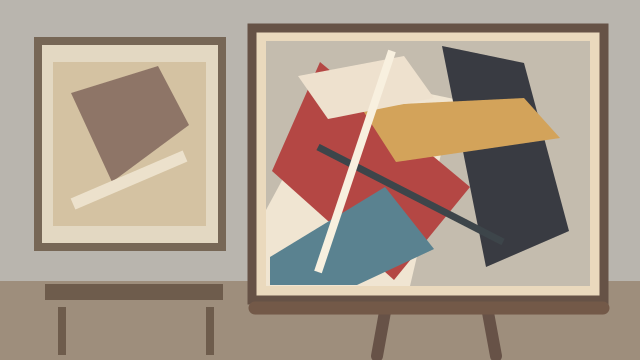
Liubov Popova was a Russian avant-garde painter known for overlapping geometric oil paintings and Painterly Architectonics before shifting toward textile and theatrical design.