
Joan Miró
Joan Miró was a Spanish artist associated with Surrealism, known for biomorphic forms, symbolic imagery, vivid color, and abstract painting and prints.

Painter
Salvador Dalí was a Spanish Surrealist painter known for meticulously rendered dream scenes, uncanny objects, and precise oil-painting techniques.
Dalí experimented with Cubism before developing the meticulous dream imagery that became central to his Surrealist paintings and their optical puzzles.
| Full name | Salvador Domingo Felipe Jacinto Dalí i Domènech |
|---|---|
| Born | May 11, 1904 · Figueres, Spain |
| Died | January 23, 1989 · Figueres, Spain |
| Nationality | Spanish |
| Movements | Surrealism |
| Paint types | Oil paint · Gouache · Watercolor |
| Other media | Drawing, printmaking, design, film collaborations, and sculpture |
| Other materials | — |
| Painting surfaces | Canvas · Paper · Cardboard · Painting board |
| Painting methods | Precisely modeled oil paintings; watercolor, gouache, ink, and collage combined in designs on board |
| Common subjects | Dreamlike landscapes, melting and transformed objects, figures, animals, and the Catalan coast |
| Notable works | The Persistence of Memory, Metamorphosis of Narcissus, and The Disintegration of the Persistence of Memory |
Sources: Guggenheim: Salvador Dalí, MoMA: The Persistence of Memory, The Met: Bathers at the Beach, The Met: Study for Vogue cover, Gala-Salvador Dalí Foundation: gouache on cardboard.
Dalí used carefully modeled oil paint for Surrealist canvases and watercolor or gouache in drawings, designs, and studies on paper and board.

The Persistence of Memory (1931) is oil on canvas, despite its small size. Dalí rendered the limp clocks and the distant Catalan coast with precise, illusionistic detail. His sharply defined forms turn an imaginary scene into something resembling a carefully observed landscape; the painting's soft-looking objects do not indicate soft or water-based paint.

Bathers at the Beach (1939) uses gouache with brush and black ink on illustration board. The Gala-Salvador Dalí Foundation also records an Untitled work (c. 1979) in gouache on cardboard mounted on plywood. These examples document opaque water-based paint on rigid supports, not the medium of his better-known oil canvases.

Dalí's Study for “Vogue” cover (1944) combines watercolor and gouache with black ink, graphite, and cut-and-pasted paper on board. The watercolor belongs to a layered design made with several materials; the ink, graphite, and collage fragments are not additional kinds of paint.
Sources: MoMA: The Persistence of Memory, oil on canvas, The Met: Bathers at the Beach, gouache and ink, Gala-Salvador Dalí Foundation: Untitled, gouache on cardboard, and The Met: Study for “Vogue” cover, watercolor and gouache.
Documented works by Salvador Dalí use Canvas and Paper, with examples clarifying when a material is painted ground, backing, or part of a constructed work.

Dalí’s paintings, including The Persistence of Memory (1931), are documented on canvas. Its limp clocks and distant Catalan coast are rendered with precise, illusionistic detail; the small oil painting shows his use of a flexible support for an impossible scene painted to resemble careful observation.

Dalí made drawings and painted works on paper, including gouache and watercolor studies. These sheets document his use of water-based paint and ink in designs distinct from the oil canvases; the support may be mounted or combined with board in specific works.

Cardboard appears in Dalí’s painted works and studies, including rigid illustration boards. The lightweight support suits compact designs and mixed-media compositions, distinct from the canvas used for his major oil paintings. The record identifies the panel as part of the painted construction.

Dalí used painting board for selected paintings and studies, including Bathers at the Beach, made in gouache and ink on illustration board. The rigid surface supports opaque paint and drawing, separate from his oil paintings on canvas. The record identifies the panel as part of the painted construction.
Sources: Guggenheim: Salvador Dalí, MoMA: The Persistence of Memory, The Met: Bathers at the Beach, The Met: Study for Vogue cover, Gala-Salvador Dalí Foundation: gouache on cardboard.
Dalí's Surrealist imagery connects him to painters using symbolism and unexpected juxtapositions, while his precise technique gives his scenes clarity.
Joan Miró was a Spanish artist associated with Surrealism, known for biomorphic forms, symbolic imagery, vivid color, and abstract painting and prints.
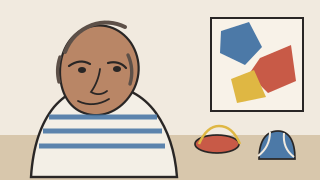
Pablo Picasso was a Spanish artist whose career ranged from the Blue and Rose periods through Cubism, Surrealism, sculpture, printmaking, and ceramics.