Giacomo Balla
Giacomo Balla was an Italian Futurist painter known for repeated forms, divided color, and studies of speed, electric light, and moving figures.
Painter
Gino Severini was an Italian Futurist painter who used fractured color, dancers, nightclub scenes, and collage to capture the motion of modern life.
Based in Paris, Severini fused Italian Futurist movement with Cubist fragmentation, especially in scenes of dance, light, and music in Paris.
| Full name | Gino Severini |
|---|---|
| Born | 1883 · Cortona, Italy |
| Died | 1966 · Paris, France |
| Nationality | Italian |
| Movements | Futurism; Cubism (influence) |
| Paint types | Oil paint · Gouache · Watercolor |
| Other media | Collage |
| Other materials | Sequins |
| Painting surfaces | Canvas · Paper |
| Painting methods | Combined oil painting with attached sequins; used opaque gouache with charcoal and paper collage |
| Common subjects | Dancers, Parisian dance halls, musicians, trains, war, light, and urban movement |
| Notable works | Dynamic Hieroglyphic of the Bal Tabarin · Dancer = Propeller = Sea · Oval Composition · Still Life: Bottle + Vase + Journal + Table |
Sources: Guggenheim: Gino Severini biography, MoMA: Dynamic Hieroglyphic of the Bal Tabarin, oil on canvas and sequins, MoMA: Oval Composition, gouache on paper, The Met: Dancer = Propeller = Sea, oil on canvas, The Met: Still Life, gouache and pasted papers.
Severini painted rhythmic Futurist scenes in oil on canvas and used gouache with drawing and collage materials for works on paper across both formats.
Dynamic Hieroglyphic of the Bal Tabarin (1912) is oil on canvas with attached sequins. Severini fragmented a Parisian dancer, her dress, the surrounding lights, and lettering into overlapping planes of color. The sequins catch light as a viewer moves, but are additions to the surface rather than metallic paint.
In Still Life: Bottle + Vase + Journal + Table (about 1914–15), Severini combined gouache and charcoal with cut-and-pasted newspaper and other papers. These pieces bring Futurist diagonals and references to wartime news into a collage; the charcoal and pasted fragments are distinct from the opaque water-based paint.
Sources: MoMA: Dynamic Hieroglyphic of the Bal Tabarin, oil and sequins, The Met: Dancer = Propeller = Sea, oil on canvas, MoMA: Oval Composition, gouache on paper, and The Met: Still Life: Bottle + Vase + Journal + Table, gouache and collage.
Collection entries identify canvas and paper among Gino Severini’s supports, with the examples below grounding each material in documented works.
Severini’s paintings, including Dynamic Hieroglyphic of the Bal Tabarin, are documented on canvas. The textile support carries oil and sometimes attached sequins, which catch light as the viewer moves. These examples show canvas in his Futurist compositions, distinct from gouache studies on paper.
Severini’s gouache studies, including Oval Composition, are on paper. He also used paper for collages combining gouache, charcoal, and pasted newspaper. These sheets document a preparatory and experimental practice distinct from the oil-on-canvas paintings. The cited collection records identify both the medium and support.
Sources: Guggenheim: Gino Severini biography, MoMA: Dynamic Hieroglyphic of the Bal Tabarin, oil on canvas and sequins, MoMA: Oval Composition, gouache on paper, The Met: Dancer = Propeller = Sea, oil on canvas, The Met: Still Life, gouache and pasted papers.
Severini trained with Balla and shared Boccioni’s interest in speed, but drew subjects from Parisian nightlife, where dancers and music conveyed motion.
Giacomo Balla was an Italian Futurist painter known for repeated forms, divided color, and studies of speed, electric light, and moving figures.
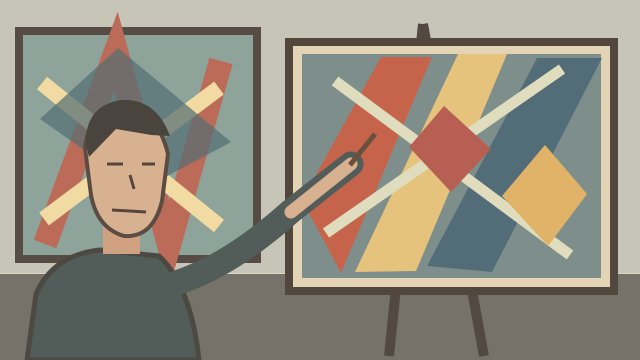
Umberto Boccioni was an Italian Futurist painter who transformed crowded cities, moving figures, and modern emotions into fractured, dynamic forms.