
Oil Paint
Oil paint is a slow-drying art medium made with pigment and a drying-oil binder that allows extended working time, smooth blending, and layered application.
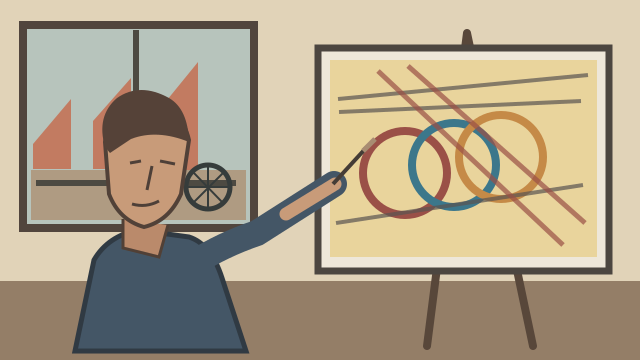
Painter
Giacomo Balla was an Italian Futurist painter known for repeated forms, divided color, and studies of speed, electric light, and moving figures.
Balla taught Divisionist approaches to younger painters before experimenting with photographic sequences and fractured views of motion in Futurism.
| Born | July 18, 1871 · Turin, Italy |
|---|---|
| Died | March 1, 1958 · Rome, Italy |
| Nationality | Italian |
| Movements | Futurism; earlier Neo-Impressionist influence |
| Paint types | Oil paint · Watercolor |
| Painting surfaces | Canvas · Wood · Paper |
| Painting methods | Divisionist color strokes, repetition of moving forms, and overlapping positions inspired by sequential photography |
| Common subjects | Moving animals, automobiles, streetlights, birds in flight, speed, light, and rhythmic abstract shapes |
| Related design | Futurist furniture, clothing, and set design |
| Notable works | Dynamism of a Dog on a Leash · Street Light · Speeding Automobile · Swifts: Paths of Movement + Dynamic Sequences |
Sources: Museo Thyssen-Bornemisza: Giacomo Balla, Guggenheim: Giacomo Balla, MoMA: Swifts: Paths of Movement + Dynamic Sequences, MoMA: Speeding Automobile, MoMA: Inventing Abstraction checklist.
Balla used oil for canvases and wood-panel paintings about speed and light, and watercolor for selected works on paper.
Oil paint is a slow-drying art medium made with pigment and a drying-oil binder that allows extended working time, smooth blending, and layered application.

Watercolor paint is a water-based art medium made with pigment and a water-soluble binder, typically applied in transparent washes on absorbent paper.
Balla's documented paintings include oil on canvas and wood, while paper supported his watercolor designs and graphic studies.

Canvas is a woven fabric support, commonly cotton or linen, used for painting and sold either raw or prepared with a compatible ground layer.

Wood is a natural, porous material whose grain, absorbency, knots, resin, species, and existing finish all influence paint preparation and adhesion.

Paper is an absorbent sheet material made from pressed fibers, with weight, sizing, and surface texture controlling moisture tolerance and paint behavior.
Balla learned from Neo-Impressionist color division and later taught related methods, making Seurat and Signac useful technical comparisons.
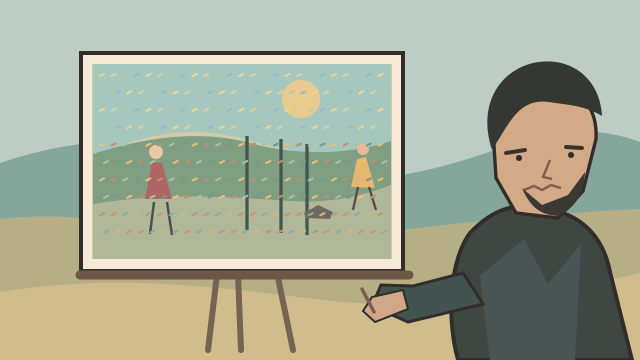
Georges Seurat was a French Neo-Impressionist painter known for carefully planned compositions, separate dots of color, and detailed oil studies of modern life.
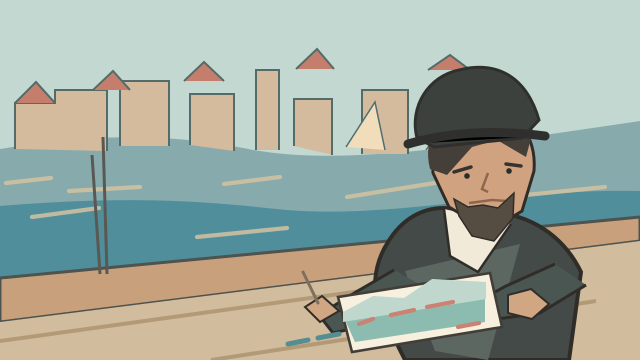
Paul Signac was a French Neo-Impressionist painter known for divided color, luminous harbor scenes, mosaic-like oil brushwork, and lively watercolors.