
Oil paint
Oil paint is a slow-drying art medium made with pigment and a drying-oil binder that allows extended working time, smooth blending, and layered application.
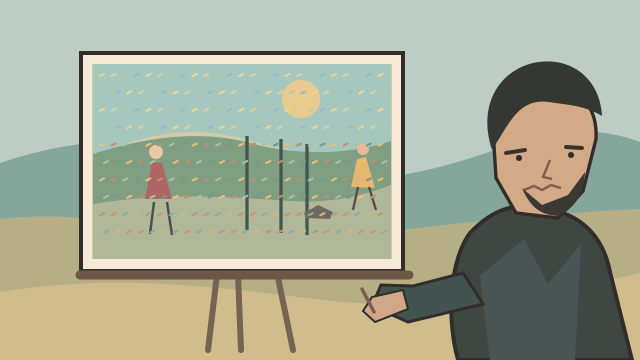
Painter
Georges Seurat was a French Neo-Impressionist painter known for carefully planned compositions, separate dots of color, and detailed oil studies of modern life.
Georges Seurat's documented painting methods, materials, and contributions to French Neo-Impressionism are summarized below.
| Born | 1859 · Paris, France |
|---|---|
| Died | 1891 · Paris, France |
| Nationality | French |
| Movement | Neo-Impressionism |
| Paint types | Oil paint |
| Painting surfaces | Canvas and wood panels for oils; paper for Conté-crayon drawings |
| Painting methods | Prepared many oil studies, then built paintings with separate strokes and dots of contrasting color |
| Other media | Conté crayon on textured paper; tonal black-and-white drawings |
| Common subjects | Riverside leisure, parks, working people, circuses, and urban life |
| Notable works | A Sunday on La Grande Jatte—1884, Bathers at Asnières, and Le Chahut |
Sources: The Met: Seurat and Neo-Impressionism, The Met: Oil study on canvas, The Met: Oil study on wood, The Met: Conté drawings.
Review the paint media documented in Georges Seurat's work, including the tools and effects associated with each medium.
Oil paint is a slow-drying art medium made with pigment and a drying-oil binder that allows extended working time, smooth blending, and layered application.
These painting supports appear in Georges Seurat's documented works and studies, with links to their material characteristics.

Canvas is a woven fabric support, commonly cotton or linen, used for painting and sold either raw or prepared with a compatible ground layer.

Painting board is a rigid artist support made from hardboard, wood, or another stable panel, sold either raw or prepared with a medium-specific ground.

Paper is an absorbent sheet material made from pressed fibers, with weight, sizing, and surface texture controlling moisture tolerance and paint behavior.
Explore two other painters central to Neo-Impressionism and the development of divided-color painting in France.
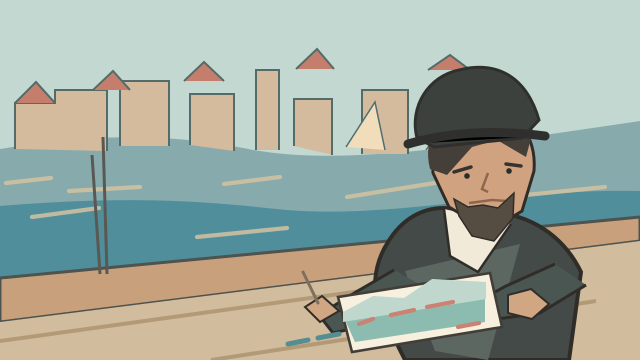
Paul Signac was a French Neo-Impressionist painter known for divided color, luminous harbor scenes, mosaic-like oil brushwork, and lively watercolors.
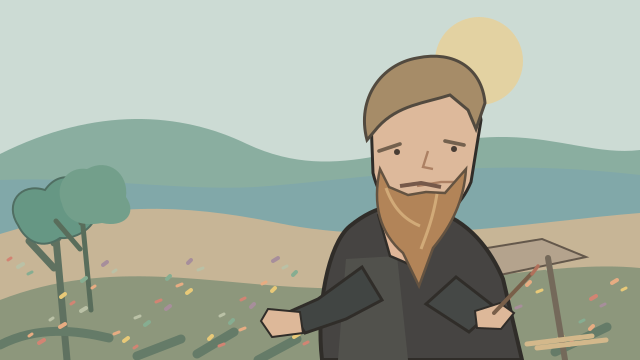
Henri-Edmond Cross was a French Neo-Impressionist painter known for Mediterranean landscapes, radiant watercolor, and broad, separated strokes of color.