
Raqib Shaw
Raqib Shaw is an Indian painter known for detailed scenes using industrial enamel, metallic paint, and raised acrylic liner, often echoing Old Masters.

Painter
Dia al-Azzawi is an Iraqi artist whose modern paintings and drawings draw on Iraqi literature, Gilgamesh, and regional history through varied media.
Al-Azzawi’s modernist painting draws on ancient Iraqi art, literature, and cultural memory, using gouache, watercolor, acrylic, oil, and metallic paints.
| Full name | Dia al-Azzawi |
|---|---|
| Born | April 24, 1939 · Baghdad, Iraq |
| Died | — |
| Nationality | Iraqi |
| Movements | New Vision Group, One Dimension Group, and Hurufiyya |
| Paint types | Metallic paint · Gouache · Watercolor · Acrylic paint · Oil paint |
| Other media | — |
| Other materials | — |
| Painting surfaces | Paper · Cardboard and paperboard · Canvas · Foam board · Wood |
| Painting methods | Integrates painted forms and handwritten script on canvas and folded dafatir artist books, using gouache on handmade paper and acrylic on some covers |
| Common subjects | Iraqi history, Gilgamesh, Arabic literature, war, exile, cultural memory, and the human figure |
| Notable works | Studies for The Epic of Gilgamesh · One Thousand & One Nights III · Western Bird |
Sources: The Met: Enkidu and the Harlot, The Met: Gilgamesh's Defeat, The Met: Gilgamesh's Quest for Immortality, Dia al-Azzawi: 1980s works, Ashmolean Museum: Dia al-Azzawi: Painting Poetry, Mathaf: Notes for an Autobiography, and Mathaf: Dia al-Azzawi.
Al-Azzawi's materials shift between Gilgamesh drawings in ink and metallic paint, gouache and watercolor works on paper, and large oil or acrylic canvases.

The Met documents ink and metallic paint on paper in Al-Azzawi’s 1965–67 Studies for The Epic of Gilgamesh. The metallic marks accompany the drawn figures and belong to a mixed-media sheet, distinct from the acrylic and oil paintings in his practice. The collection record names the material rather than relying on visual appearance.

In [A Personal Dialogue in] Samarqand: Mahmoud Darwish (2001), the Ashmolean records ink and gouache on paper alongside a separate acrylic work on fabric-covered paperboard. The records document different media and supports within the project. Gouache is therefore a specific water-based paint in his practice, not a generic label for all color passages.

Mathaf identifies watercolor with ink and graphite on paper in Drawings Consecrated to Love (1972). This work documents transparent water-based paint alongside drawing media, distinct from the opaque gouache recorded for other sheets. The object record supports watercolor as a separate paint type in Al-Azzawi’s practice.
Al-Azzawi used acrylic in canvases such as Western Bird (1995–96), and in works on fabric-covered paperboard in the Samarqand project. Museum and artist records document the medium across both conventional and constructed supports. These examples distinguish acrylic from his watercolor, gouache, metallic paint, and oils.

Mathaf documents oil on canvas in Human States (1975), a major painting series responding to the Iraqi government’s war against Kurdish people. The canvas works document oil in a large-scale political practice, distinct from the paper-based drawings and mixed-media constructions also made by Al-Azzawi.
Sources: The Met: Study for The Epic of Gilgamesh: Gilgamesh’s Struggle with the Wild Beasts, ink and metallic paint on paper; Ashmolean: [A Personal Dialogue in] Samarqand: Mahmoud Darwish, ink and gouache on paper, with a separate acrylic-on-board component; Mathaf: Drawings Consecrated to Love, watercolor, ink, and graphite; and Human States, oil on canvas; Dia al-Azzawi: Western Bird (1995–96), acrylic on canvas.
Museum records identify paper and cardboard among Dia al-Azzawi’s supports; the examples below tie each material to specific works in collections.

Al-Azzawi’s works on paper include drawings and painted sheets, such as the Met’s Studies for The Epic of Gilgamesh and Mathaf’s Drawings Consecrated to Love. Collection records document metallic paint, watercolor, ink, and graphite on paper. These works differ from canvas paintings and fabric-covered board constructions.

Al-Azzawi has used cardboard and paperboard for large works, including fabric-covered supports documented by the Ashmolean. These rigid paper-based materials differ from loose paper sheets and from canvas. The record shows paperboard functioning as a constructed support in mixed-media works.
Canvas appears in selected paintings and mixed-media works, including Mathaf’s oil series Human States and the acrylic painting Western Bird. The flexible textile support carries both oil and acrylic in distinct projects. These records distinguish canvas from paper sheets and paperboard constructions.

Al-Azzawi has also painted on foam board and wood for particular works and installations, as documented in his artist and exhibition records. The rigid manufactured support differs from fabric-covered paperboard and canvas. This entry is limited to those specific constructions rather than treating foam board as a standard support.
Al-Azzawi’s use of wood is documented in exhibition and artist records for selected painted panels and installations. This rigid support differs from paper, canvas, and foam board, which appear in other works. The examples establish wood as part of his varied practice without generalizing it to every painting.
Sources: The Met: Enkidu and the Harlot, The Met: Gilgamesh's Defeat, The Met: Gilgamesh's Quest for Immortality, Dia al-Azzawi: 1980s works, Ashmolean Museum: Dia al-Azzawi: Painting Poetry.
Explore painters similar to Dia al-Azzawi through modernist figuration, literary and cultural memory, decorative surfaces, and varied painting media.
Raqib Shaw is an Indian painter known for detailed scenes using industrial enamel, metallic paint, and raised acrylic liner, often echoing Old Masters.
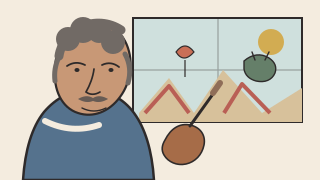
Marc Chagall was a Belarus-born French artist whose dreamlike scenes joined village memories, lovers, animals, folklore, religion, music, and vivid color.