
Watercolor
Watercolor paint is a water-based art medium made with pigment and a water-soluble binder. It is known for transparent color that settles into absorbent paper.
Painter
Andrew Wyeth was an American painter known for closely observed landscapes, interiors, and people from Chadds Ford, Pennsylvania, and coastal Maine.
Review key details about Andrew Wyeth's life, career, American realist practice, major periods, and the places, people, and materials that shaped his work.
| Born | July 12, 1917 · Chadds Ford, Pennsylvania, U.S. |
|---|---|
| Died | January 16, 2009 · Chadds Ford, Pennsylvania, U.S. |
| Nationality | American |
| Movements | American realism and Regionalism |
| Paint types | Watercolor · Gouache · Egg tempera · Oil paint |
| Painting surfaces | Paper · Cardboard · Painting board · Wood · Canvas |
| Painting methods | Drybrush watercolor |
| Common subjects | Rural landscapes, weathered buildings, interiors, portraits, fields, coastlines, and everyday objects |
| Notable works | Christina's World, Winter 1946, Wind from the Sea, and Pentecost |
Sources: Brandywine Museum of Art, The Andrew & Betsy Wyeth Collection, Brandywine: Natural Selections, Brandywine online collection, Delaware Art Museum: Christmas Card, Brandywine: Maine Houses, and The Met: Overgrown Orchard.
See the paint types documented in Wyeth's work, with links to PaintZeal references explaining each medium's properties, uses, and working characteristics.
Watercolor paint is a water-based art medium made with pigment and a water-soluble binder. It is known for transparent color that settles into absorbent paper.

Gouache paint is an opaque, water-based art medium made with pigment and a water-soluble binder. Traditional formulas dry to a matte finish and can be reactivated with water.

Egg tempera is a traditional paint made by combining pigment with an egg-yolk binder and water. It dries quickly in thin layers and is normally used on a rigid, smooth, absorbent ground rather than a flexible painting support.

Oil paint is a slow-drying paint made with pigment and a drying oil binder. It is widely used for artwork because it blends smoothly and develops rich color.
See the surface types documented in Wyeth's work, with links to PaintZeal references explaining how each support behaves and is prepared for painting.

Paper is an absorbent sheet material made primarily from cellulose fibers. Its weight, sizing, surface texture, and wet strength determine how much paint it can accept before buckling, pilling, bleeding, or warping.

Cardboard is a paper-based sheet material made from compressed fibers, often with corrugated fluting between liner sheets. It is lightweight and absorbent, so heavy wet coats can soften or warp it.

Painting board is a rigid artist support made from hardboard, wood, or another stable panel material. It may be sold raw or prepared with a medium-specific ground layer.
Wood is a natural, porous material with grain patterns and absorbency that vary by species and cut. Its surface may also contain knots, resin, or an existing finish.
Canvas is a woven fabric support used for paintings, banners, bags, décor, and other projects. Artist canvas may be raw, sized, acrylic-primed, oil-primed, or factory-coated, and each condition changes how paint absorbs and bonds.
Explore painters similar to Andrew Wyeth through American realism, closely observed landscapes, quiet interiors, watercolor, and strong attention to place.

Edward Hopper was an American realist known for city interiors, roadside buildings, coastal landscapes, and compositions shaped by strong light and geometric forms.

Winslow Homer was an American painter and illustrator known for scenes of the sea, coastal life, rural America, and people in demanding natural environments.

George Tooker was an American realist known for precisely layered egg tempera paintings of modern spaces, figures, isolation, and social tension.
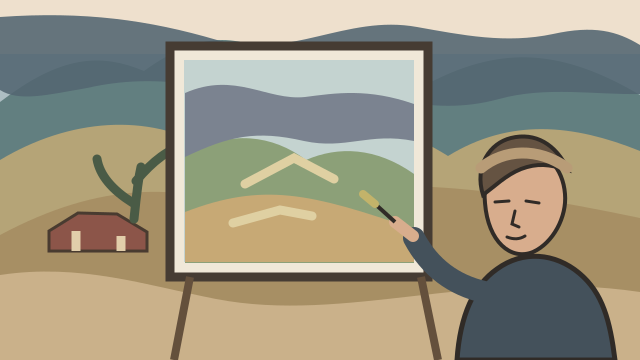
Peter Hurd was an American painter known for egg-tempera and watercolor landscapes of New Mexico, using expressive brushwork to capture desert light and weather.