
Egg Tempera
Egg tempera is a traditional paint made by combining pigment with an egg-yolk binder and water. It dries quickly in thin layers and is normally used on a rigid, smooth, absorbent ground rather than a flexible painting support.

Painter
George Tooker was an American painter known for egg tempera scenes of offices, subways, waiting rooms, and other modern spaces, often centered on isolation and social tension.
Tooker’s Magic Realist scenes have an uneasy, dreamlike quality often associated with Surrealism, although he rejected that label. He worked chiefly in egg tempera.
| Born | 1920 · New York City, New York, U.S. |
|---|---|
| Died | 2011 · Hartland, Vermont, U.S. |
| Nationality | American |
| Movements | Magic Realism |
| Paint types | Egg tempera · Watercolor |
| Painting surfaces | Painting board · Wood · Plywood · Paper |
| Painting methods | Thin, carefully built tempera layers over rigid prepared supports |
| Common subjects | Urban interiors, bureaucracy, public transit, crowds, waiting, social isolation, and psychological tension |
| Notable works | The Subway, Government Bureau, The Waiting Room, and Landscape with Figures III |
Sources: Smithsonian American Art Museum, The Met: Government Bureau, Addison Gallery of American Art: Study for Landscape With Figures, Indianapolis Museum of Art 2006 annual report: Mirror III, and Whitney Museum of American Art.
See the paint types documented in Tooker's work, with links to PaintZeal references explaining each medium's properties, uses, and working characteristics.
Egg tempera is a traditional paint made by combining pigment with an egg-yolk binder and water. It dries quickly in thin layers and is normally used on a rigid, smooth, absorbent ground rather than a flexible painting support.

Watercolor paint is a water-based art medium made with pigment and a water-soluble binder. It is known for transparent color that settles into absorbent paper.
See the surface types documented in Tooker's work, with links to PaintZeal references explaining how each support behaves and is prepared for painting.

Painting board is a rigid artist support made from hardboard, wood, or another stable panel material. It may be sold raw or prepared with a medium-specific ground layer.
Wood is a natural, porous material with grain patterns and absorbency that vary by species and cut. Its surface may also contain knots, resin, or an existing finish.
Plywood is an engineered wood panel made from thin wood veneers bonded in alternating grain directions. Its face veneer, edges, voids, and adhesive system affect how paint absorbs and bonds.

Paper is an absorbent sheet material made primarily from cellulose fibers. Its weight, sizing, surface texture, and wet strength determine how much paint it can accept before buckling, pilling, bleeding, or warping.
Explore painters similar to George Tooker through egg tempera, carefully layered surfaces, psychologically charged figuration, and mid-century American realism.
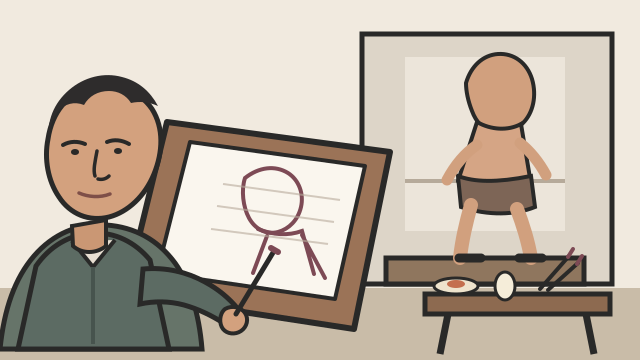
Paul Cadmus was an American painter known for figurative paintings, social satire, and sustained use of egg tempera throughout much of his career.
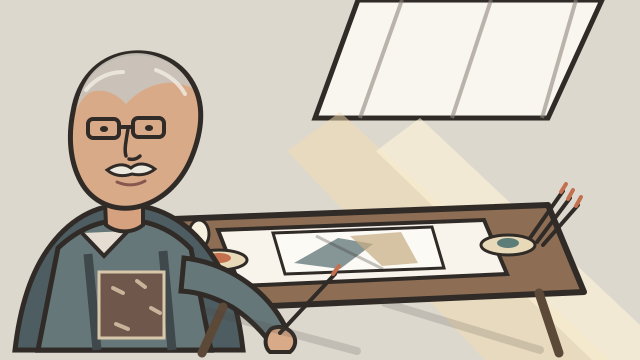
Robert Vickrey was an American painter and illustrator known for detailed egg tempera paintings combining realistic observation with symbolic imagery.
John Wilde was an American Magic Realist known for intricate oil paintings on wooden panels, depicting surreal figures, animals, still lifes, and imagined worlds.
Jared French was an American painter known for precise egg-tempera pictures of figures and symbolic scenes, associated with Magic Realism.