
Egg Tempera
Egg tempera is a traditional paint made by combining pigment with an egg-yolk binder and water. It dries quickly in thin layers and is normally used on a rigid, smooth, absorbent ground rather than a flexible painting support.

Painter
Paul Cadmus was an American painter known for figurative paintings, social satire, sustained use of egg tempera, and casein, watercolor, and gouache studies on paper.
Review key details about Paul Cadmus's life, career, figurative practice, major subjects, and the egg-tempera, casein, watercolor, and gouache methods that shaped his work.
| Born | 1904 · New York City, New York, U.S. |
|---|---|
| Died | 1999 · Weston, Connecticut, U.S. |
| Nationality | American |
| Movements | Magic Realism and Social Realism |
| Paint types | Egg tempera · Casein paint · Oil paint · Watercolor · Gouache |
| Painting surfaces | Painting board · Canvas · Linen · Wood · Paper · Cardboard |
| Painting methods | Slow, precise egg-tempera painting built with fine crosshatched strokes on rigid supports |
| Common subjects | Figures, social satire, urban life, mythology, allegory, and portraits |
| Known for | Using the slow, precise egg-tempera technique for sharply observed figurative paintings. |
| Notable works | The Fleet's In! and the Seven Deadly Sins series |
Sources: Smithsonian American Art Museum, Smithsonian: Green Still Life, Smithsonian American Art Museum: Bar Italia, The Met: The Seven Deadly Sins: Pride, The Met: The Seven Deadly Sins: Avarice, The Met: Gilding the Acrobats, The Met: The Fleet's In!, MoMA: Mac, the Filling Station Attendant, Whitney Museum: To the Lynching!, and Smithsonian Archives of American Art oral history.
See the paint types documented in Cadmus's work, with links to PaintZeal references explaining each medium's properties, uses, and working characteristics.
Egg tempera is a traditional paint made by combining pigment with an egg-yolk binder and water. It dries quickly in thin layers and is normally used on a rigid, smooth, absorbent ground rather than a flexible painting support.

Casein paint is a water-based paint that uses casein, a milk protein, as its binder. It dries quickly to a matte film and becomes increasingly water-resistant as it cures.

Oil paint is a slow-drying paint made with pigment and a drying oil binder. It is widely used for artwork because it blends smoothly and develops rich color.
Watercolor paint is a water-based art medium made with pigment and a water-soluble binder. It is known for transparent color that settles into absorbent paper.
Gouache paint is an opaque, water-based art medium made with pigment and a water-soluble binder. Traditional formulas dry to a matte finish and can be reactivated with water.
See the surface types documented in Cadmus's work, with links to PaintZeal references explaining how each support behaves and is prepared for painting.

Painting board is a rigid artist support made from hardboard, wood, or another stable panel material. It may be sold raw or prepared with a medium-specific ground layer.
Canvas is a woven fabric support used for paintings, banners, bags, décor, and other projects. Artist canvas may be raw, sized, acrylic-primed, oil-primed, or factory-coated, and each condition changes how paint absorbs and bonds.

Linen is a strong woven fabric made from flax fibers and commonly used as a support for fine-art painting. Artist linen may be sold raw or prepared with a ground layer.
Wood is a natural, porous material with grain patterns and absorbency that vary by species and cut. Its surface may also contain knots, resin, or an existing finish.

Paper is an absorbent sheet material made primarily from cellulose fibers. Its weight, sizing, surface texture, and wet strength determine how much paint it can accept before buckling, pilling, bleeding, or warping.

Cardboard is a paper-based sheet material made from compressed fibers, often with corrugated fluting between liner sheets. It is lightweight and absorbent, so heavy wet coats can soften or warp it.
Explore painters similar to Paul Cadmus through egg tempera, precise figurative technique, American realism, symbolic imagery, and carefully built surfaces.

George Tooker was an American painter known for egg tempera scenes of offices, subways, waiting rooms, and other modern spaces, often centered on isolation and social tension.
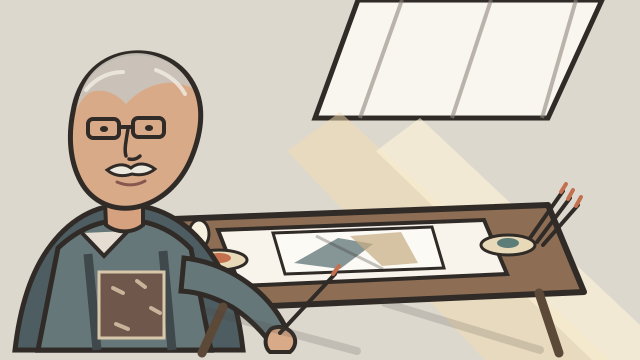
Robert Vickrey was an American painter and illustrator known for detailed egg tempera paintings combining realistic observation with symbolic imagery.
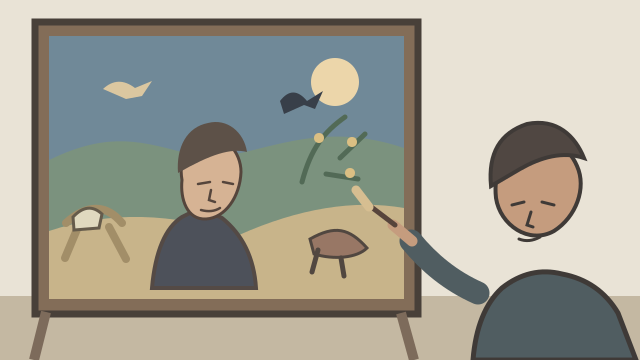
John Wilde was an American Magic Realist known for intricate oil paintings on wooden panels, depicting surreal figures, animals, still lifes, and imagined worlds.

Jared French was an American painter known for precise egg-tempera pictures of figures and symbolic scenes, associated with Magic Realism.