Watercolor Paint
Watercolor paint is a water-based art medium made with pigment and a water-soluble binder. It is known for transparent color that settles into absorbent paper.
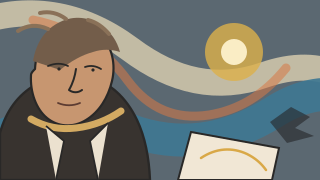
Painter
J. M. W. Turner was a British Romantic artist known for landscapes, marine subjects, changing weather, and increasingly expressive treatments of light and color.
Review key details about J. M. W. Turner's life, career, British Romantic context, major periods, and the evolving treatment of light, weather, and landscape in his work.
| Full name | Joseph Mallord William Turner |
|---|---|
| Born | April 23, 1775 · London, England |
| Died | December 19, 1851 · Chelsea, London, England |
| Nationality | British |
| Movements | Romanticism |
| Paint types | Watercolor · Gouache · Oil paint |
| Painting surfaces | Paper · Canvas · Wood panels |
| Painting methods | Layered watercolor washes and freely brushed oil paint for atmospheric light and weather effects |
| Common subjects | Landscapes, seascapes, storms, fires, architecture, ships, mountains, and atmospheric light |
| Notable works | The Fighting Temeraire, Rain, Steam and Speed, Snow Storm: Steam-Boat off a Harbour's Mouth, and Light and Colour (Goethe's Theory) |
Sources: Tate: Venice: The Rio di San Luca, Tate: The Burning of the Houses of Parliament, Tate: Snow Storm, and Tate: Moonlight, a Study at Millbank.
See the paint types documented in Turner's work, with links to PaintZeal references explaining each medium's properties, uses, and working characteristics.
Watercolor paint is a water-based art medium made with pigment and a water-soluble binder. It is known for transparent color that settles into absorbent paper.
Gouache paint is an opaque, water-based art medium made with pigment and a water-soluble binder. Traditional formulas dry to a matte finish and can be reactivated with water.

Oil paint is a slow-drying paint made with pigment and a drying oil binder. It is widely used for artwork because it blends smoothly and develops rich color.
See the surface types documented in Turner's work, with links to PaintZeal references explaining how each support behaves and is prepared for painting.

Paper is an absorbent sheet material made primarily from cellulose fibers. Its weight, sizing, surface texture, and wet strength determine how much paint it can accept before buckling, pilling, bleeding, or warping.
Canvas is a woven fabric support used for paintings, banners, bags, décor, and other projects. Artist canvas may be raw, sized, acrylic-primed, oil-primed, or factory-coated, and each condition changes how paint absorbs and bonds.
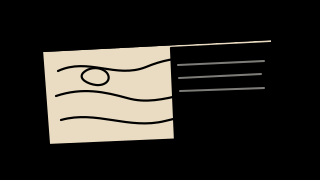
Wood is a natural, porous material with grain patterns and absorbency that vary by species and cut. Its surface may also contain knots, resin, or an existing finish.
Explore painters similar to J. M. W. Turner through atmospheric landscapes, dramatic light, marine subjects, watercolor, and expressive approaches to nature.
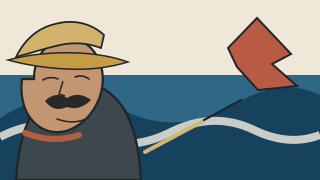
Winslow Homer was an American painter and illustrator known for scenes of the sea, coastal life, rural America, and people in demanding natural environments.

Claude Monet was a French Impressionist painter known for landscapes and repeated studies of changing light, color, and atmosphere.