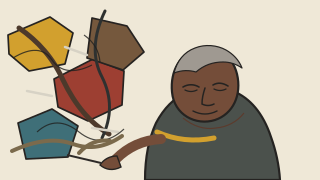
Thornton Dial
Thornton Dial was an American self-taught artist whose painted assemblages combine found objects with house paint, enamel, spray paint, and oil.

Painter
Jean Dubuffet was a French painter and sculptor known for rough surfaces, unconventional materials, figurative imagery, and his Art Brut ideas.
Dubuffet used rough, mixed-material surfaces and graffiti-like figures, then developed a red, blue, black, and white vocabulary for his Hourloupe works.
| Full name | Jean Philippe Arthur Dubuffet |
|---|---|
| Born | July 31, 1901 · Le Havre, France |
| Died | May 12, 1985 · Paris, France |
| Nationality | French |
| Movements | Art Brut |
| Paint types | Vinyl paint · Oil paint · Gouache · Acrylic paint |
| Other media | Drawing · printmaking · sculpture · animated performance |
| Other materials | — |
| Painting surfaces | Canvas · Burlap and other fabric · Paper · Masonite and painting board · Metal · Fiberglass and composite structures · Polystyrene foam · Epoxy resin |
| Painting methods | Mixing sand and gravel into paint, applying thick layers, then scratching and scraping the surface |
| Common subjects | Human figures, portraits, urban scenes, landscapes, graffiti-like imagery, and Hourloupe forms |
| Notable works | The Anachronism · Convergences · Abode V |
Sources: MoMA: The Anachronism, MoMA: Convergences, MoMA: Abode V, MoMA: Landscape with Three Figures, The Met: Jean Paulhan, Centre Pompidou: Donnée (Non-lieu H 10), Centre Pompidou: vinyl-painted polystyrene model and polyurethane-coated epoxy Winter Garden, and MoMA artist overview.
Dubuffet built rough surfaces by loading oil paint with sand and other materials; he also combined oil and acrylic on board in separate paintings.

Dubuffet used oil in works such as the Met’s Apartment Houses, Paris, which combines oil with sand and charcoal on canvas. His rough, built-up surfaces challenged polished academic finish; chalk and gritty materials could become part of the paint ground, as the Met also describes for his portrait of Jean Paulhan.
MoMA records acrylic in Dubuffet’s later work, including Parachiffre XLIV. He used the synthetic medium in compositions of dense, graphic forms, part of a practice that changed materials over time. The specific collection record documents acrylic rather than allowing the medium to be inferred from color or surface appearance.

Dubuffet used vinyl paint in later works, including examples documented by MoMA. This synthetic medium belongs to his experimentation with industrial materials and broad, flat passages; it differs from the oil, sand, and charcoal mixture recorded for earlier works such as Apartment Houses, Paris.

Dubuffet made gouache works on paper, including compositions that combine opaque color with drawing and collage. The medium let him establish dense, flat passages alongside his more heavily textured oil paintings; his collection records document this separate works-on-paper practice. This keeps opaque color distinct from his oil paintings.
Sources: The Met: Apartment Houses, Paris; The Met: Jean Paulhan.; MoMA: Parachiffre XLIV; MoMA: À La Réticence
Records identify Jean Dubuffet's use of canvas, fabric, and paper, with named examples below showing how each support functions in the finished work.
The Met records Apartment Houses, Paris as oil with sand and charcoal on canvas. Dubuffet’s rough, granular surface builds directly into the painted ground, making canvas the support for a materially dense city scene. This work anchors the row in a specific museum-documented painting.

Dubuffet painted on burlap and other coarse fabrics, incorporating the weave into the image rather than hiding it beneath a smooth finish. The uneven surface suited his interest in rough, non-academic materials; collection records and exhibition materials document these fabric supports alongside canvas.

Dubuffet made drawings and painted works on paper, including gouache and collage compositions. The paper sheets allowed him to combine opaque paint, drawing, and cut elements in a smaller format than his textured canvas paintings. This distinct support is documented across museum collections.

Dubuffet used rigid boards such as Masonite for selected compositions, as recorded in collection materials. The panel support offered a stable base for his built-up, heavily worked surfaces and differs from the flexible canvas used in paintings such as Apartment Houses, Paris.
Dubuffet’s painted metal works extend his experiments beyond canvas and paper. Collection records identify metal as a surface carrying paint, distinct from his three-dimensional sculptures and from textured oil paintings on canvas. This distinction helps separate painted objects from his sculptures.

Fiberglass appears in Dubuffet’s painted sculptural constructions, where molded composite forms carry color as part of the object. This is a three-dimensional support rather than a flat painting surface, documenting how his material practice extended from canvases into constructed forms.

Dubuffet used polystyrene foam in models and sculptural forms that could be painted, extending his material experiments beyond flat panels. The foam acts as a shaped support for color in a three-dimensional work, not as a standard substrate for an easel painting.
Epoxy resin appears in Dubuffet’s constructed, painted works, where the material forms part of the support and object. This is a sculptural use of resin rather than a conventional painting ground; specific work records should distinguish these constructions from flat paintings.
Sources: MoMA: The Anachronism, MoMA: Convergences, MoMA: Abode V, MoMA: Landscape with Three Figures, The Met: Jean Paulhan.
Explore painters similar to Jean Dubuffet through rough surfaces, unconventional media, graffiti-like marks, assemblage, and anti-academic figuration.
Thornton Dial was an American self-taught artist whose painted assemblages combine found objects with house paint, enamel, spray paint, and oil.
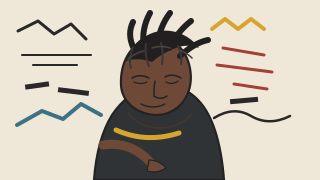
Jean-Michel Basquiat was an American artist whose paintings combine handwritten text, anatomy, crowns, cultural references, music, and history.