Latex Paint
Latex paint is a water-based architectural coating made with a synthetic polymer binder. It is commonly used on interior and exterior building surfaces.
Painter
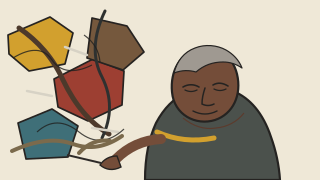
Thornton Dial was an American self-taught artist whose work ranged from large painted assemblages combining found objects with house paint, enamel, spray paint, and oil to works on paper using watercolor, acrylic, and gouache.
Review key details about Thornton Dial's life, self-taught practice, large assemblages, works on paper, found materials, house paint, alkyd, enamel, spray paint, oil, acrylic, watercolor, gouache, and social themes shaping his work.
| Born | 1928 · Emelle, Alabama, U.S. |
|---|---|
| Died | 2016 · McCalla, Alabama, U.S. |
| Nationality | American |
| Movements | Self-taught art |
| Paint types | House paint · Latex paint · Alkyd paint · Enamel paint · Spray paint · Oil paint · Acrylic paint · Watercolor · Gouache |
| Painting surfaces | Wood · Plywood · Canvas · Paper |
| Painting methods | Building dense assemblages from found materials, then painting and spray-coating the combined surface |
| Conservation finding | FTIR analysis of paint samples from surveyed High Museum assemblages identified alkyd-based house paint |
| Common materials | Rope, wire, wood, metal, fabric, discarded objects, and other found materials |
| Common subjects | Race, class, violence, war, Black life in the American South, struggle, and survival |
| Known for | Dense painted assemblages and expressive works on paper addressing complex narrative, symbolic, and social themes |
| Notable works | The Man That Left Home Walking and Came Back Riding · Almanac - Time for Things to Grow · Life Go On · Celebration |
Sources: Smithsonian American Art Museum, Smithsonian: Oh Freedom!, Smithsonian: Life Go On, Smithsonian: The Beginning of Life in the Yellow Jungle, MFAH: The Man That Left Home Walking and Came Back Riding, National Gallery of Art: Almanac - Time for Things to Grow, Morgan Library & Museum: Life Go On drawing, and The Met: Celebration, and Williamstown + Atlanta Art Conservation Center: Saving Thornton Dial.
See the paint types documented in Dial's work, with links to PaintZeal references explaining each medium's properties, uses, and working characteristics.
Latex paint is a water-based architectural coating made with a synthetic polymer binder. It is commonly used on interior and exterior building surfaces.

Alkyd paint is a resin-based coating that levels into a smooth, durable finish. It is available in traditional solvent-based formulas and newer waterborne versions.
Enamel paint is a broad category of coatings designed to form a hard and durable finish. Modern enamels may use either oil-based or water-based binders.

Spray paint is a liquid coating packaged in a pressurized can and applied as a fine aerosol. It creates an even finish without requiring a brush or roller.

Oil paint is a slow-drying paint made with pigment and a drying oil binder. It is widely used for artwork because it blends smoothly and develops rich color.
Acrylic paint is a fast-drying, water-based paint made with pigment and an acrylic polymer binder. It is widely used in art and decorative projects because it is versatile and durable.

Watercolor paint is a water-based art medium made with pigment and a water-soluble binder. It is known for transparent color that settles into absorbent paper.
Gouache paint is an opaque, water-based art medium made with pigment and a water-soluble binder. Traditional formulas dry to a matte finish and can be reactivated with water.
See the surface types documented in Dial's work, with links to PaintZeal references explaining how each support behaves and is prepared for painting.
Wood is a natural, porous material with grain patterns and absorbency that vary by species and cut. Its surface may also contain knots, resin, or an existing finish.

Plywood is an engineered wood panel made by bonding thin veneer layers with alternating grain directions. Its faces, cut edges, and filled areas absorb paint differently.
Canvas is a woven fabric support used for paintings, banners, bags, décor, and other projects. Artist canvas may be raw, sized, acrylic-primed, oil-primed, or factory-coated, and each condition changes how paint absorbs and bonds.

Paper is an absorbent sheet material made primarily from cellulose fibers. Its weight, sizing, surface texture, and wet strength determine how much paint it can accept before buckling, pilling, bleeding, or warping.

Metal surfaces are hard and nonporous, but their behavior varies by material. Steel and iron can rust, while aluminum forms an oxide layer.

Fabric is a flexible material made by weaving, knitting, or bonding fibers. Its fiber content, texture, stretch, and washability affect how paint bonds and wears.
Explore painters similar to Thornton Dial through ordinary house and spray paints, found materials, unconventional supports, works on paper, and materially experimental painting.
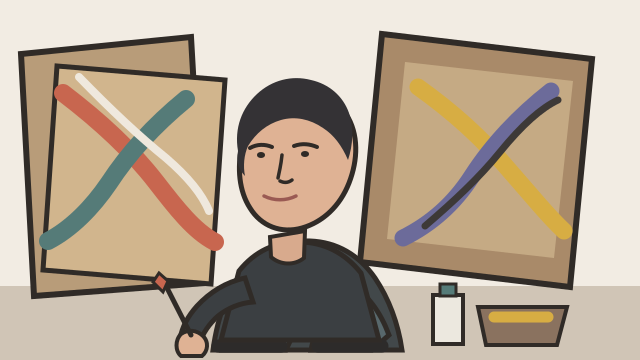
Alicia McCarthy is an American painter associated with San Francisco's Mission School whose work often uses house paint, spray paint, gouache, colored pencil, and wood.
Molly Zuckerman-Hartung is an American painter known for abstract works combining latex house paint, enamel, spray paint, cut and sewn drop cloth, and other studio materials.

Maceptaw Bogun was a self-taught artist known for using phosphorescent paint to create images that change in appearance between normal light and darkness.

Jean Dubuffet was a French painter and sculptor known for rough surfaces, unconventional materials, figurative imagery, and a long-running interest in Art Brut.