
Jean Dubuffet
Jean Dubuffet was a French painter and sculptor who challenged conventional ideas of artistic refinement through rough surfaces, unruly figures, unconventional materials, and a long-running interest in Art Brut.

Paint Type
Vinyl paint is a flexible specialty coating used to recolor or restore vinyl and related trim surfaces, with formulas selected for material and exposure.
Vinyl paint works best on clean flexible vinyl, while plastics, rubber, simulated leather, and fabrics require explicit approval from the selected coating system.
| Surface | Compatibility | Preparation | Primer or ground | Finish | Guide |
|---|---|---|---|---|---|
| Vinyl | Excellent with a flexible coating specifically approved for vinyl | Clean thoroughly and remove dirt, grease, silicone, dressings, and other residue that can interfere with adhesion; repair holes or damage before coating when required. | Often no separate conventional primer when the product contains its own adhesion system, but follow the exact coating directions. | Flexible color coat designed to resist cracking, peeling, or rubbing off during normal movement and handling. | — |
| Plastic | Good when the vinyl coating specifically approves the plastic type | Clean completely and remove surface contamination; test an inconspicuous area when the exact plastic or previous finish is uncertain. | Product-specific; some flexible vinyl coatings include an adhesion promoter and require no primer. | Flexible decorative finish whose adhesion depends heavily on the plastic chemistry and coating system. | — |
| Rubber | Good only when the selected flexible coating explicitly lists rubber | Use a clean, dry surface free of oils, mold-release agents, conditioners, and other residues that can prevent bonding. | Use only the adhesion preparation specified for the selected coating and rubber type. | Flexible finish intended to tolerate movement better than ordinary rigid paint. | — |
| Leather | Product-specific; some modern flexible color-coat systems approve leather as well as vinyl | Clean and prepare the leather with the products specified by the coating manufacturer, especially when an existing protective finish is present. | Use the manufacturer's leather or flexible-substrate adhesion system rather than assuming vinyl preparation is interchangeable. | Flexible recoloring finish when the coating is approved for leather and correctly prepared. | — |
Sources: Rust-Oleum Vinyl Spray Paint, Rust-Oleum Fabric & Vinyl, Dupli-Color Vinyl & Fabric Spray, and SEM Color Coat 3.
Browse PaintZeal painter profiles featuring artists who used vinyl paint, with examples of flexible coatings, synthetic surfaces, and unconventional studio materials.
Jean Dubuffet was a French painter and sculptor who challenged conventional ideas of artistic refinement through rough surfaces, unruly figures, unconventional materials, and a long-running interest in Art Brut.

Keith Haring was an American artist known for energetic outlined figures, public murals, subway drawings, vivid color, and an instantly recognizable visual language used to address social and political themes.
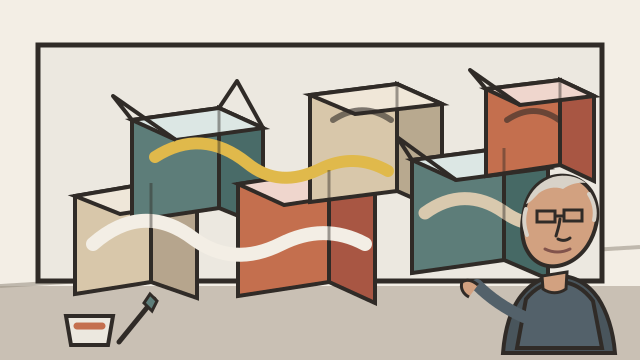
Justen Ladda is a German artist whose work crosses painting, assemblage, and installation. MoMA documents his 1985 work Tide as latex, vinyl paint, and synthetic polymer paint applied to washing-powder boxes.
No related PaintZeal articles are currently available.