
Kristoffer Ardeña
Kristoffer Ardeña is a Filipino artist known for Ghost Paintings using repurposed surfaces, tropical materials, and elastomeric, latex, and acrylic paint.
Painter
Justen Ladda is a German artist whose painting, assemblage, and installation use latex, vinyl, and synthetic polymer paints on unusual supports.
Ladda’s quick facts cover his painting and installation practice, unconventional supports, and documented latex, vinyl, and synthetic polymer paints.
| Full name | Justen Ladda |
|---|---|
| Born | 1953 · Germany |
| Died | — |
| Nationality | German |
| Movements | — |
| Paint types | Latex paint · Vinyl paint · Synthetic polymer paint |
| Other media | — |
| Other materials | — |
| Painting surfaces | Cardboard · Paper · Wood, including red cedar |
| Painting methods | Painting disposable boxes and other found supports, then assembling them into installation-scale constructions |
| Common subjects | — |
| Notable works | Tide · Face Off · Lake Crescent |
Sources: MoMA: Justen Ladda, MoMA: Tide, MoMA: Face Off, MoMA: Projects 3: Justen Ladda, and Peter Freeman, Inc.: Downtown Painting.
Ladda used latex paint on found packaging and vinyl paint on assemblages and paper, bringing architectural coatings into his sculptural practice.
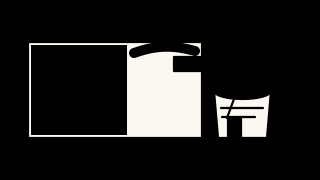
Ladda used latex paint in Tide (1985), applying an architectural coating to washing-powder boxes within a sculptural assemblage. The work repurposes printed packaging as a painted support, bringing ordinary household materials into the composition rather than using the latex as an easel-paint medium.

MoMA records vinyl paint in Tide and vinyl emulsion on paper in Face Off (1984). These records document two distinct uses of the synthetic coating: over found packaging in an assemblage and directly on paper in a more conventional sheet-based work.
Sources: MoMA: Justen Ladda, MoMA: Tide, MoMA: Face Off, MoMA: Projects 3: Justen Ladda, and Peter Freeman, Inc.: Downtown Painting.
Records identify Justen Ladda's use of cardboard, paper, and wood, with named examples below showing how each support functions in the finished work.

Ladda used cardboard packaging in paintings and collages, including the washing-powder boxes in Tide (1985). He painted and assembled the printed containers into the work, leaving their everyday form legible; cardboard here is a found object as well as a surface receiving paint.

Ladda also painted on paper, as in MoMA’s Face Off (1984), cataloged with vinyl emulsion. The flexible sheet carries applied color directly, distinct from the found boxes and packaging incorporated into his sculptural assemblages. The collection record identifies paper as the support.
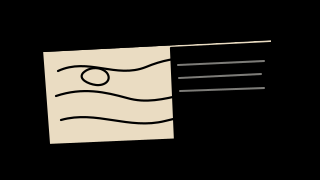
Ladda’s works include wood supports such as red cedar. He uses the rigid material as one component within painted and assembled compositions, alongside cardboard packaging and paper. The wood support is documented in collection records and should not be inferred from a frame or backing.
Sources: MoMA: Justen Ladda, MoMA: Tide, MoMA: Face Off, MoMA: Projects 3: Justen Ladda, Peter Freeman, Inc.: Downtown Painting.
Explore artists connected to Ladda through industrial coatings, repurposed objects, unusual supports, installation, and material-driven painting.
Kristoffer Ardeña is a Filipino artist known for Ghost Paintings using repurposed surfaces, tropical materials, and elastomeric, latex, and acrylic paint.

Davide D'Elia is an Italian artist who coats found objects with antifouling paint to explore material change, preservation, and surface effects.