
Jacob Lawrence
Jacob Lawrence was an American painter known for vivid narrative series on Black life and history, including The Migration Series in tempera on hardboard.

Painter
Ben Shahn was an American painter and graphic artist known for socially engaged images, expressive line, and work in tempera, gouache, watercolor, and oil.
Ben Shahn combined painting, illustration, and printmaking to address labor, political conflict, and everyday life through socially engaged images.
| Full name | Benjamin Shahn |
|---|---|
| Born | 1898 · Kovno, Lithuania |
| Died | 1969 · New York City, New York, U.S. |
| Nationality | American |
| Movements | Social Realism |
| Paint types | Tempera · Gouache · Watercolor · Casein paint · Oil paint |
| Other media | Printmaking · photography · graphic design |
| Other materials | — |
| Painting surfaces | Painting board · Cardboard · Paper · Wood · Canvas |
| Painting methods | Tempera and casein painting with strong drawn outlines and flat graphic forms |
| Common subjects | Workers, immigrants, civil rights, injustice, politics, and everyday American life |
| Notable works | The Passion of Sacco and Vanzetti · Man · Still Music |
Sources: MoMA: Man, Smithsonian American Art Museum: We Did Not Know What Happened to Us, Smithsonian American Art Museum: North Africa, from the United Nations Series, Museo Nacional Thyssen-Bornemisza: French Workers, University of Michigan Museum of Art: Boy, Whitney Museum: Everyman, The Phillips Collection: Still Music, and Smithsonian American Art Museum: Ben Shahn biography.
Shahn moved among tempera, gouache, watercolor, and oil, using each in works on paper or canvas to render social subjects, portraits, and landscapes.

MoMA records Pacific Landscape as tempera on paper over composition board, and the Met identifies tempera in Death of a Miner. These works document Shahn’s use of tempera in socially engaged subjects and landscapes. The records do not name an egg binder, so the broader medium name should be retained.

MoMA catalogs Handball as gouache on paper on board. The opaque water-based paint documents a medium in Shahn’s works on paper, distinct from his tempera paintings and oils. The museum record specifies the layered support and the use of gouache without requiring assumptions about the exact sequence of application.

The Whitney records opaque watercolor in Conversations, combined with brush and ink on paper mounted on board. This catalog entry documents watercolor in a mixed-media work, with the ink drawing separately identified. The specific “opaque watercolor” label is preserved rather than generalized as transparent watercolor.

The Whitney identifies both tempera and oil in Shahn’s Everyman, documenting oil in a mixed-media painting. Other records identify oil on canvas in his works, while the Whitney entry shows oil used alongside tempera. This distinguishes the medium from his watercolor, gouache, and tempera works on paper or board.
Sources: MoMA: Man; MoMA: Pacific Landscape.; The Met: Death of a Miner, tempera; MoMA: Handball, gouache; Whitney: Conversations, opaque watercolor; Whitney: Everyman, tempera and oil
Shahn used board, cardboard, paper, wood, and canvas; examples link these supports to different media across his museum-cataloged painting practice.

Shahn’s paintings include works on composition board and paper-faced board, including MoMA’s Pacific Landscape and Handball. The rigid support carries both tempera and gouache works, often with paper forming the painted surface. This is distinct from his documented works on canvas and wood.

Museum records document Shahn using cardboard for painted works and studies. This paper-based support differs from the more rigid composition boards identified for works such as Pacific Landscape. Collection entries establish cardboard as a separate material within his varied support practice.

Shahn made drawings and paintings on paper, including watercolor, gouache, and tempera works recorded by MoMA and the Whitney. Some sheets are mounted on board, so the paper is the image-bearing surface while the board serves as backing. These examples distinguish direct works on paper from paintings on canvas or wood.
Museum records identify Shahn paintings on wood, a rigid panel support distinct from canvas and paper-faced board. This material belongs to the range of supports used across his socially engaged painting practice. The cited collection records document wood directly for specific works, rather than inferring it from his use of oil or tempera.
Shahn’s paintings include oil works on canvas as well as tempera, watercolor, and gouache on paper or board. Museum collections document the canvas paintings as separate examples in his practice. The stretched textile support provided a larger format for finished compositions, while board and paper appear in other documented works.
Sources: MoMA: Man, Smithsonian American Art Museum: We Did Not Know What Happened to Us, Smithsonian American Art Museum: North Africa, from the United Nations Series, Museo Nacional Thyssen-Bornemisza: French Workers, University of Michigan Museum of Art: Boy.
Painters related to Ben Shahn combined social realism, graphic line, narrative imagery, and political subjects in twentieth-century American art.
Jacob Lawrence was an American painter known for vivid narrative series on Black life and history, including The Migration Series in tempera on hardboard.

George Tooker was an American painter known for egg-tempera scenes of offices, subways, and waiting rooms, often centered on isolation and social tension.
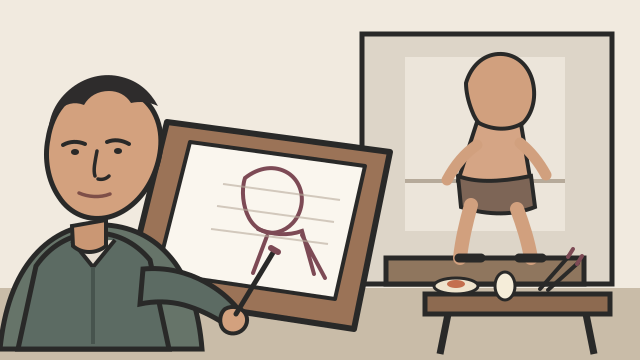
Paul Cadmus was an American painter known for figurative social satire, sustained egg tempera, and casein, watercolor, and gouache studies on paper.
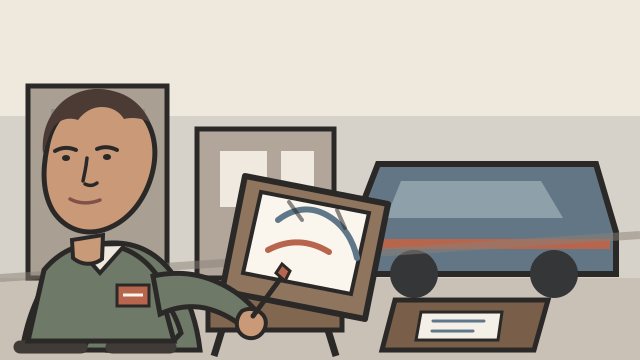
Bernard Perlin was an American painter and illustrator whose figurative work spans casein, gouache, and oil, alongside wartime and editorial art.