
Francis Picabia
Francis Picabia was a French avant-garde painter associated with Dada, shifting among machine imagery, abstraction, and playful visual provocation.
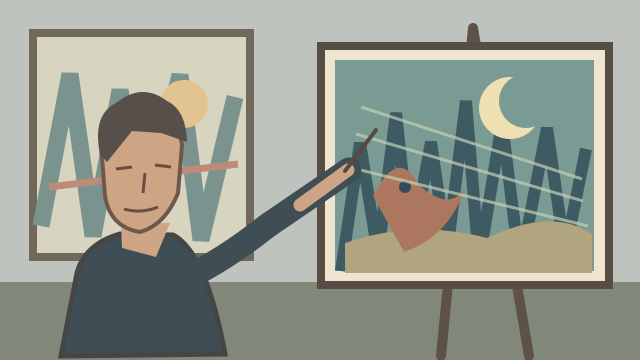
Painter
Max Ernst was a German-born painter associated with Dada and Surrealism, known for uncanny scenes, collage, frottage, and scraped paint textures.
Ernst's Dada collages led to Surrealist methods using chance, including frottage on paper and grattage, which scrapes through wet paint on canvas.
| Full name | Maximilian Maria Ernst |
|---|---|
| Born | 1891 · Brühl, German Empire (now Germany) |
| Died | 1976 · Paris, France |
| Nationality | German-born; later French and American |
| Movements | Dada · Surrealism |
| Paint types | Oil paint · Gouache |
| Other media | Drawing · collage · printmaking · sculpture |
| Other materials | Magazine cutouts · pasted illustrations |
| Painting surfaces | Canvas · Paper |
| Painting methods | Oil grattage with scraping and combing; decalcomania transfers; gouache collage and graphite frottage on paper |
| Common subjects | Birdlike creatures, dream landscapes, hybrid figures, forests, machines, and imaginary worlds |
| Notable works | The Elephant Celebes · Woman, Old Man, and Flower · Birds above the Forest · Napoleon in the Wilderness |
Sources: MoMA: Max Ernst and his techniques, The Met: Abstract Composition, oil on canvas, MoMA: Napoleon in the Wilderness, decalcomania in oil, Centre Pompidou: La Chanson de la chair, gouache collage on paper, Max Ernst Museum: frottage and grattage.
Ernst developed grattage and decalcomania in oil on canvas, while gouache appears in early Dada collages on paper, linking medium to distinct procedures.

In Birds above the Forest (1929), also oil on canvas, he pulled a toothed plasterer's comb through pigment before adding and removing further layers. Napoleon in the Wilderness (1941) uses decalcomania, pressing and lifting a surface against wet paint to create unpredictable textures.

La Chanson de la chair (1920) combines gouache and graphite with cut-and-pasted magazine illustrations on paper. The Centre Pompidou classifies it as a drawing and collage; the opaque paint contributes to the altered imagery, while the graphite and magazine fragments remain separate materials. It should not be mistaken for an oil painting on canvas.
Sources: The Met: Abstract Composition, oil and grattage, MoMA: Birds above the Forest, scraped oil paint, MoMA: Napoleon in the Wilderness, oil and decalcomania, and Centre Pompidou: La Chanson de la chair, gouache and collage.
Documented works by Max Ernst use Canvas, Paper, with examples below clarifying when a material is a painted ground, backing, or constructed element.
Ernst’s paintings, including Abstract Composition and Birds above the Forest, are documented on canvas. He used the flexible support for layered experiments such as grattage and decalcomania, in which textures are revealed or transferred through contact with wet paint. The support remains part of a deliberately manipulated surface.

Ernst also worked on paper, including La Chanson de la chair (1920), a gouache-and-graphite collage with cut magazine illustrations. Paper carries both the painted marks and pasted fragments; his works on paper extend his experiments with chance and found imagery beyond the canvas.
Sources: MoMA: Max Ernst and his techniques, The Met: Abstract Composition, oil on canvas, MoMA: Napoleon in the Wilderness, decalcomania in oil, Centre Pompidou: La Chanson de la chair, gouache collage on paper, Max Ernst Museum: frottage and grattage.
Picabia crossed painting with Dada experimentation, while Magritte used precise illusionism to make unsettling Surrealist scenes and imagery.
Francis Picabia was a French avant-garde painter associated with Dada, shifting among machine imagery, abstraction, and playful visual provocation.
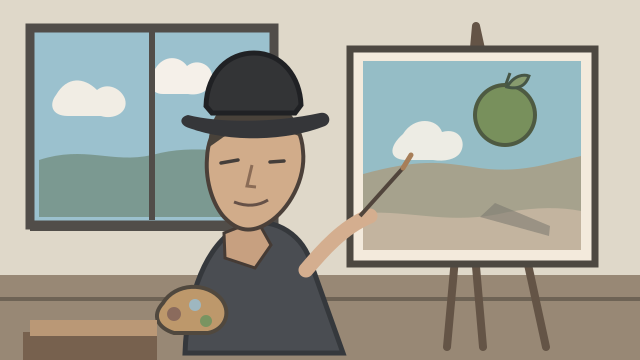
René Magritte was a Belgian Surrealist painter known for placing familiar objects in puzzling scenes that challenge how images represent reality.