Henri Matisse
Henri Matisse was a French artist known for vivid color, simplified forms, Fauvist painting, and the gouache-painted paper cut-outs of his later career.
Painter
Édouard Vuillard was a French painter who made intimate decorative compositions from interiors, gardens, patterned surfaces, and oil and distemper.
Vuillard flattened domestic interiors into decorative spaces where figures, wallpaper, and textile patterns merge across oil and distemper paintings.
| Full name | Jean-Édouard Vuillard |
|---|---|
| Born | 1868 · Cuiseaux, France |
| Died | 1940 · La Baule, France |
| Nationality | French |
| Movements | Les Nabis |
| Paint types | Distemper · Oil paint · Watercolor · Gouache |
| Other media | — |
| Other materials | — |
| Painting surfaces | Paper (sometimes laid on canvas) · Cardboard · board · Canvas (oil paintings) |
| Painting methods | Heated glue-based distemper on prepared paper; oil on board; watercolor and gouache on paper |
| Common subjects | Domestic interiors, gardens, portraits, family life, patterned textiles, and decorative scenes |
| Notable works | Still Life with Top Hat · Le Peintre Forain dans son atelier |
Sources: Museum of Modern Art, MoMA: Still Life with Top Hat, Musée d'Orsay: Le Peintre Forain dans son atelier, National Gallery of Art: Vuillard in the Park, and Nelson-Atkins: Woman in a Red Dress technical entry.
Vuillard used glue-bound distemper for matte decorative panels, oil for small interiors, and watercolor and gouache for studies on paper and board.

Vuillard painted the five-panel Place Vintimille screen (1911) in distemper on paper laid down on canvas. The National Gallery of Art describes his preparation of powdered pigments in heated animal glue and water. This fast-drying mixture required planning and produced the matte, textured surface he wanted for a view of the Paris square.

Still Life with Top Hat (1893) is oil on cardboard mounted on panel, while The Green Lamp (1893) is oil on board. These intimate compositions use dense patterns and domestic objects rather than the glue-bound distemper of his large decorative screen.
The Musée d'Orsay identifies Le Peintre Forain dans son atelier (1927) as watercolor and gouache on paper. Vuillard used the water-based media in a study of the artist's studio, distinct from the oils and decorative distemper used in other works.
Opaque gouache appears alongside watercolor in Le Peintre Forain dans son atelier. The museum's medium record supports listing both materials, but not treating the paper work as an oil painting or assuming all Vuillard interiors used gouache. The museum record documents both paints on the same sheet.
Sources: National Gallery of Art: Place Vintimille and distemper technique, MoMA: Still Life with Top Hat, MoMA: The Green Lamp, and Musée d'Orsay: watercolor and gouache in Le Peintre Forain dans son atelier.
The documented supports include canvas and painting board, and the rows below connect each surface to works by Édouard Vuillard through collection records.

Vuillard painted on paper and sometimes mounted it to canvas for larger works, as the National Gallery of Art documents for the five-panel screen Place Vintimille. The paper served as the painted ground, while the canvas provided backing. This construction is distinct from works painted directly on cardboard or board.

Vuillard’s works include cardboard and other board supports, documented in the Met and Nelson-Atkins collections. He painted oil interiors on cardboard mounted to panel as well as on board. These rigid supports differ from paper mounted on canvas for the decorative screens.

Vuillard used paper directly for watercolors and drawings, and also laid paper down on canvas for larger decorative works. The NGA records this construction for Place Vintimille. The distinction matters because the paper can remain the image-bearing surface even when a textile backing is present.

Vuillard’s oil paintings include cardboard mounted on panel, such as Still Life with Top Hat (1893). This rigid paper-based support differs from loose paper sheets and from paper laid down on canvas for large screens. Museum records document cardboard as a specific support in his intimate compositions.
Sources: Museum of Modern Art, MoMA: Still Life with Top Hat, Musée d'Orsay: Le Peintre Forain dans son atelier, National Gallery of Art: Vuillard in the Park, Nelson-Atkins: Woman in a Red Dress technical entry.
Explore painters similar to Édouard Vuillard through French modernism, decorative color, intimate domestic subjects, and patterned painted surfaces.
Henri Matisse was a French artist known for vivid color, simplified forms, Fauvist painting, and the gouache-painted paper cut-outs of his later career.
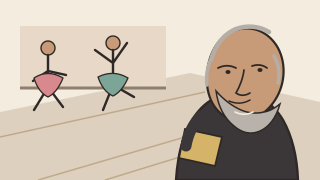
Edgar Degas was a French artist associated with the Impressionists, known for ballet dancers, horse racing, portraits, and scenes of modern Parisian life.