
Édouard Vuillard
Édouard Vuillard was a French painter known for intimate interiors, gardens, patterned surfaces, and decorative compositions in distemper, oil, watercolor, and gouache.
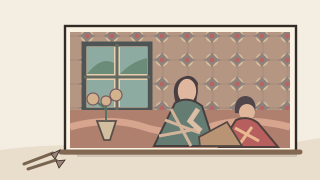
Painting Movement
The Nabis were a French group of painters active from 1888 to about 1900 who used flat color, simplified shapes, and decorative patterns in their art.
The group followed Gauguin's experiments with color and turned painting toward ornament, expressive surfaces, and art for everyday interiors.
| Origin | Paris, France |
|---|---|
| Approximate period | 1888–about 1900; members continued individual careers afterward |
| French name | Les Nabis; nabi means “prophet” in Hebrew |
| Founding context | Paul Sérusier shared painting ideas learned from Paul Gauguin at Pont-Aven with fellow artists in Paris |
| Early landmark | Sérusier's The Talisman (1888), painted in oil on a small wooden panel |
| Defining characteristics | Broad color areas, simplified outlines, flattened space, ornamental patterns, and subjective color |
| Influences | Gauguin's approach to painting, Symbolism, and Japanese prints |
| Leading painters | Paul Sérusier, Pierre Bonnard, Édouard Vuillard, Maurice Denis, and Paul Ranson |
| Typical subjects | Domestic interiors, gardens, portraits, religious scenes, and patterned landscapes |
| Beyond easel painting | Decorative panels, screens, illustrated books, posters, theater design, and other applied arts |
| Paint media | Oil paint and distemper were among the media used by different members |
| Painting surfaces | Canvas, paper, and wood panels |
| Relationship to Post-Impressionism | A distinctive artist circle often discussed within the broader Post-Impressionist period |
Sources: The Met: The Nabis and Decorative Painting, Musée d'Orsay: Nabis 1888–1900, and Musée d'Orsay: The Talisman.
Bonnard, Denis, Sérusier, and Vuillard helped shape the movement, while Vuillard's interiors are especially known for patterned decorative surfaces.
Édouard Vuillard was a French painter known for intimate interiors, gardens, patterned surfaces, and decorative compositions in distemper, oil, watercolor, and gouache.
The Nabis drew on Symbolist ideas and Gauguin's approach to color, but formed a distinct artist group known for decorative painting.
| Movement | How it differs |
|---|---|
| Symbolism | A broader artistic tendency centered on suggestive imagery and ideas, rather than a particular Parisian artists' group. |
| Post-Impressionism | A retrospective umbrella for varied painting developments after Impressionism; the Nabis were one distinct circle within that period. |
| Impressionism | More often emphasized observed light and atmosphere, while the Nabis favored flattened shapes and expressive decorative design. |
Sources: The Met: The Nabis and Decorative Painting and Musée d'Orsay: Nabis and decoration.