
Robert Delaunay
Robert Delaunay was a French painter associated with Orphism, known for luminous color contrasts, abstract circles, and repeated views of the Eiffel Tower.

Painter
František Kupka was a Czech-born pioneer of abstract painting known for rhythmic circles, vertical forms, bold color relationships, and musical analogies.
Kupka developed nonrepresentational painting independently and used numerous paper studies to refine color, rotation, and abstract movement.
| Full name | František Kupka |
|---|---|
| Born | 1871 · Opočno, Bohemia (now Czech Republic) |
| Died | 1957 · Puteaux, France |
| Nationality | Czech |
| Movements | Associated with Orphism; independently developed abstract painting |
| Paint types | Oil paint · Watercolor · Gouache |
| Other media | — |
| Other materials | — |
| Painting surfaces | Canvas · Paper |
| Painting methods | Reworked oil portraits with vertical color bands; repeated circular-form studies before major abstractions; red-and-blue gouache and mixed watercolor studies on paper |
| Common subjects | Color disks, sweeping arcs, vertical forms, human figures, music-like rhythms, and abstract movement |
| Notable works | Amorpha: Fugue in Two Colors · Disks of Newton · Mme Kupka among Verticals · Red and Blue Disks |
Sources: National Gallery of Art: František Kupka, MoMA: František Kupka, MoMA: Untitled (1928), gouache and watercolor, MoMA: Amorpha study, Museo Thyssen: František Kupka.
Kupka reworked figurative oil compositions and explored abstract color rhythms through gouache and watercolor studies on paper that led toward abstraction.

Mme Kupka among Verticals (1910–11), oil on canvas, started as a portrait of Kupka's wife and was reworked into an arrangement of densely packed vertical color bands. The National Gallery's account of his early abstraction can be read alongside MoMA's catalogue, which identifies this painting as oil, not watercolor or gouache.

An Untitled work from 1928 at MoMA combines watercolor, gouache, and pencil on paper. The transparent passages allow the drawn composition to remain apparent beneath broad colored forms. MoMA also describes Kupka's earlier watercolor studies of rhythmic forms, but the 1928 museum record provides a specific example with its materials identified.

In a 1912 Amorpha: Fugue in Two Colors study, Kupka used gouache and ink on paper to test interlocking red and blue ribbons. The studies developed from a figurative image of a girl playing with a ball toward nonrepresentational movement. A separate 1928 Untitled combines gouache with watercolor and pencil; neither study should be described as an oil-on-canvas painting.
Sources: MoMA: Mme Kupka among Verticals, oil on canvas, MoMA: Untitled (1928), watercolor and gouache, and MoMA: Amorpha: Fugue in Two Colors study (1912), gouache and ink.
Collection entries identify canvas and paper among František Kupka’s supports, with the examples below grounding each material in documented works.
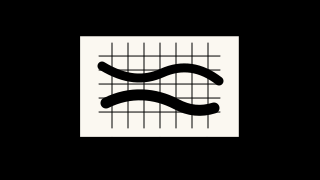
Kupka’s abstract paintings are documented on canvas in museum collections, including the National Gallery’s account of his early abstraction. Works such as Mme Kupka among Verticals use oil on canvas to move from portraiture toward organized bands of color. The textile support is distinct from his gouache and watercolor studies on paper.

Kupka used paper for gouache and watercolor studies, including MoMA’s 1928 Untitled with watercolor, gouache, and pencil. The sheet supported experiments with color, rhythm, and nonrepresentational form before and alongside canvas paintings. Museum records distinguish these works on paper from oil canvases.
Sources: National Gallery of Art: František Kupka, MoMA: František Kupka, MoMA: Untitled (1928), gouache and watercolor, MoMA: Amorpha study, Museo Thyssen: František Kupka.
Robert and Sonia Delaunay explored color and rhythmic abstraction, though Kupka developed his own path toward nonfigurative painting as a modernist.
Robert Delaunay was a French painter associated with Orphism, known for luminous color contrasts, abstract circles, and repeated views of the Eiffel Tower.

Sonia Delaunay was a Ukrainian-born French artist associated with Orphism, known for vibrant color contrasts across paintings, textiles, and design.