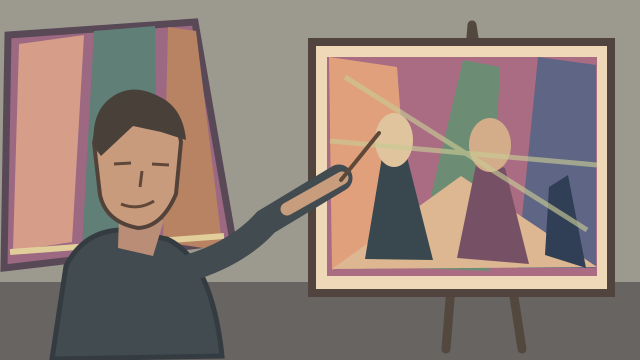
Ernst Ludwig Kirchner
Ernst Ludwig Kirchner was a German Expressionist painter and Die Brücke founder known for angular figures, vivid colors, and tense city street scenes.

Painter
Egon Schiele was an Austrian Expressionist painter known for angular self-portraits, expressive figure studies, and stark townscape paintings.
Schiele developed a distinctive figural style through sharp outlines and expressive poses, while also making closely observed Austrian townscapes.
| Full name | Egon Leo Adolf Ludwig Schiele |
|---|---|
| Born | 1890 · Tulln, Austria-Hungary (now Austria) |
| Died | 1918 · Vienna, Austria |
| Nationality | Austrian |
| Movements | Expressionism; Austrian modernism |
| Paint types | Oil paint · Watercolor · Gouache |
| Other media | Drawing (pencil · ink) |
| Other materials | — |
| Painting surfaces | Canvas · Wood · Paper |
| Painting methods | Broad oil brushwork over pencil on wood or canvas; watercolor and gouache combined with pencil contours on paper |
| Common subjects | Self-portraits, figures, families, trees, towns, landscapes, and themes of mortality |
| Notable works | The Small Town III · Dead Mother I · Seated Male Nude (Self-Portrait) · Girl with Black Hair |
Sources: Leopold Museum: Schiele collection, Leopold Museum: The Small Town III, oil on canvas, Leopold Museum: Dead Mother I, oil on wood, MoMA: Girl with Black Hair, gouache and watercolor on paper, MoMA: Standing Girl Wrapped in Blanket, watercolor on paper.
Schiele painted in oil on joined wood and canvas, and used watercolor or gouache with pencil on paper for expressive figure studies and town scenes.

For The Small Town III (1913), Schiele used oil and soft pencil on canvas, arranging the buildings of Krumau along dark water. The Leopold Museum records that the canvas was sewn from two pieces, making its support a distinctive part of the painting's construction.

Standing Girl Wrapped in Blanket (1911) is watercolor and pencil on paper. In Girl with Black Hair (1911), Schiele combined watercolor with gouache and pencil, letting drawn contours and irregular washes define the figure. These paper works are distinct from his oil-painted panels and canvases.

MoMA explicitly lists opaque gouache alongside watercolor and pencil for Girl with Black Hair (1911). Schiele combined those media on paper for an expressive figure drawing; the pencil is a drawing material, not an additional paint type, and the gouache is not evidence that his oils used water-based paint.
Sources: Leopold Museum: oil and pencil on wood in Dead Mother I, Leopold Museum: oil and pencil on joined canvas in The Small Town III, MoMA: Standing Girl Wrapped in Blanket, and MoMA: Girl with Black Hair, gouache and watercolor.
Collection records document canvas and wood in Egon Schiele’s practice, and each row links a support to a named object and its recorded materials.
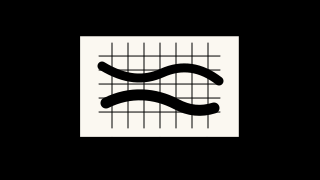
Schiele’s paintings, including The Small Town III (1913), are documented on canvas. The Leopold Museum notes that this canvas was sewn from two pieces, making the support’s construction a distinctive part of the work. It differs from the wood used for Dead Mother I and paper used for watercolor drawings.
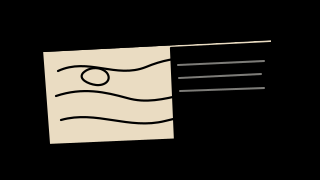
Schiele painted selected works on wooden supports, including Dead Mother I (1910), cataloged as oil and pencil on wood. The rigid panel carries broad strokes around the mother and child, unlike the sewn canvas of The Small Town III. Museum records document wood as a separate support.

Schiele’s watercolors and gouaches, including MoMA’s Girl with Black Hair, are on paper. The flexible sheet supports expressive drawn contours and washes, distinct from his oil paintings on wood and canvas. Collection records identify the support for these works on paper directly.
Sources: Leopold Museum: Schiele collection, Leopold Museum: The Small Town III, oil on canvas, Leopold Museum: Dead Mother I, oil on wood, MoMA: Girl with Black Hair, gouache and watercolor on paper, MoMA: Standing Girl Wrapped in Blanket, watercolor on paper.
Kirchner likewise pursued expressive figural distortion, while Moreau's symbolic subjects offer an earlier approach to psychological imagery.
Ernst Ludwig Kirchner was a German Expressionist painter and Die Brücke founder known for angular figures, vivid colors, and tense city street scenes.

Gustave Moreau was a French Symbolist painter known for richly ornamented mythological scenes, biblical figures, and detailed oil and watercolor paintings.